Small Bedroom Problems: 5 Common Design Issues I Fixed in 5 Different Spaces

Proven solutions for common bedroom problems—from transforming a property with smoking odor, noise complaints, and safety hazards into a consistently booked, premium-priced space
When I first walked into the studio that would become “April Breeze,” I saw what most people would run from: years of cigarette smoke embedded in the walls, paper-thin construction that transmitted every sound, and safety hazards waiting to happen. The previous landlord had given up trying to rent it at market rate.
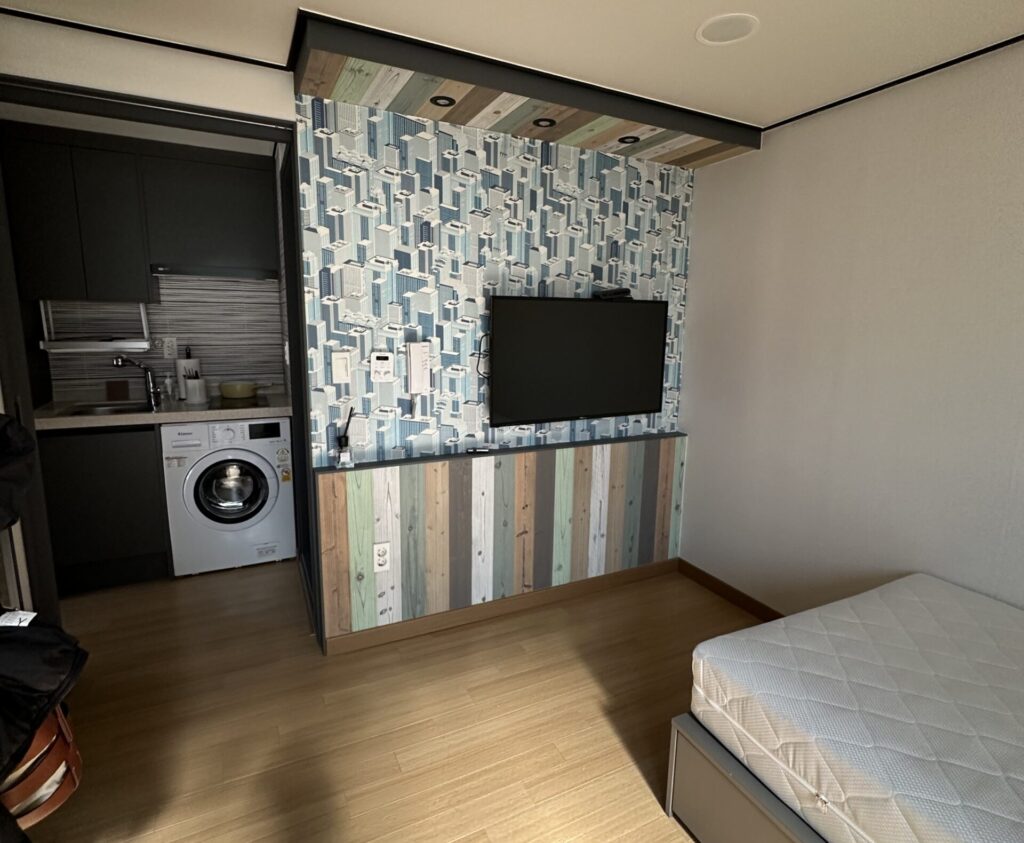
Six months later, this same problem-riddled space became my most consistently booked property, maintaining full occupancy while commanding 30% above market rates. The difference? I didn’t just mask the problems—I solved them systematically.
Here’s exactly how I fixed five major bedroom deal-breakers that destroy property value and guest satisfaction. These aren’t theoretical solutions—they’re tested fixes with real costs, timelines, and proven results from hundreds of guest stays.
Who These Guest Bedroom Solutions Help
These proven fixes are for:
- Airbnb hosts dealing with bad reviews or low bookings
- Property owners inheriting problem spaces (smoke damage, thin walls)
- Anyone transforming challenging bedrooms on a budget
- Landlords preparing rental properties for premium tenants
- DIY renovators facing odor, noise, or safety issues
- Small space dwellers dealing with multiple problems at once
- New hosts wanting to avoid common pitfalls
Whether you’re fixing an existing problem or preventing future issues, these solutions come from real experience managing actual guest complaints.
The 5 Problems + Solutions Overview
| Problem | Traditional “Fix” | Why It Fails | My Solution | Cost |
|---|---|---|---|---|
| Smoke Odor | Air fresheners | Just masks smell | Deep clean + primer | $140 |
| Noise | “Please be quiet” signs | Never works | Acoustic materials | $315 |
| Safety | Hope nothing happens | Liability nightmare | Proper mounting | $65 |
| Generic | Lower price | Race to bottom | Distinctive theme | $245 |
| Inconsistency | Wing it | Bad reviews | Systems | $115 |
The Property From Hell: What I Was Working With
Location: Fourth floor studio apartment in Daejeon
Size: Slightly larger than my other studios, with better natural light
Rent: ₩500,000/month + ₩150,000 utilities
Initial problems: Everything that makes Airbnb hosts panic
Most hosts see problems like smoking odor or noise complaints and either give up or throw money at superficial fixes that don’t work. I took a different approach: understand the root cause of each problem, then design solutions that address both the practical issue and the guest psychology behind it.
Problem #1: Persistent Smoke Odor (The Silent Booking Killer)
The Problem: The previous tenant had been a heavy smoker for years. Professional cleaning hadn’t eliminated the smell, and lingering tobacco odor is an instant booking killer—guests can smell it in photos somehow.
Who Else This Helps:
- Homeowners who bought from smokers
- Landlords with damaged units
- Anyone dealing with pet odors (same principles apply)
- Property flippers on tight budgets
Why Surface Solutions Don’t Work:
- Air fresheners just mask the problem temporarily
- Paint alone seals in odor but doesn’t eliminate it
- Ozone treatments work but don’t address embedded residue in walls
My Deep-Clean Strategy:
- Wallpaper steaming removal: Used professional steamer to remove wallpaper and underlying adhesive where tar had accumulated
- Constant cleaning cycles: Multiple rounds of TSP (trisodium phosphate) wall washing before any painting
- Primer barrier: Applied odor-blocking primer on all surfaces after cleaning
- Candle burning solution: Burned candles throughout the space during cleaning phases—the flame actually helps consume odor molecules in the air, not just mask them
- Strategic ventilation: Positioned air circulation to create positive airflow patterns
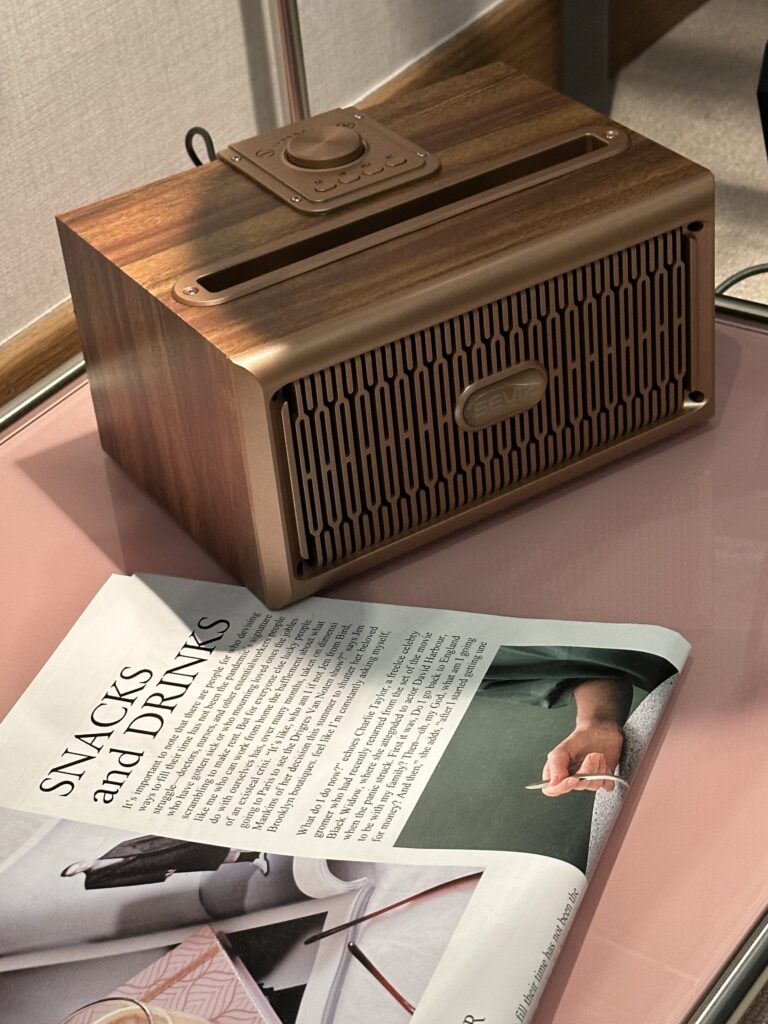

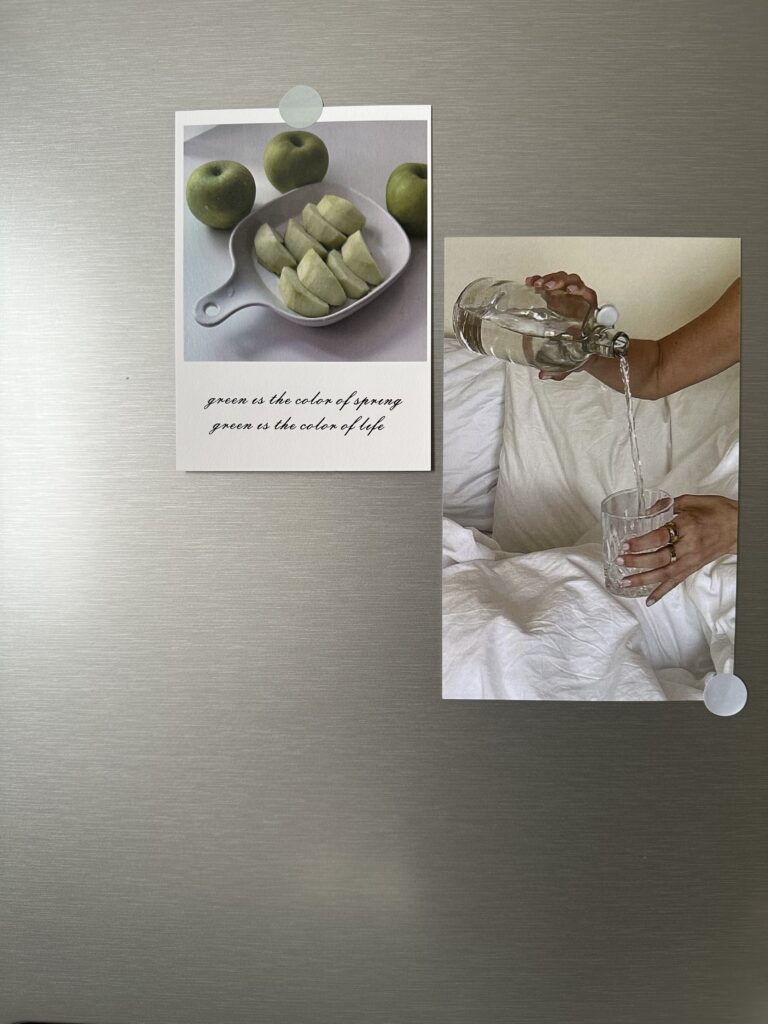
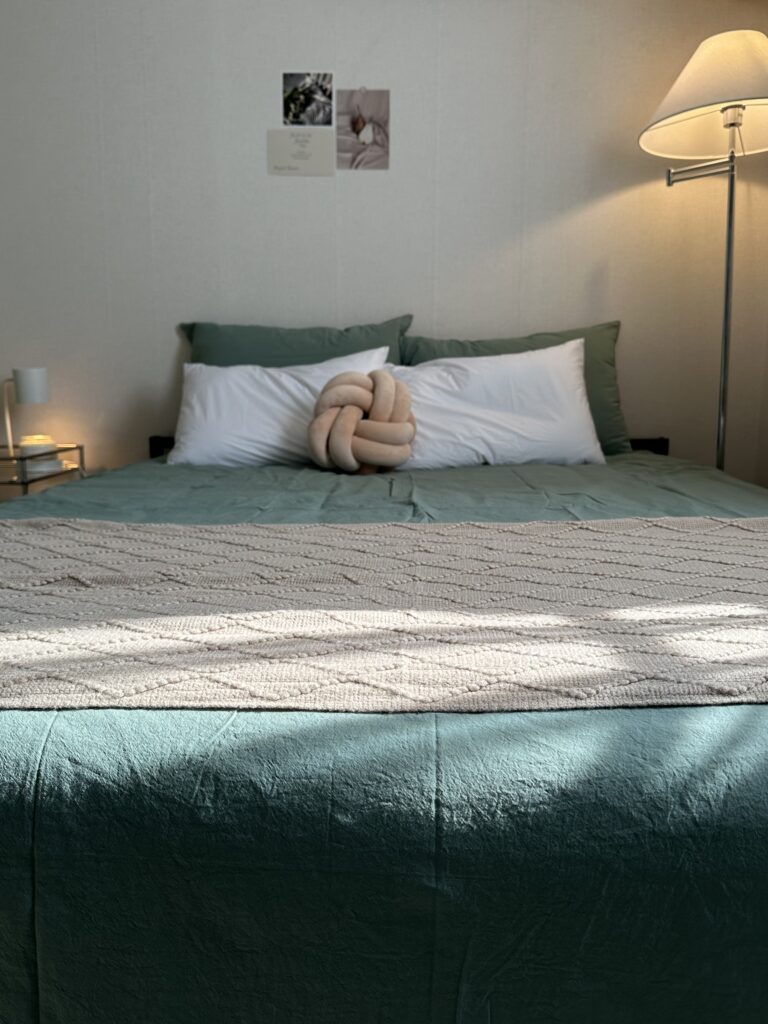
Design Integration: Instead of fighting the space’s history, I embraced it as part of the healing journey. The sage green bedding and warm beige palette created a “fresh start” narrative that guests connected with emotionally.
Investment: ₩180,000 in cleaning supplies, primer, and materials
Timeline: 3 full days of intensive cleaning before any design work
Results: Zero odor complaints
Problem #2: Paper-Thin Walls and Noise Transfer
The Problem: The apartment walls were so thin that normal conversation carried to neighboring units, resulting in noise complaints that could have gotten the property banned from Airbnb.
Why Standard Sound Solutions Fail:
- Soundproofing foam looks unprofessional and guests remove it
- Thick rugs help but don’t address door/wall transmission
- Asking guests to “be quiet” never works reliably
My Multi-Layer Approach:
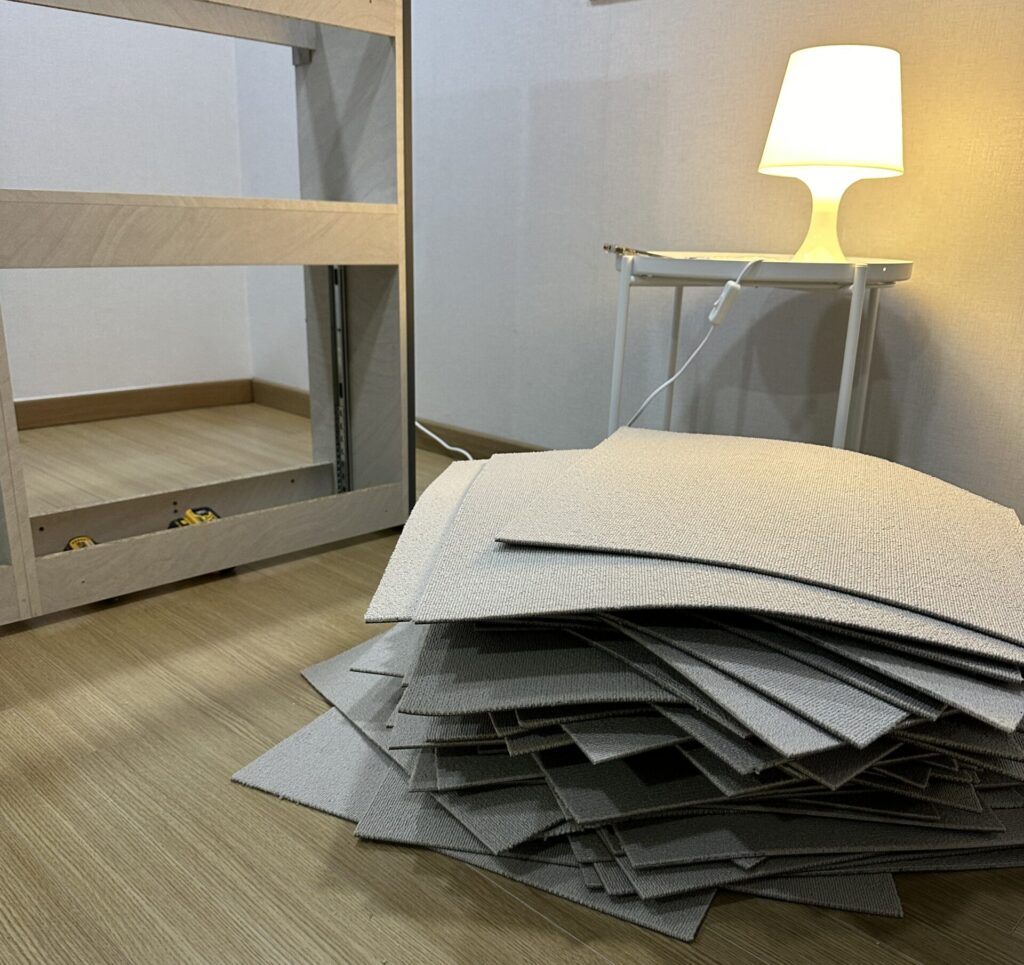
- Magnetic sound tiles on door: Installed acoustic tiles that could be easily removed/replaced and looked intentional rather than makeshift
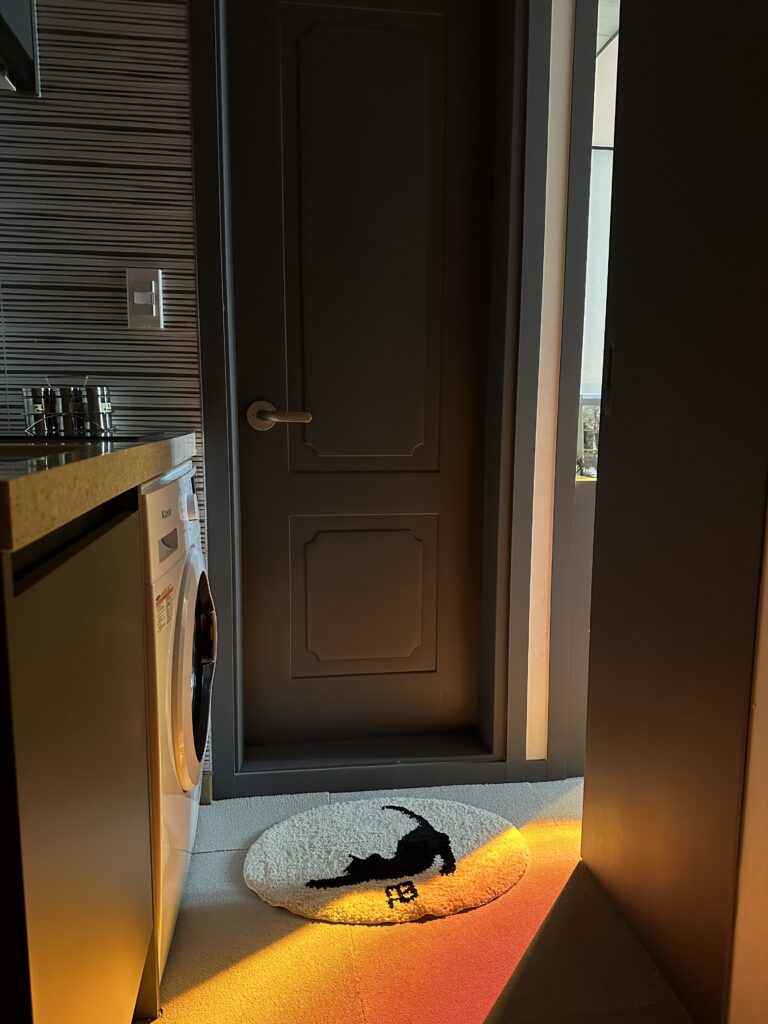
- Tile carpet flooring: Covered the entire floor with carpet tiles to absorb footstep sounds—a crucial detail since noise complaints often stem from impact sounds traveling through floors to units below
- Strategic soft surfaces: Food-themed rugs (pretzel and bread patterns) throughout provided additional sound absorption while adding personality
- Furniture positioning: Placed soft, upholstered pieces against shared walls to create natural sound barriers
- Guest psychology: Used calming elements that naturally encouraged quieter behavior
The Psychology Element: I discovered that guests in relaxing, spa-like environments naturally speak more softly and move more gently. Moreover, the grass scent, piano jazz background music, and soft textures created an atmosphere that promoted mindful behavior.
Investment: ₩410,000 in acoustic materials and strategic textiles
Results: Zero noise complaints after implementation
Problem #3: Safety Hazards That Create Liability
The Problem: Large mirrors leaning against walls—a guaranteed disaster waiting to happen with tired, unfamiliar guests in a small space.
Why Safety Matters Beyond Liability:
- Guests subconsciously assess safety within minutes of arrival
- Unsafe spaces create stress that ruins the entire experience
- One accident can end your hosting career permanently
My Safety-First Redesign:
- Proper mirror mounting: Invested in quality mirrors with secure legs instead of wall-leaning options
- Sharp corner elimination: Chose furniture with rounded edges throughout
- Clear pathways: Designed traffic flow to prevent collisions in tight spaces
- Emergency accessibility: Ensured all exits remained clearly marked and unobstructed
The Business Case: That ₩50,000 investment in proper mirror mounting saved potentially hundreds of thousands in liability and prevented the review disaster that kills Airbnb businesses.
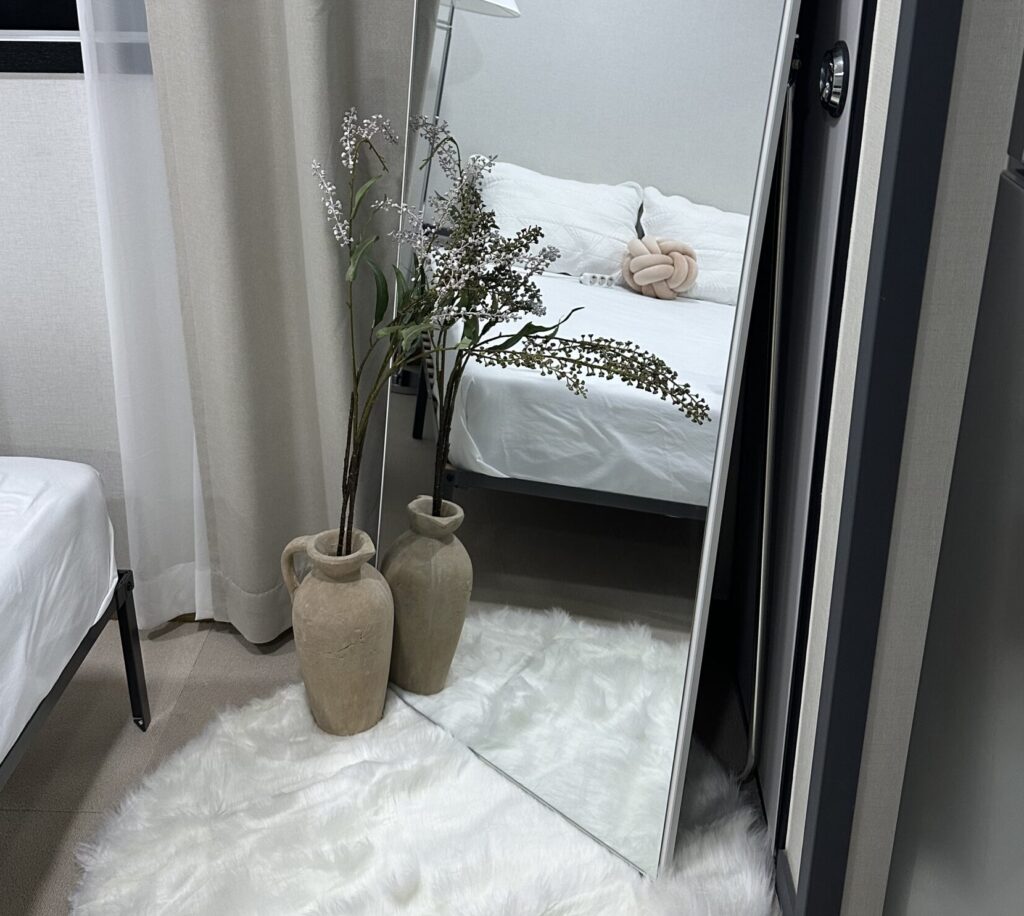
Investment: ₩85,000 in safety improvements
ROI: Immeasurable—you can’t put a price on preventing accidents
Problem #4: Generic Design That Disappears in Listings
The Problem: In a saturated market, generic beige apartments disappear into search result oblivion. Guests need a reason to choose your property over dozens of similar options.

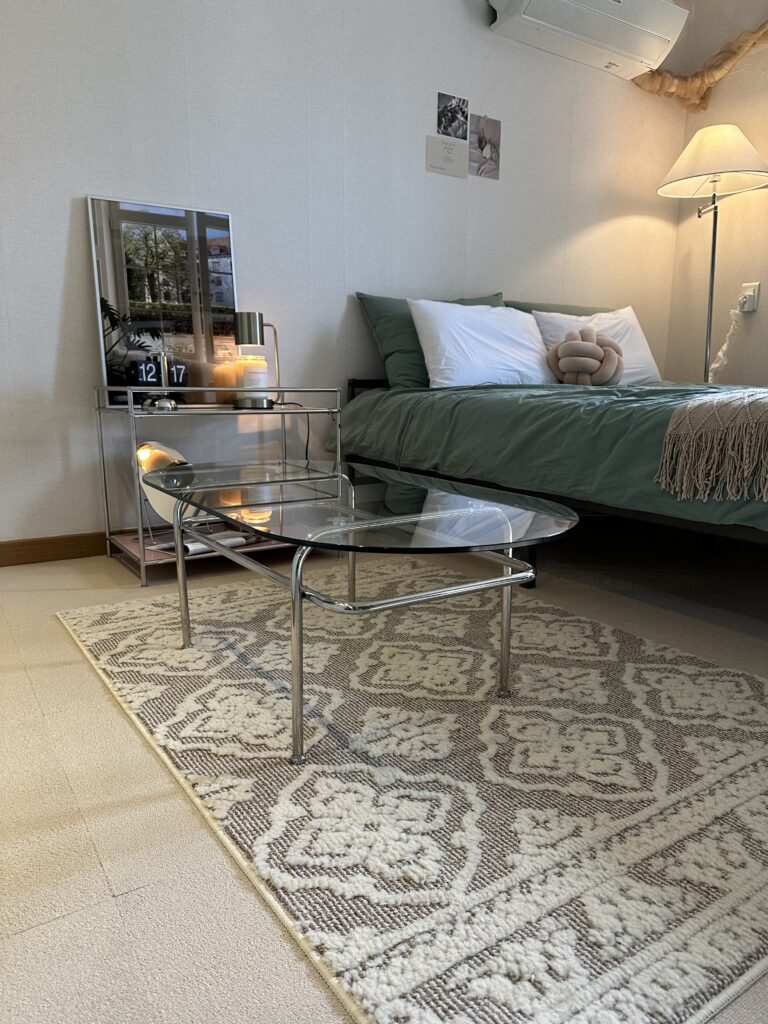
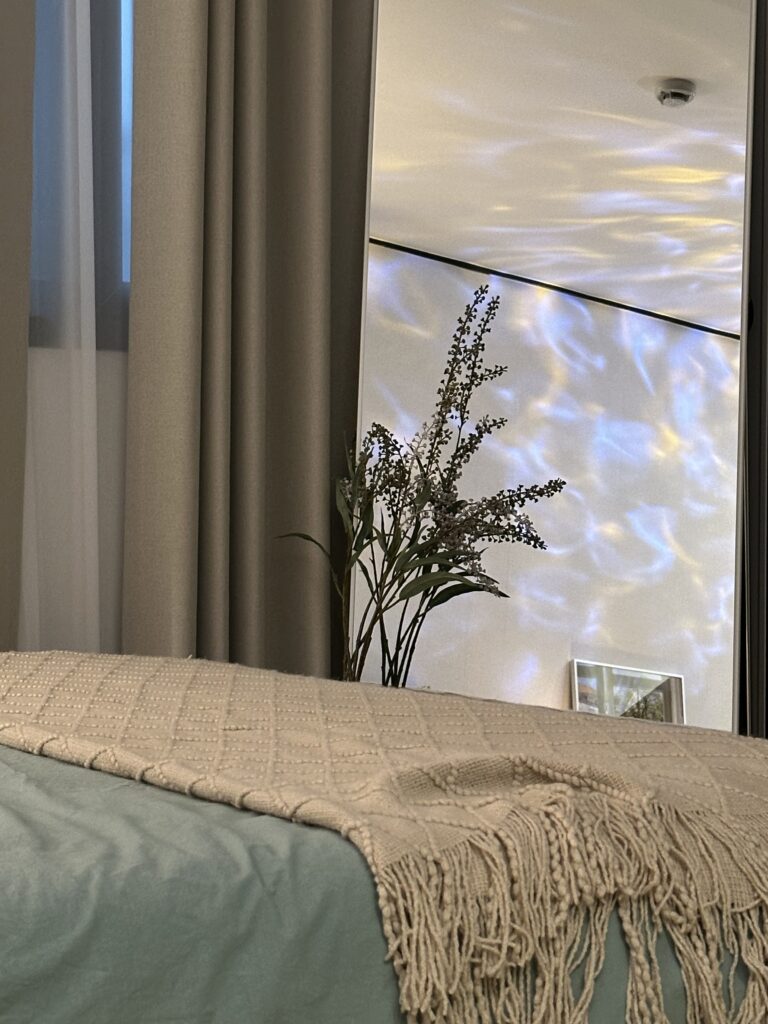
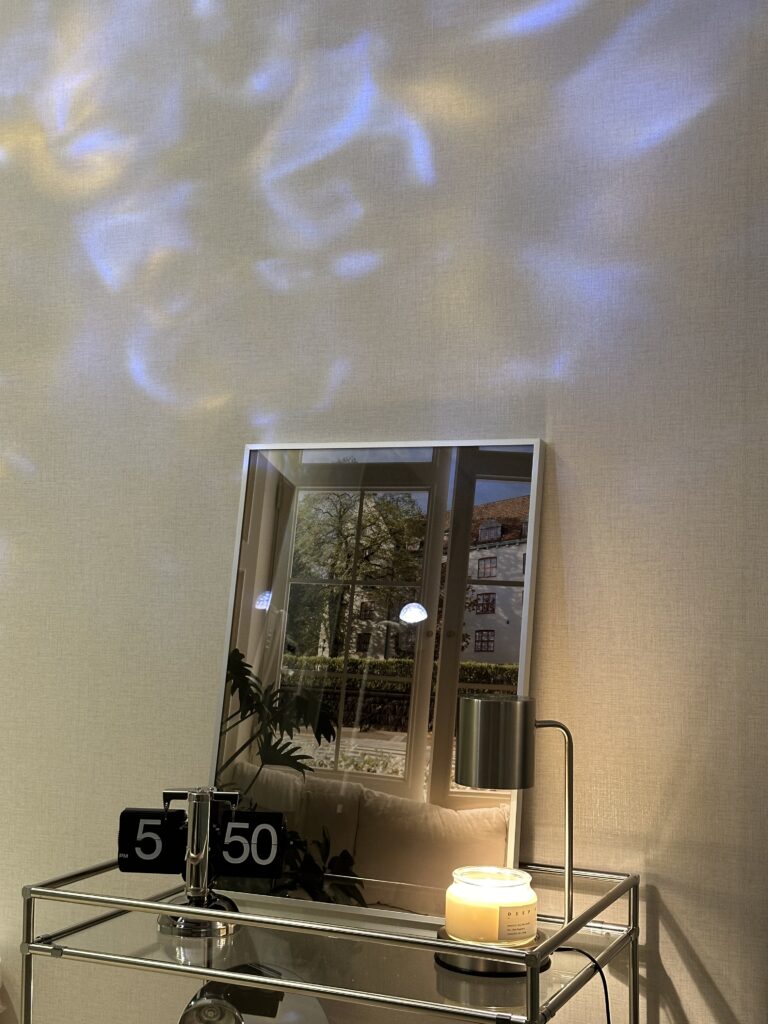
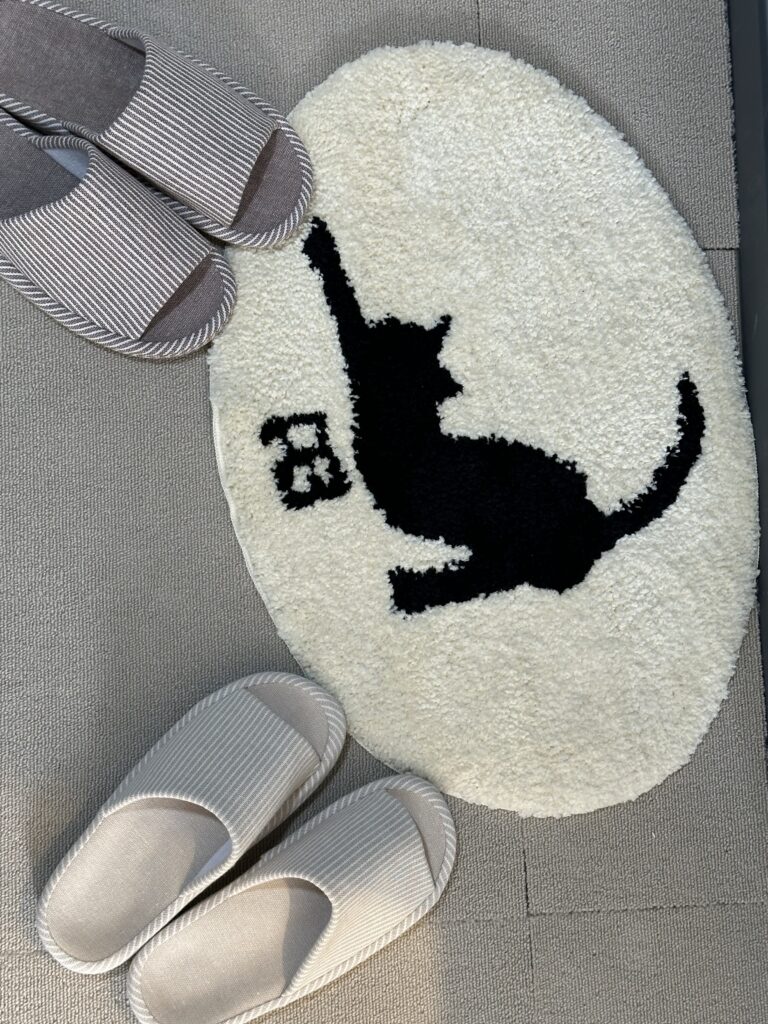
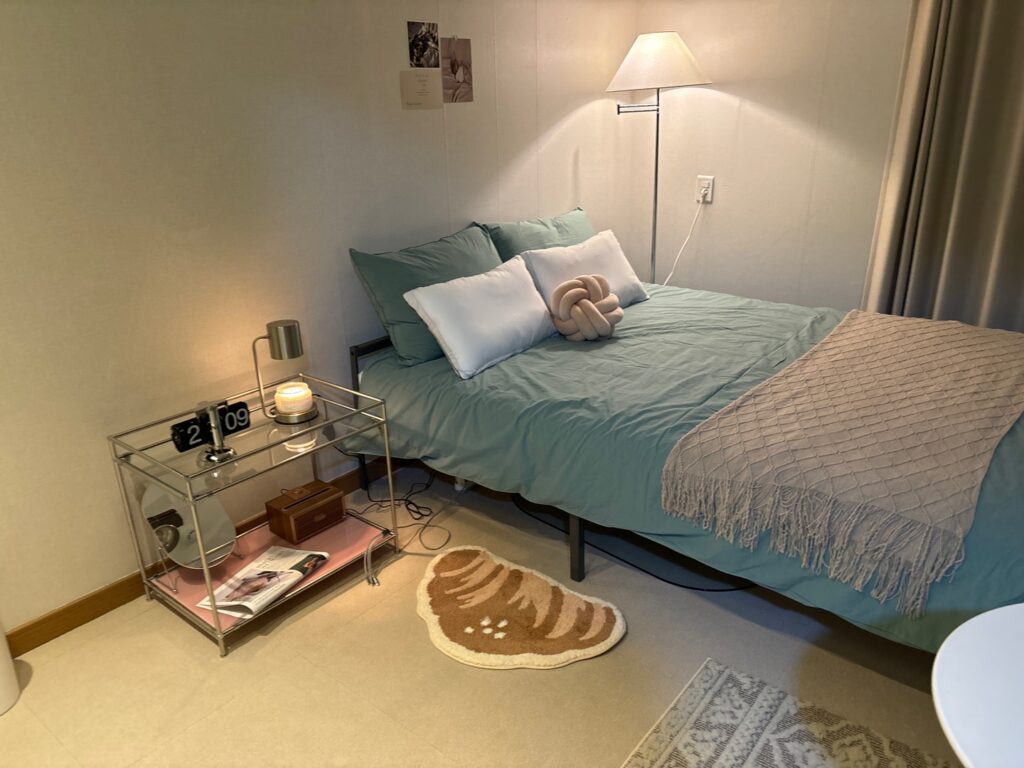
My Therapeutic Theme Strategy: Instead of competing on price, I created a distinctive “nature therapy” experience that commanded premium rates:
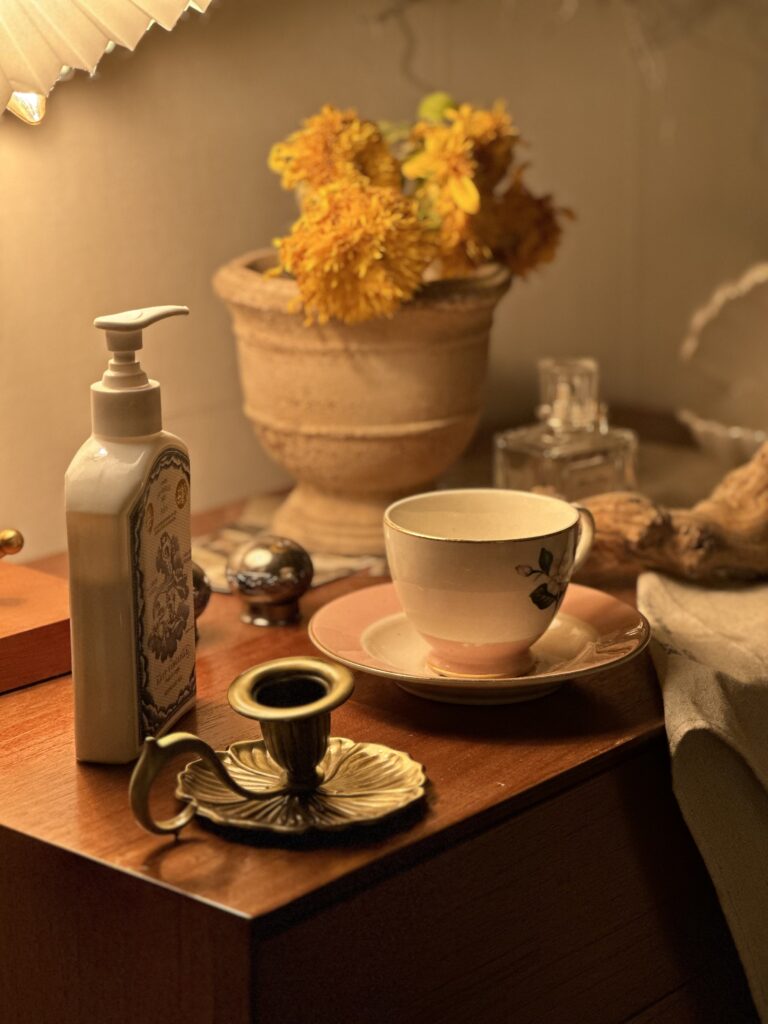
- Color Psychology: Sage green bedding for calm, terra cotta pottery for grounding
- Scent Branding: Grass-scented candles for natural aromatherapy
- Music Curation: Piano jazz playlist for sophisticated relaxation
- Personality Details: Food-themed rugs that guests consistently mentioned in reviews
The Content Marketing Bonus: These distinctive details made April Breeze incredibly photogenic, leading to organic social media sharing that provided free marketing.
Investment: ₩320,000 in theming and distinctive elements Results: 30% premium pricing over comparable properties
Problem #5: Inconsistent Guest Experience
The Problem: Most hosts treat each booking as a separate event, leading to inconsistent experiences that damage long-term success.
My Systematic Approach:
- Chrome cart organization: Everything guests needed in one mobile station
- Aesop-style amenities: Professional presentation that guests associate with luxury hotels
- Arrival atmosphere: Music playing, scent active, lighting preset before every check-in
- Maintenance protocols: Weekly deep cleaning, monthly amenity refresh, quarterly design updates
The Efficiency Advantage: These systems allowed me to maintain premium quality while managing multiple properties simultaneously.
Investment: ₩150,000 in organizational systems and premium amenities
Time savings: 2 hours per turnover through efficient systems
The Complete Investment Breakdown
Total transformation cost: ₩2,143,004
Monthly revenue: ₩2,580,000 (₩60k weekdays, ₩100k weekends, full occupancy)
Monthly expenses: ₩650,000 (rent + utilities)
Monthly profit: ₩1,930,000
ROI: Investment paid for itself in 1.1 months
How These Solutions Connect to Broader Design Strategy
These problem-solving approaches are part of my comprehensive small space design system:
- Small Bedroom Transformations: 5 Airbnb Makeovers – See these solutions in action across multiple properties
- 5 Small Bedroom Design Changes for Better Sleep – Foundational principles that prevent problems
- Small Space Design Ideas: Complete Guide – Room-by-room problem prevention
Each solution here prevented issues that could have destroyed guest satisfaction and booking rates.
What Guests Actually Said
The proof is in the reviews. Here’s what guests said about April Breeze:
“Everything was clean and emotional, and everything was prepared without lacking anything. The bed was spacious, hot water worked well, and I rested comfortably. I’m completely satisfied with choosing this accommodation!”
“The details were so satisfying. Among all the Airbnb accommodations I’ve used, this was where the host’s attention to detail showed the most. Thanks to that, I rested comfortably.”
Notice they’re not just commenting on cleanliness or amenities—they’re talking about how the space made them feel emotionally.
Lessons for Other Hosts: Implementing Your Own Airbnb Problem Solutions
1. Don’t Run From Problem Properties Properties with issues are often underpriced, giving you better margins to invest in solutions that create competitive advantages. In fact, these challenging properties can become your most profitable investments.
2. Address Root Causes, Not Symptoms Surface fixes fail because they don’t solve the underlying problems. Instead, invest in proper solutions that eliminate issues permanently. This approach saves money in the long run.
3. Turn Necessities Into Advantages For example, the sound-dampening rugs became distinctive design elements. Similarly, safety improvements became selling points about thoughtful hosting. Every problem you solve can become a marketing advantage.
4. Systems Scale, Perfection Doesn’t Create repeatable processes that maintain quality without requiring perfect execution every time. Consequently, you’ll be able to manage multiple properties successfully.
5. Guest Psychology Trumps Property Features A smaller space with thoughtful design consistently outperformed larger properties with generic aesthetics. Therefore, focus on creating experiences rather than just providing amenities.
Your Problem-Solving Action Plan
Stop losing money to fixable bedroom problems. Whether you’re dealing with:
- Inherited property issues
- Guest complaints
- Low booking rates
- Safety concerns
- Market competition
These solutions prove that systematic problem-solving beats surface-level fixes every time.
The Problem-Solving Framework:
- Identify root causes (not just symptoms)
- Design multi-purpose solutions (fix + enhance)
- Document the process (for scaling)
- Track results (reviews + revenue)
- Refine and repeat (continuous improvement)
Resources to Fix Your Space:
Free Download: “The 25-Point Problem Property Checklist” – Identify every issue affecting your bookings before guests do.
Cost Calculator: “Problem-Solving ROI Worksheet” – Calculate which fixes will give you the fastest return on investment.
Coming Next: “Small Bedroom Storage Solutions That Guests Actually Use” – Beyond basic organization to functional design.
Share Your Challenge:
What bedroom problem is killing your bookings or property value? Comment below with your specific issue—I personally respond to every problem-solving question.



One Comment
Comments are closed.