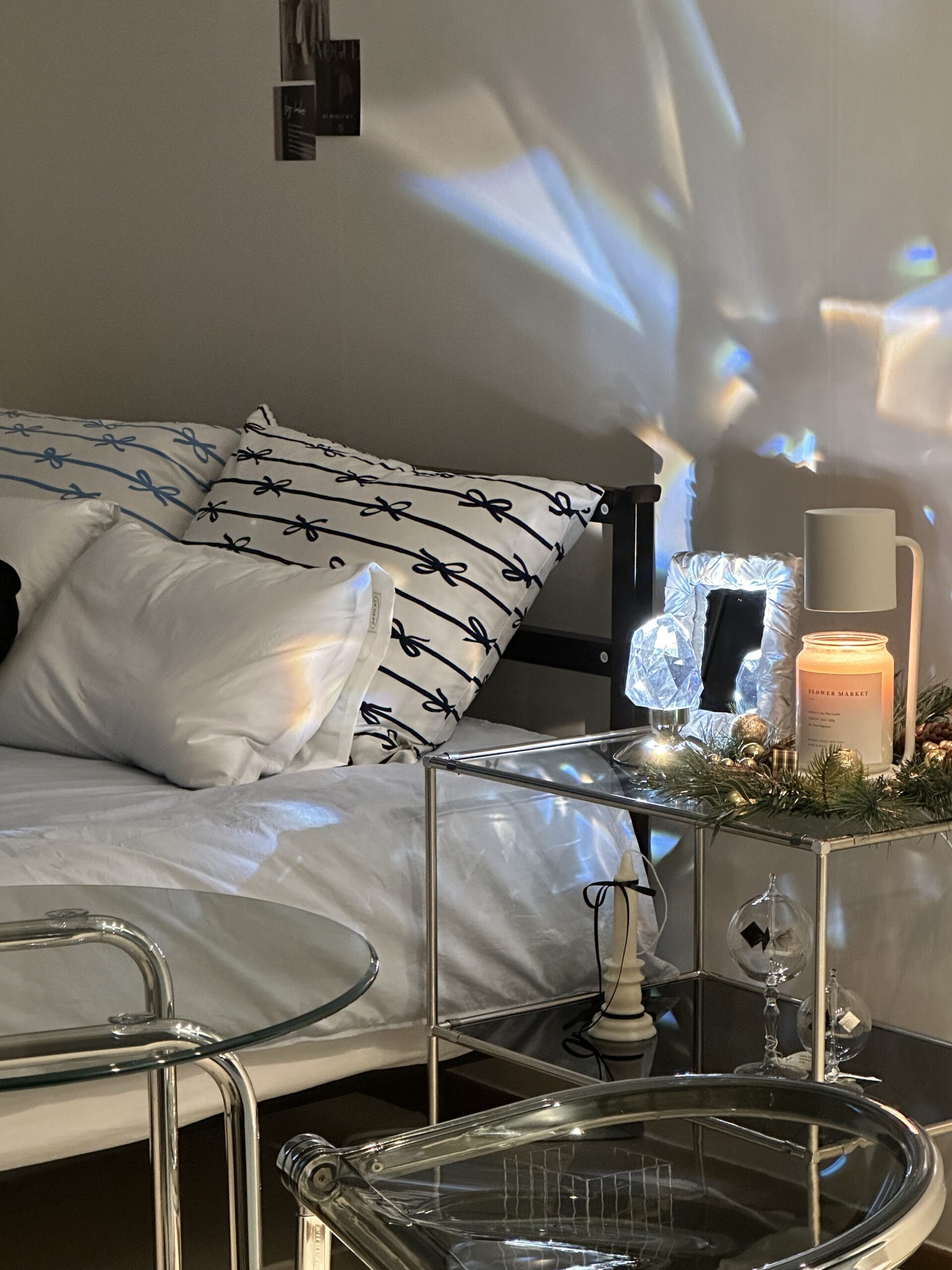
5 Small Bedroom Design Changes for Better Sleep and Mental Health

Simple, affordable bedroom design changes that actually support better sleep and emotional regulation—tested in 5 real spaces
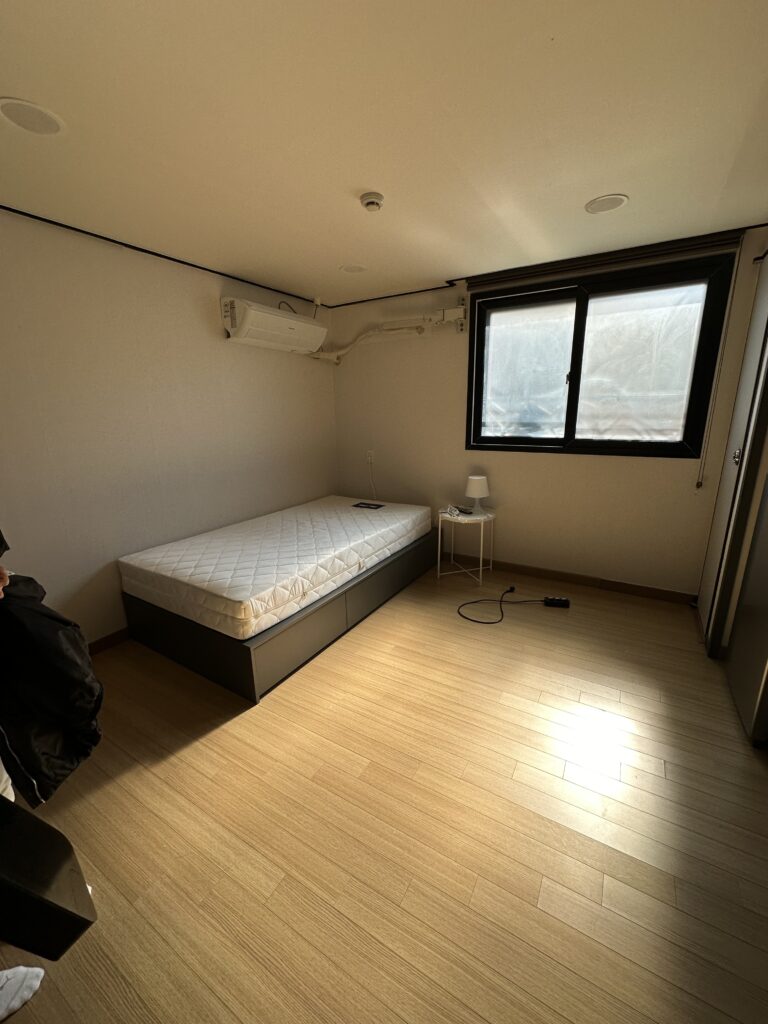
When I was first diagnosed with BPD, I didn’t realize my bedroom was actively sabotaging my mental health and sleep quality. The harsh overhead lighting triggered anxiety spikes that kept me awake. The visual clutter made racing thoughts worse. The stark white walls felt clinical and cold, amplifying feelings of isolation that many of us experience at night.
I couldn’t afford a complete renovation—and if you’re reading this, you probably can’t either. But here’s what I discovered: a few strategic bedroom design changes transformed my space from a source of stress into a genuine sanctuary for better sleep and mental wellness. These aren’t expensive designer solutions—they’re practical modifications that cost under $100 total and take less than a day to implement.
After testing these changes in my own recovery and later implementing them across five Airbnb properties (with hundreds of guests reporting better sleep), I can confirm they work for anyone whose bedroom feels more like a stress zone than a rest zone. Your bedroom should actively support your nervous system, not work against it. Here are five evidence-based design changes that actually make a difference.
Who These Small Bedroom Design Changes Help
These bedroom modifications benefit anyone dealing with:
- Sleep issues in small spaces
- Feeling overwhelmed by bedroom clutter
- Anxiety or stress that worsens at night
- ADHD, BPD, depression, or other mental health challenges
- Sensitive nervous systems that react to environmental triggers
- Budget constraints (everything here costs under $100)
- Rental restrictions that prevent major renovations
Whether you’re a student in a dorm, renter in a studio, or homeowner wanting better sleep, these changes create calmer, more supportive bedroom environments.
Quick Overview: 5 Changes for Better Sleep
| Change | Cost | Time | Impact |
|---|---|---|---|
| Warm Lighting | $30-50 | 15 min | HIGH |
| Panic-Safe Corner | $0-40 | 30 min | CRITICAL |
| Visual Declutter | $0-30 | 1-2 hrs | MEDIUM-HIGH |
| Natural Element | $10-25 | 10 min | MEDIUM |
| Intentional Scent | $8-15 | Immediate | MEDIUM |
| Total Investment: Under $100 |
Why Small Bedroom Design Matters for Your Mental Health
Research shows that environmental factors directly affect neural pathways responsible for mood regulation and stress response. Specifically for people with BPD, whose emotional regulation systems are already challenged, a poorly designed bedroom can be the difference between managing symptoms and spiraling.
According to studies on environmental psychology, our surroundings constantly send signals to our nervous system about safety or threat. Consequently, when you’re already experiencing emotional intensity, your environment either amplifies distress or provides grounding support.
These five Small bedroom design changes address the most common environmental triggers I’ve identified through my own experience. Additionally, feedback from hundreds of Airbnb guests who mentioned feeling unexpectedly calm in my therapeutic spaces validates these principles.
Change #1: Replace Overhead Lighting with Multiple Warm Lamps
The Problem: Harsh overhead lighting triggers fight-or-flight response
The Cost: $30-50
Time to Implement: 15 minutes
Impact Level: HIGH
Why This Small Bedroom Design Principle Works
Bright, cool-toned overhead lights activate your sympathetic nervous system—the same system involved in anxiety and panic responses. Therefore, when you’re already managing BPD-related emotional intensity, harsh lighting adds unnecessary physiological stress.
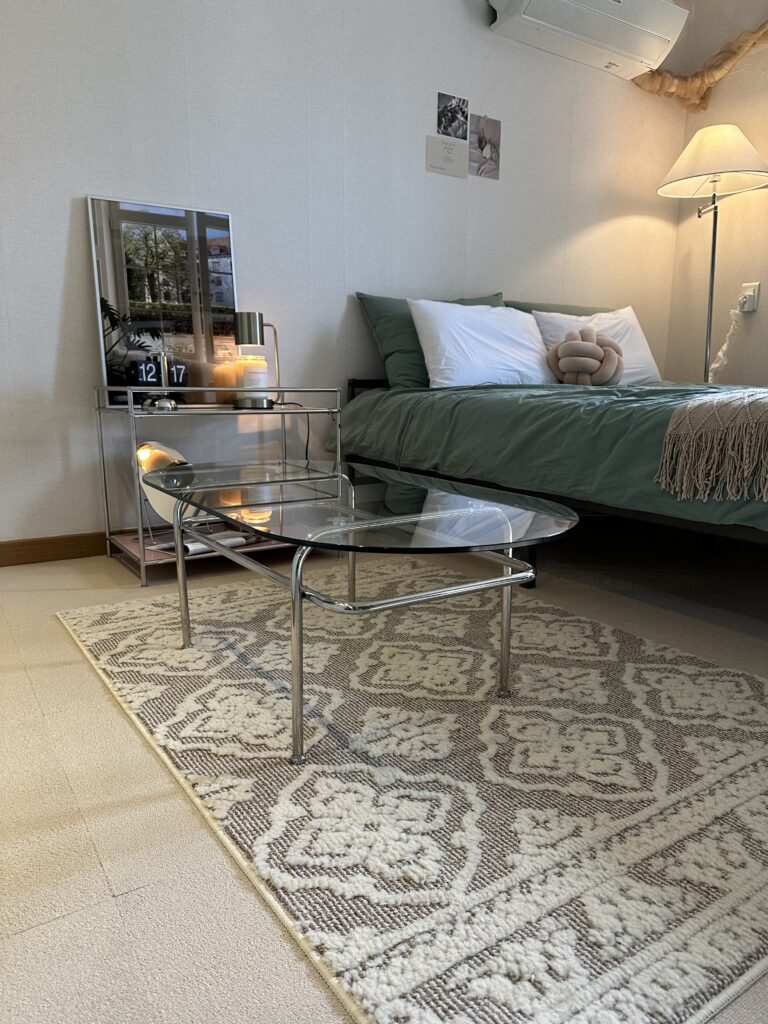
Warm, adjustable lighting from multiple sources allows you to match light levels to your emotional state. For instance, during depressive episodes when you need energy, you can increase brightness. Conversely, during heightened anxiety when you need calming, you can dim everything down.
Implementation for Your Small Bedroom Design
What to buy:
- 2-3 table or floor lamps with warm-toned LED bulbs (2700K-3000K color temperature)
- At least one lamp with a dimmer switch
- Budget option: IKEA basic lamps ($10-15 each)
- Investment option: Smart bulbs you can control from your phone ($20-30 each)
Where to place them:
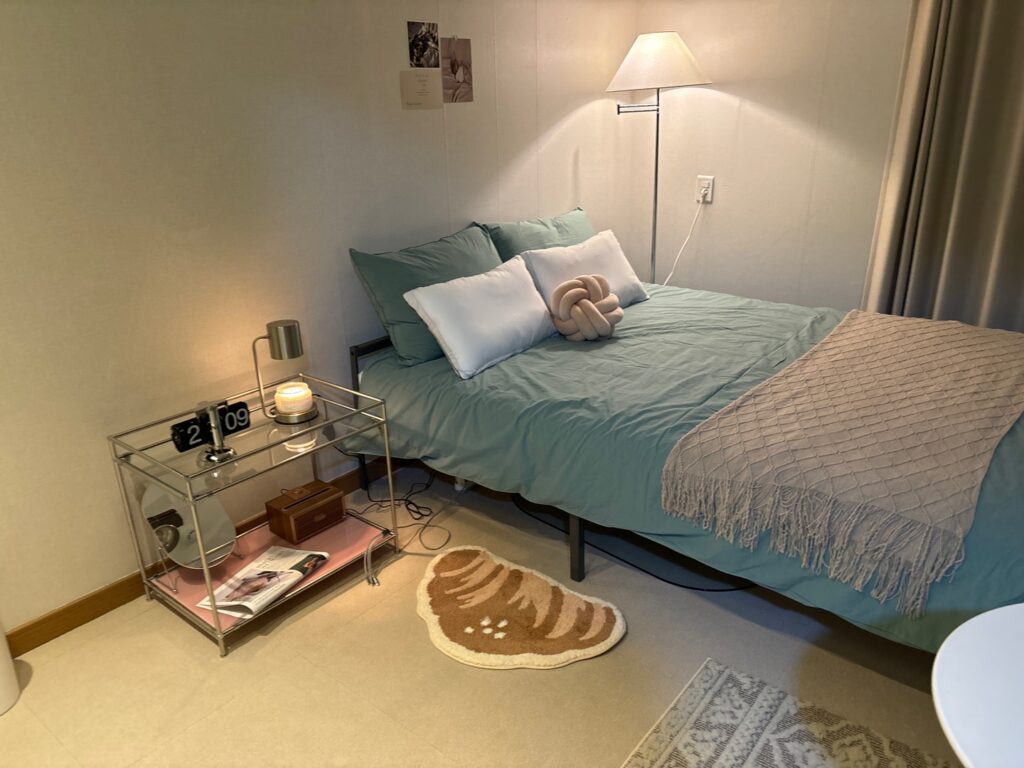
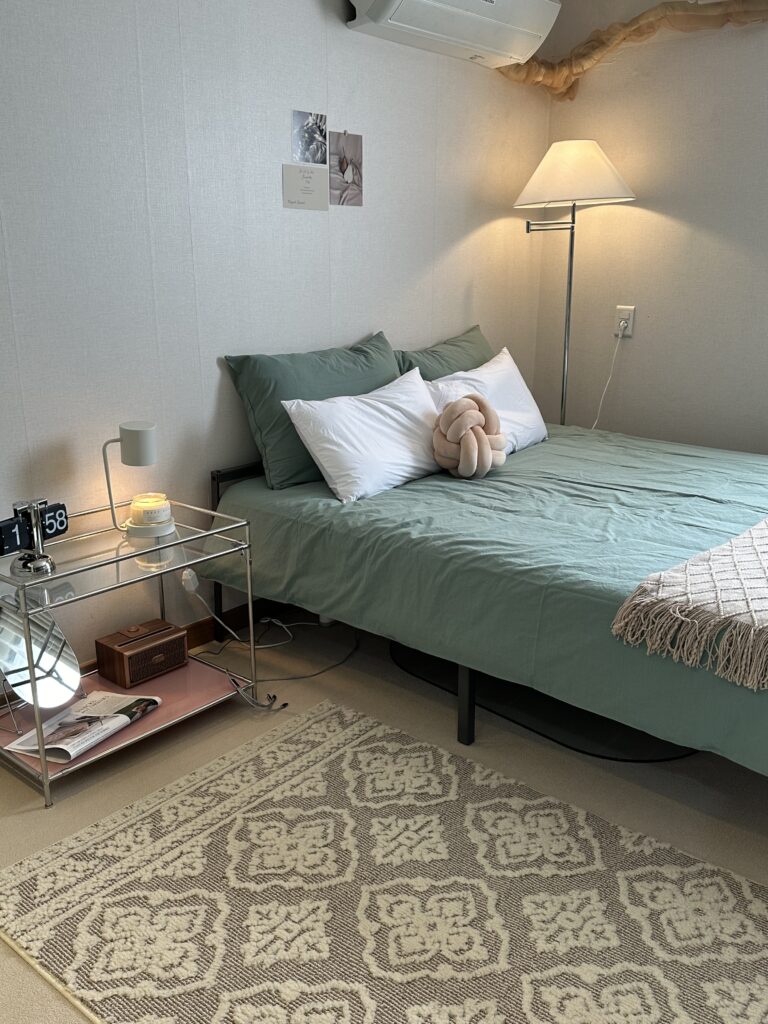
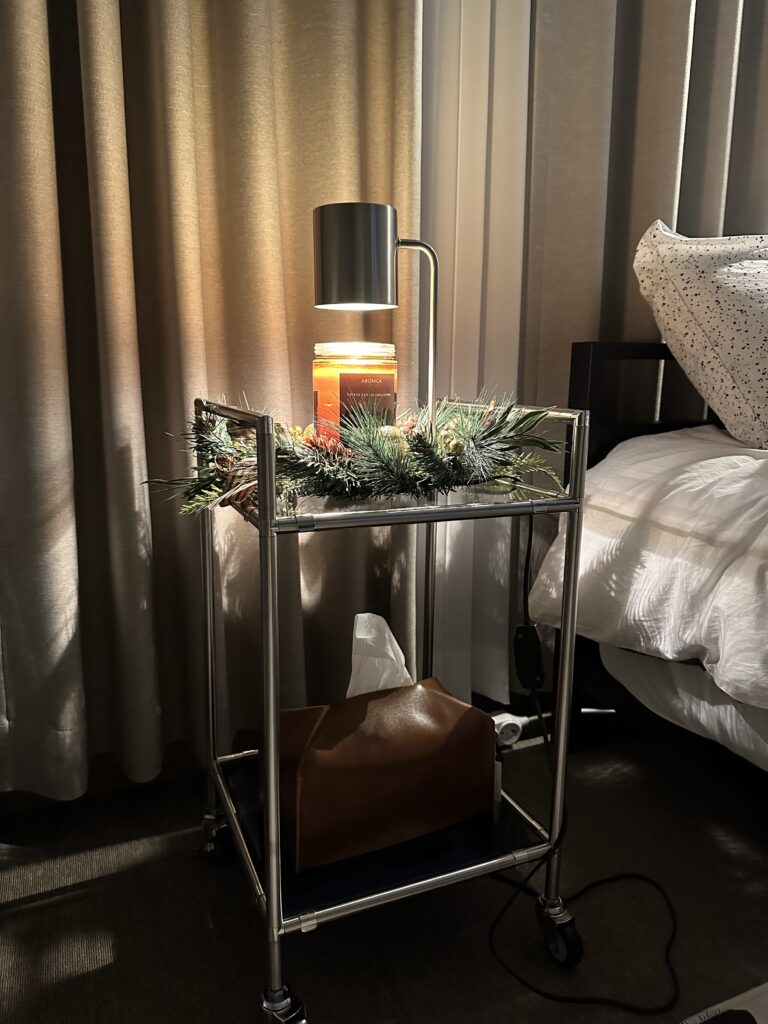
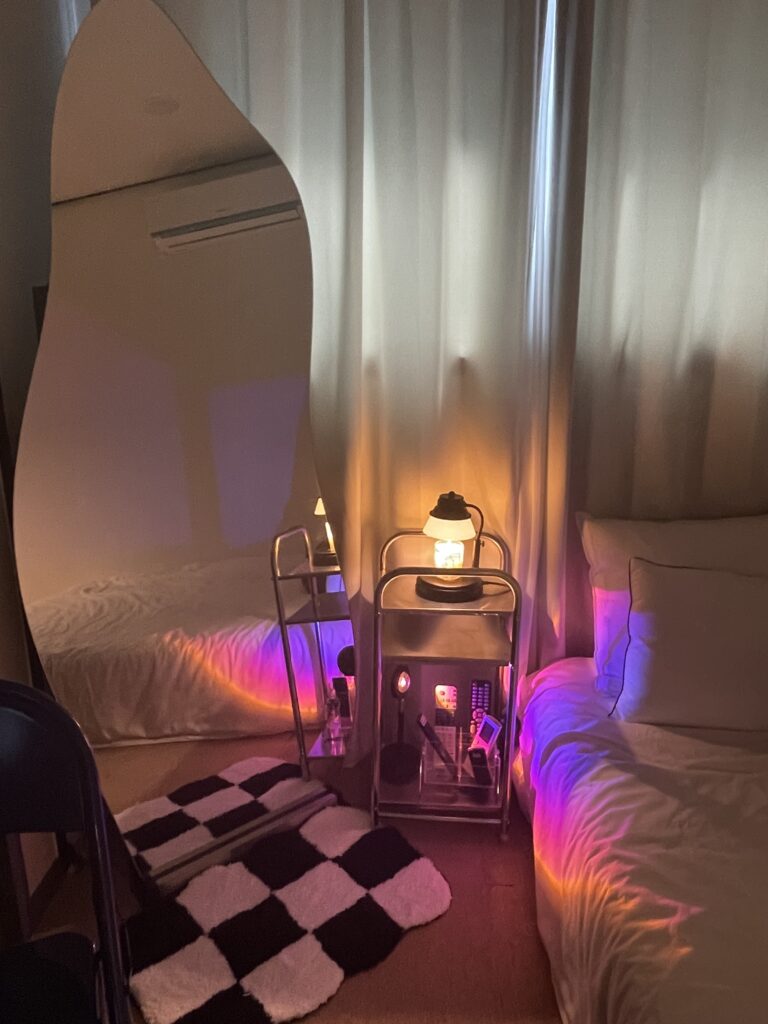
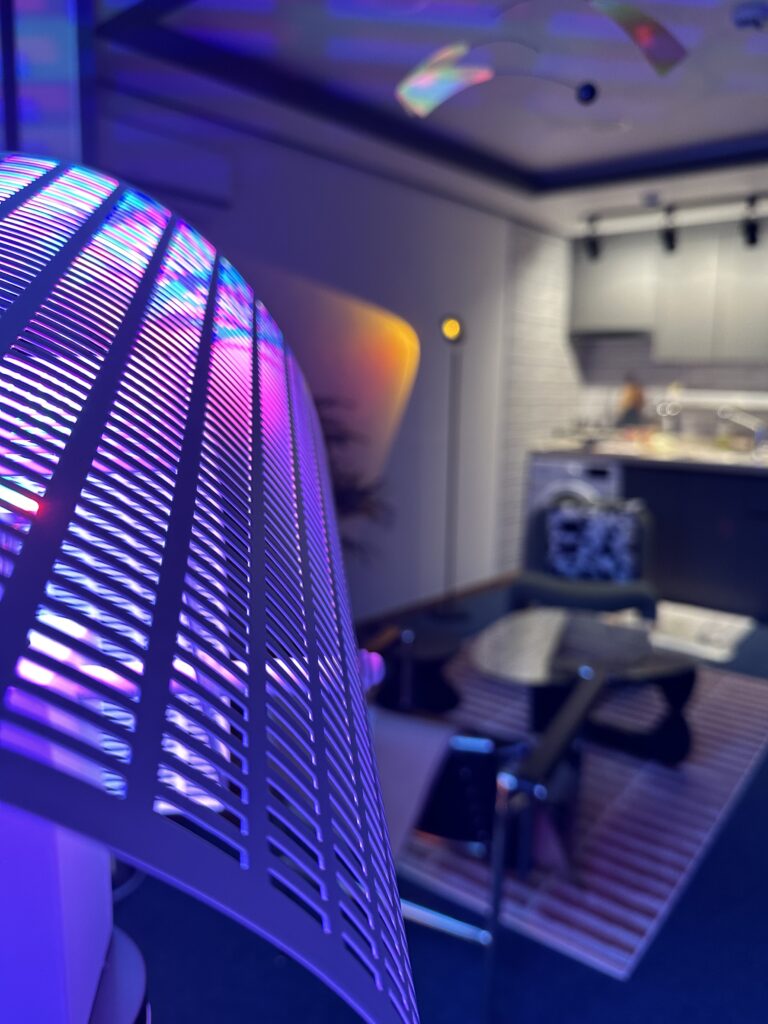
- Bedside lamp – For reading, winding down, emergency middle-of-night grounding
- Corner floor lamp – Creates ambient lighting, eliminates harsh shadows
- Desk/dresser lamp – Task lighting that doesn’t require overhead
Real Results from My Experience
Pro tip from my Airbnb experience: Guests consistently mentioned “perfect lighting” in reviews. Furthermore, I literally cannot have too many lamps in a space. The ability to control brightness and warmth makes people feel safe and comfortable.
My specific setup: Three lamps total in my temple room. Each serves a different function. Together they create layered lighting that adapts to my needs throughout the day.
Change #2: Create Your Panic-Safe Corner
The Problem: No designated space for emotional regulation
The Cost: $0-40
Time to Implement: 30 minutes
Impact Level: CRITICAL
Why This Small Bedroom Design Element Matters
During BPD episodes, having a specific physical location that signals “you’re safe here” provides crucial grounding. Importantly, this isn’t about hiding from problems—it’s about having a reliable place to regulate emotions before they escalate.
After my breakup, I learned the hard way that I’d been using another person as my emotional safe zone. When she left, I had nowhere to retreat during panic attacks. Subsequently, creating a physical panic-safe corner gave me something stable when everything else felt uncertain.
Creating Your Safe Space Today
What you need:
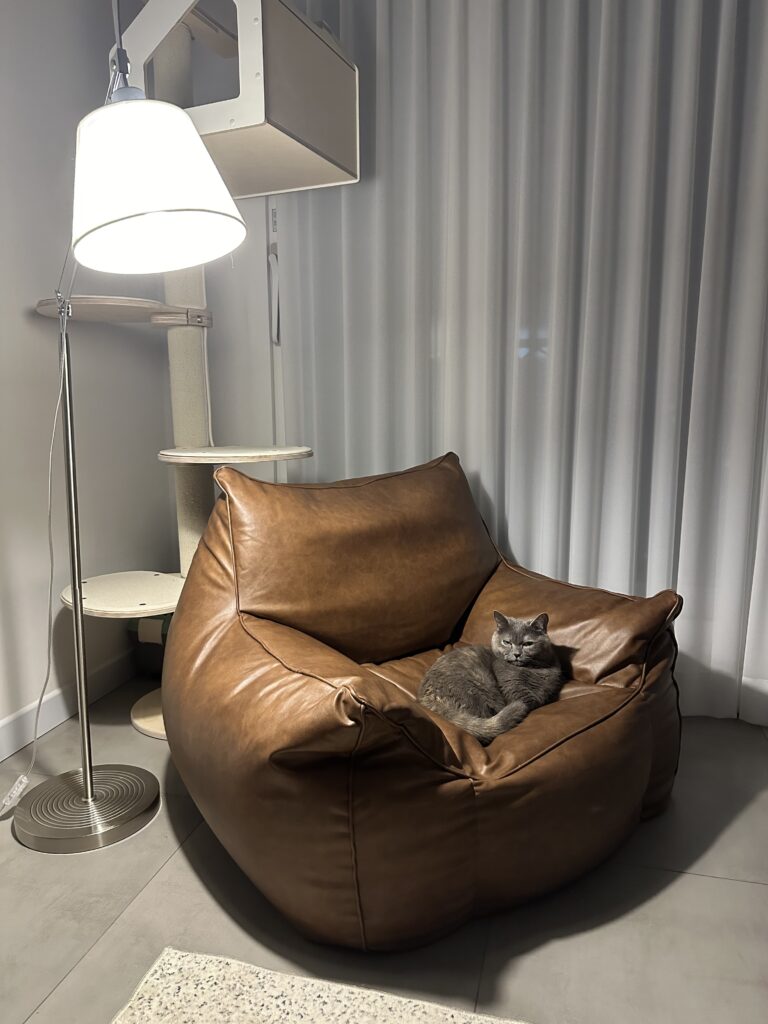
- One comfortable seating option (beanbag, floor cushion, or chair you already own)
- One personal lamp (even if you’re using the one from Change #1)
- Something to occupy your hands during anxiety (stress ball, textured blanket, fidget toy)
- Optional: small speaker for calming music or white noise
Where to create it: Pick the corner that feels most protected—ideally where your back is against two walls and you have a view of the door. Specifically, this addresses primal safety needs that matter when your nervous system is activated.
What Makes It “Panic-Safe”
Essential elements that define this Small bedroom design feature:
- Consistent location (same spot every time)
- Sensory comfort (soft textures, warm light)
- No demands (no phone charging here, no work, no “shoulds”)
- Easily accessible (nothing blocking the path when you need it)
My setup: Simple beanbag, warm lamp, speaker with pre-loaded calming playlist, and space for coffee. Nothing fancy, but it became my sanctuary during the darkest periods.
Related: Creating Healing Spaces in Small Apartments explains the full psychology behind panic-safe corners
Small Space Hosting Secrets: Design Psychology That Gets 5-Star Reviews – How I applied these principles to Airbnb success
Small Space Design Ideas: Complete Guide to Creating Calming Apartments – Room-by-room therapeutic design guide
Change #3: Minimize Visual Clutter in Your Line of Sight
The Problem: Visual chaos creates mental chaos
The Cost: $0-30
Time to Implement: 1-2 hours
Impact Level: MEDIUM-HIGH
The Psychology Behind This Small Bedroom Design Change
When you have BPD, your brain is already processing emotional information at overwhelming intensity. Visual clutter adds another layer of stimulation that your nervous system has to manage. In fact, research from Princeton Neuroscience Institute shows that physical clutter competes for attention and reduces cognitive performance.
This doesn’t mean minimalism for aesthetics. Rather, it means creating visual calm specifically in your primary line of sight—what you see when lying in bed or sitting in your panic-safe corner.
Practical Decluttering for Small Bedroom Design
Focus on three zones:
- What you see from your bed – Clear surfaces on bedside tables, organized (or hidden) charging cables, minimal wall decorations directly in view
- What you see from your panic-safe corner – Remove any items that create visual noise or remind you of unfinished tasks
- Floor space – Create clear pathways with nothing to trip over or navigate around
Storage Solutions That Actually Work
Storage options for this small bedroom design change:
- Closed baskets or bins for items you use but don’t need visible
- Wall-mounted shelves to get things off surfaces
- Drawer organizers (even cheap cardboard boxes work)
- Under-bed storage containers
Important distinction: This isn’t about getting rid of everything. Keep what you love. Just organize it so your primary visual fields are calm. Similarly, my temple training taught me: if you don’t use it regularly, store it out of sight.
The Reality of Maintaining Organization
Real talk: I have BPD and ADHD, so “organized” happens in waves. Nevertheless, the key is making it easy to reset. I use open baskets—when things get messy, I can quickly toss items into baskets rather than having complex organizational systems I’ll never maintain.

Change #4: Add One Significant Natural Element
The Problem: Disconnection from nature increases stress
The Cost: $10-25
Time to Implement: 10 minutes
Impact Level: MEDIUM
The Science Behind This Small Bedroom Design Element
Biophilic design—incorporating natural elements into spaces—reduces cortisol levels and promotes emotional regulation. Furthermore, studies published in Environmental Health Perspectives show that even minimal nature exposure improves mental health outcomes.
You don’t need to create an indoor jungle. Instead, one significant natural element is enough to shift the atmosphere from clinical to calming.
Adding Natural Elements to Your Small Bedroom Design for Mental Health
Option 1: Nearly Indestructible Plants If you’re like me (BPD + ADHD = inconsistent plant care):
- Snake plant – Survives weeks of neglect, improves air quality
- ZZ plant – Tolerates low light and forgotten watering
- Pothos – Grows even when you ignore it, looks beautiful trailing
Cost: $10-20 at most grocery stores or home improvement stores
Option 2: Wall-Mounted Natural Element My current favorite: staghorn fern mounted on wood. It doesn’t need a pot, can be hung like art, and my inconsistent watering habits don’t kill it. Specifically, I style mine to look like natural wall art.
Option 3: Natural Materials If plants feel like too much responsibility:
- Large piece of driftwood or interesting branch ($0 if you find it)
- Natural fiber rug (even a small one makes a difference)
- Wooden shelving or accessories
- River rocks or stones in a bowl
Placement Strategy
Where to place it: Near your panic-safe corner or where you see it first thing in the morning. Notably, the visual reminder of nature provides subtle grounding throughout the day.
My honest experience: A rainstorm once killed my entire plant collection after I impulsively moved them all outside. Now I stick with wall-mounted or truly low-maintenance options. Progress over perfection.
[Image: Wall-mounted staghorn fern styled as natural art]
Alt text: BPD-friendly bedroom featuring wall-mounted staghorn fern as low-maintenance natural element
Change #5: Introduce Intentional Scent
The Problem: Smell is the fastest route to emotional memories (good and bad)
The Cost: $8-15
Time to Implement: Immediate
Impact Level: MEDIUM
Understanding Scent in Bedroom Design for Mental Health
Scent bypasses your cognitive processing and goes straight to the limbic system—the emotional center of your brain. Consequently, smell can trigger emotional regulation faster than visual or auditory cues. According to research in Chemical Senses journal, olfactory stimuli directly influence mood and stress levels.
For BPD specifically, creating positive scent associations with your safe space helps signal to your nervous system that you’re entering a calming environment.
Implementing Scent in Your Space
What works for emotional regulation:
- Lavender – Classic calming scent, reduces anxiety
- Vanilla – Promotes feelings of comfort and safety
- Cedar/pine – Grounding, reminds brain of nature
- Fresh grass – My personal favorite, feels clean without being chemical
What to avoid:
- Artificial fragrances that smell “fake”
- Overpowering scents that become overwhelming
- Anything that reminds you of stressful places or people
Delivery Methods for Small Bedroom Design
Delivery options:
- Candles – My preference, adds visual warmth too ($8-15)
- Essential oil diffuser – More control over intensity ($15-25)
- Reed diffusers – Constant subtle scent ($10-20)
- Fresh flowers or herbs – Natural and temporary ($5-10)
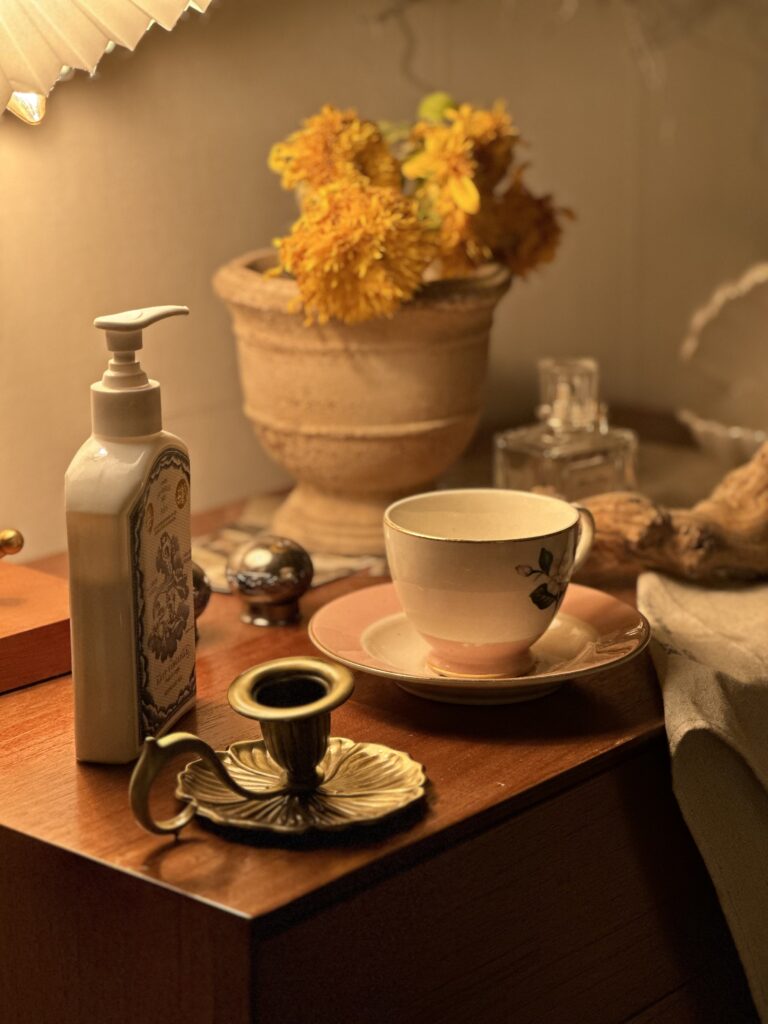
Warning from experience: If you love scents like I do, this can become an expensive rabbit hole. For instance, I got obsessed with high-end aromatherapy (Maison Christian Dior’s Eden-roc captures luxury summer vacation vibes). However, you can start with basic drugstore candles and upgrade later if it helps.
Pro tip: Use the same scent consistently in your bedroom design for mental health. Your brain will start associating that smell with safety and calm, making it work even faster over time.
The Combined Effect: How These Small Bedroom Design Changes Work Together
Here’s what surprised me most: these five small bedroom design changes work synergistically. Warm lighting makes the natural element more visible and calming. Additionally, the panic-safe corner feels more effective when it has good lighting and intentional scent. The reduced clutter helps you actually notice and appreciate the plant.
Within one week of making all five changes, I noticed:
- Falling asleep 30-40 minutes faster
- Fewer middle-of-night anxiety spirals
- Actual desire to spend time in my room (instead of avoiding it)
- Lower baseline anxiety throughout the day
These weren’t placebo effects. My nervous system genuinely responded to BPD-friendly bedroom design changes that supported rather than sabotaged my emotional regulation.
How This Fits Into Your Whole Home Design
These bedroom changes are part of a larger approach to small space design that supports mental wellness. Once you’ve transformed your bedroom, you might explore our guides on guest bedroom transformations, small space storage solutions, and creating calming living spaces. Each room in your home can either support or sabotage your wellbeing—we’re here to help you choose support.
What This Looks Like in Practice: My Real Setup
I’m writing this from my 100-square-foot temple room, where these principles create a genuinely healing space:
Lighting: Three lamps total. Overhead light hasn’t been turned on in weeks.
Panic-safe corner: Beanbag against the wall, lamp, speaker nearby, nothing else required.
Clutter: Minimal possessions (temple life forces this). What I have serves a purpose or brings joy.
Natural element: Wall-mounted staghorn fern that survives my inconsistent care.
Scent: Grass-scented candle I light during evening meditation.
Total cost to recreate this: Under $100 if starting from scratch, under $50 if you already have some lamps.
Budget Breakdown: Three Versions
$0 Version (Reorganize What You Have)
- Use existing lamps, just move them strategically
- Create panic-safe corner with items you own
- Declutter for free (just time investment)
- Find natural elements outside (branches, interesting rocks)
- Use scents you already have or skip for now
Total: $0 + 2-3 hours
$50 Version (Smart Additions)
- 1-2 new warm-bulb lamps ($20-30)
- One low-maintenance plant ($10-15)
- Simple candle or diffuser ($8-12)
- Storage basket for decluttering ($5-10)
Total: $50-70 + 2-3 hours
$100 Version (Optimal Setup)
- 3 lamps with dimmers ($40-60)
- Two plants or one statement natural element ($20-30)
- Quality candle or essential oil setup ($15-25)
- Multiple storage solutions ($15-20)
- Comfort item for panic corner ($15-20)
Total: $90-120 + 3-4 hours
All three versions work. Start where you are financially and emotionally. You can always add more later.
Common Mistakes to Avoid
Mistake #1: Trying to do everything at once
BPD brain loves intensity, but overwhelming yourself with changes backfires. Pick 2-3 changes this week. Add more later.
Mistake #2: Copying Pinterest exactly
Those perfect bedrooms don’t show the laundry pile or the days depression makes organizing impossible. Design for your real life, not Instagram.
Mistake #3: Neglecting the panic-safe corner
This feels unnecessary until you desperately need it. Create it before crisis hits.
Mistake #4: Buying expensive items first
Test concepts with budget versions. Upgrade only what actually helps your specific nervous system.
Mistake #5: Forgetting maintenance
Whatever you implement needs to be sustainable during depressive or manic episodes. Choose simple systems you’ll actually maintain.
Your Action Plan for Today
Don’t just read this and move on. Pick ONE change to implement in the next hour:
If you have 15 minutes: Move existing lamps to create better lighting, or designate your panic-safe corner location.
If you have 1 hour: Declutter your primary line of sight, or go buy one low-maintenance plant.
If you have 2-3 hours: Implement 2-3 changes that feel most urgent for your current needs.
If you have this weekend: Do all five changes systematically, one at a time.
The goal isn’t perfection. The goal is creating an environment that stops working against you and starts supporting your emotional regulation.
Beyond Your Bedroom: Whole-Home Approach
These five BPD-friendly design principles apply to every space you inhabit. Once you’ve transformed your bedroom, consider:
- Living room: Create meditation zones with similar lighting and natural elements
- Kitchen: Organize for mental clarity and accessible healthy eating
- Bathroom: Add spa elements for self-care routines
Detailed guidance: Creating Healing Spaces in Small Apartments: My Complete Guide covers room-by-room therapeutic design
Frequently Asked Questions
Q: Do I need to make all 5 changes at once?
A: No! Start with 1-2 changes that address your biggest sleep issues. Most people see improvement with just the lighting change alone.
Q: Will these work in a rental where I can’t paint or make permanent changes?
A: Yes, all 5 changes are completely rental-friendly and reversible.
Q: What if I can’t afford even the $50 version?
A: Start with the $0 version using items you already own. Rearranging existing lamps and decluttering costs nothing but provides significant benefits.
Q: How quickly will I notice better sleep?
A: Most people report falling asleep faster within 3-5 days. Full benefits typically appear within 2 weeks.
The Deeper Truth
Making these bedroom changes isn’t about having a pretty space. It’s about acknowledging that you deserve an environment that supports your healing rather than undermines it.
When I was managing severe BPD in that cramped dorm room, I didn’t realize I was suffering from environmental triggers on top of emotional ones. Changing my physical space didn’t cure my BPD—nothing does. However, it removed unnecessary stressors and gave my nervous system a fighting chance.
Your bedroom should be your sanctuary, not another source of anxiety. These five changes are how you start reclaiming that space.
Now go turn off that overhead light and add a lamp. Your nervous system will thank you.
Ready to improve your sleep and mental wellbeing?
📥 Free Download: “Small Bedroom Sleep Sanctuary Checklist” – Track your progress through all 5 changes with our printable guide.
📧 Join Our Newsletter: Get weekly small space design tips that support better sleep and mental health.
Next on the Blog:
- Best Furniture for Small Guest Bedrooms – Space-saving pieces under $500
- Color Psychology for Better Sleep – What actually works in bedrooms
💬 Share Your Experience: Which change made the biggest difference for your sleep? Comment below – I respond to every question about bedroom design and sleep improvement.


One Comment
Comments are closed.