Best Storage for Small Apartments: 7 Solutions Under $100 (Minimal Maximalist Tested)

Affiliate Disclosure: This post contains affiliate links. I earn a commission if you purchase through my links at no extra cost to you. I only recommend products I’ve actually used in my 400 sq ft apartment while managing BPD and living a minimal maximalist lifestyle.
[Read my full disclosure policy →]
I live in 400 square feet. I own way more than minimalists would approve of—multiple bedding sets, a coat collection, backup skincare, seasonal decor. But I also donate bags of stuff every few months because if I haven’t used it in six months, it’s taking up mental space I can’t afford.
The trick? Storage systems that make it easy to cycle through abundance without creating chaos.
I’ve tested dozens of organisers over two years and seven apartment moves. Some failed spectacularly (looking at you, storage ottoman that grew mildew). These 7 survived my BPD chaos cycles, ADHD object permanence issues, and constant buy-and-release rotation.
All under $100. Most under $30. Zero drilling required.
Here’s what actually works when you love abundance but need visual calm.
Quick Comparison: Best Storage for Small Apartments
|
Product |
Price |
Best For |
Key Benefit |
|
Linen Storage Box |
~$30 |
Seasonal bedding |
Keeps duvets dust-free, stackable |
|
Compression Bags |
~$25 |
Winter clothes |
Saves 70% closet space |
|
Rolling Storage Cart |
~$30 |
Kitchen/bathroom |
Fits in 6-inch gaps |
|
Magnetic Shelf |
~$25 |
Laundry area |
Uses vertical space on the washing machine |
|
Cable Management Box |
~$12 |
Desk/nightstand |
Hides power strip chaos |
|
Over-Door Hanger |
~$18 |
Entryway |
No drilling, holds 5+ items |
|
Fabric Storage Cubes |
~$25 |
Closet/shelves |
Collapsible, theme-friendly |
The 7 Best Storage Solutions for Small Apartments
1. Linen Storage Box with Clear Window — Best for Seasonal Bedding
Price: ~$37.99 for 2 packs
Best for: Anyone who switches bedding seasonally or has allergies
I change my duvet every season—light cotton for summer, heavy down for winter. Before these boxes, clean bedding sat in closet corners collecting dust and wrinkles.
What makes it work:
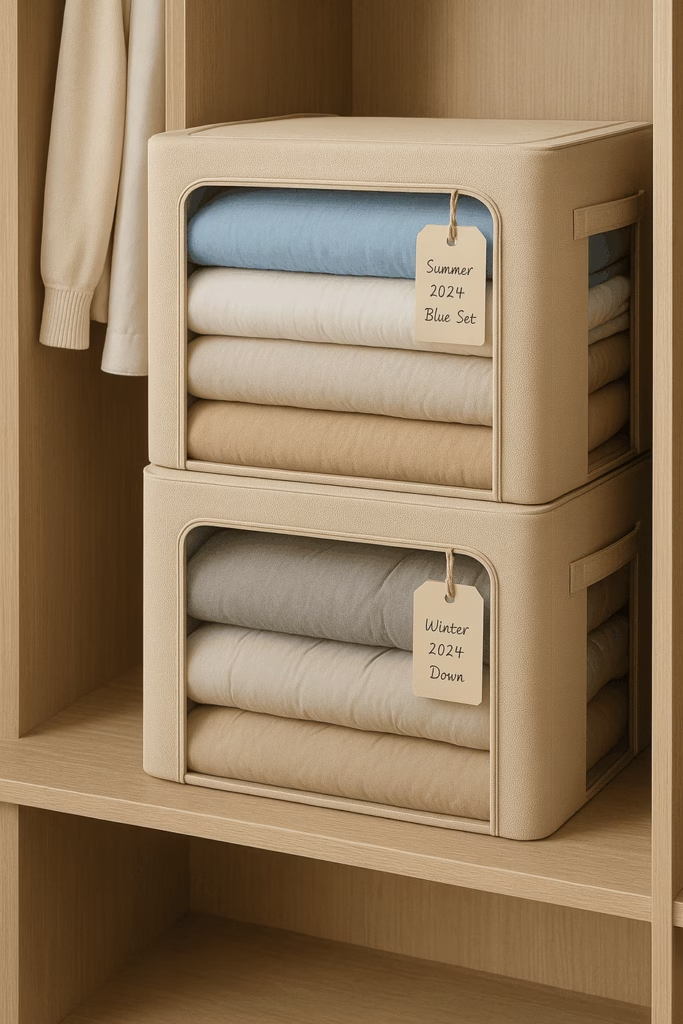
- Clear window top = see what’s inside without opening
- Stackable design = uses vertical closet space
- Handles make seasonal swaps easy
- Protects from dust (critical for allergies)
- Frees closet space for current-season clothes
How I use it: Every time the seasons change, I wash everything, fold it (mostly properly), and store it with a handwritten tag: “Summer 2024 – Blue Set.” The tags save my ADHD brain from opening every box to find what I need.
Pros:
✅ Stackable (I have 3 on top of each other)
✅ Clear window eliminates guessing games
✅ Protects bedding from dust and moisture
✅ Sturdy handles for easy pull-down
✅ Lets me keep 4-5 bedding sets without closet chaos
Cons:
❌ Takes more space than vacuum bags
❌ Only works if you have closet shelf space
❌ Fabric can rip if overstuffed (I learned this with a king comforter)
My verdict: This is the organiser that made me realise I could keep abundance without chaos. Best overall for closet organisation.
→ Check current price on Amazon
2. Hanging Compression Garment Bags — Best Budget Space-Saver
Price: ~$22.99 for 2-packs
Best for: Seasonal wardrobes, bulky coats, anyone with limited closet space
I used to own 10+ winter coats because I love outerwear and I live in brutal winters. I’m not getting rid of them. These hanging compression bags let me keep my collection without sacrificing daily closet space.
What makes it work:
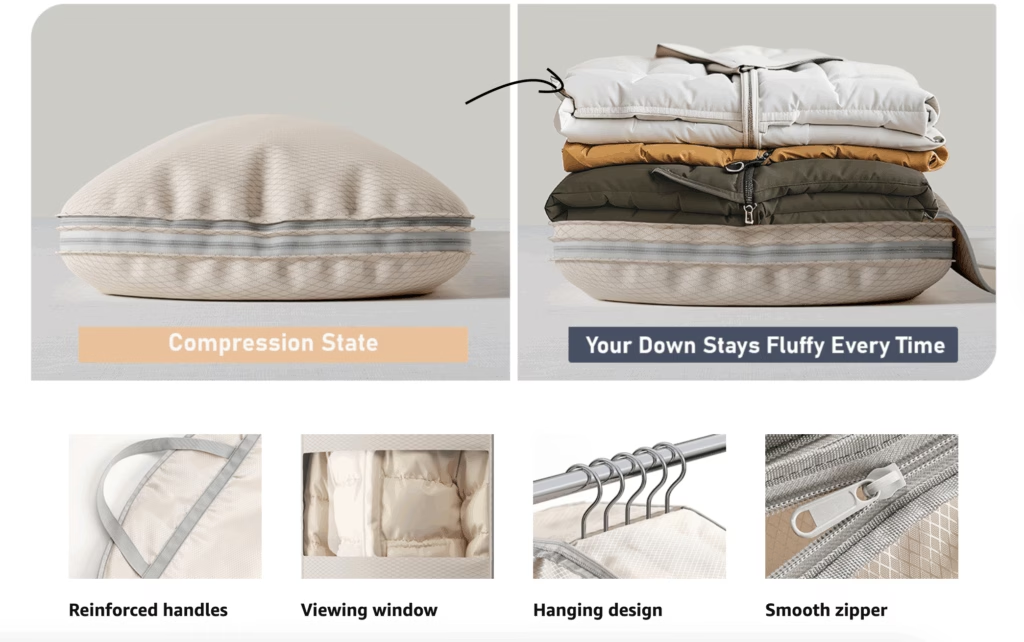
Hangs directly in the closet (no vacuum needed)
Zip compression shrinks bulky items by 50-60%
Clear window = see what’s stored inside
Protects from dust and moisture
Keeps coats wrinkle-free (unlike vacuum bags that flatten everything)
How I use it:
Every spring: pull out winter coats → wash/dry clean → hang in compression bags → zip closed → hang in back of closet or at parents’ house. No vacuum. No under-bed storage. Just hang and forget until next winter.
Pros:
✅ No vacuum required (just zip and compress)
✅ Hangs in closet (uses vertical space)
✅ Clear window shows contents
✅ Keeps coats on hangers (no wrinkles)
✅ Easy to access when seasons change
✅ Protects from dust and moths
Cons:
❌ Requires closet rod space (won’t work for under-bed storage)
❌ Not as extreme compression as vacuum bags (but less hassle)
❌ Can only fit 2-3 coats per bag
❌ Zipper can snag on bulky items if you’re not careful
My verdict: I tried vacuum compression bags and hated them—too much work, wrinkled everything, required hunting for a vacuum. These hanging bags are the lazy person’s solution. Just zip and hang. Best for people who hate complicated storage systems.
→ Check current price on Amazon
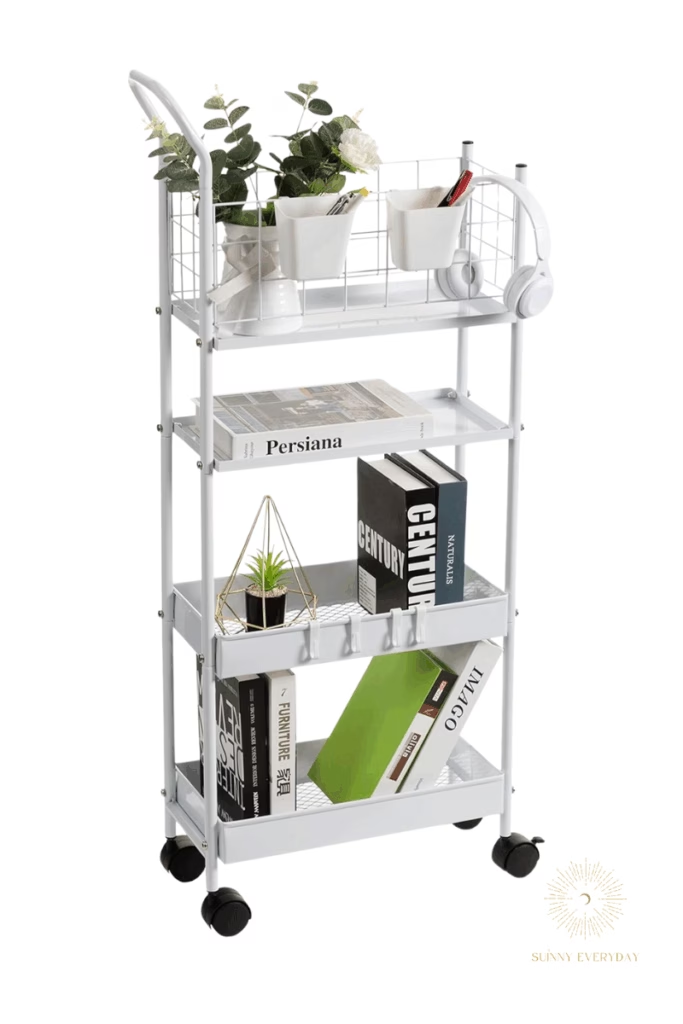
3. Slim Rolling Storage Cart (3-4 Tier) — Best Multi-Room Solution
Price: ~$22.99
Best for: Tiny kitchens, bathrooms, anyone whose obsessions change monthly
My apartment kitchen is “one person can stand in it comfortably” tiny. This cart fits in the 6-inch gap beside my fridge and holds oils, vinegars, spices, and my fancy salt collection.
What makes it work:
- Fits in impossibly small gaps (6 inches)
- Wheels = rolls between rooms as needs change
- Multiple tiers = vertical storage
- Currently kitchen, but I’ve used it in the bathroom for skincare
- Moves with my life phases (cooking era → skincare era → reading phase)
How I use it: Right now it’s kitchen storage. But when I got obsessed with 10-step skincare, I rolled it to the bathroom. When I purge and start a new phase, the cart adapts. It’s not tied to one function.
Pros:
✅ Actually fits 6-inch gaps (measured)
✅ Wheels make cleaning behind easy
✅ Looks clean and minimal (I have white)
✅ Multi-room flexibility
✅ No assembly stress
Cons:
❌ Some tiers are shallow (tall bottles can tip)
❌ Can scratch floors without felt pads
❌ Not stable with very heavy items
My verdict: This is the “you don’t know you need it until you have it” organiser. Best for flexible use across rooms.
→ Check current price on Amazon
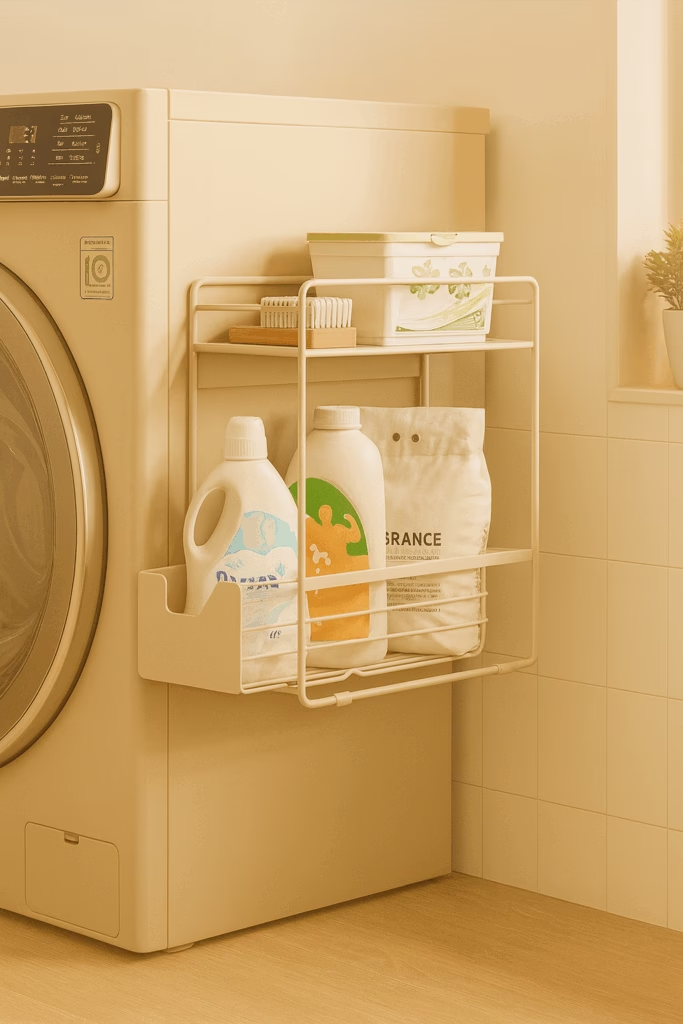
4. Magnetic Shelf for Washing Machine — Best Vertical Space Hack
Price: ~$39.99
Best for: Anyone with a washing machine and wasted vertical space
My laundry area is a bathroom corner. Before this shelf, detergent bottles lived on the floor or stacked precariously on top of the machine.
What makes it work:
- Magnetic = sticks to the washing machine side
- Zero installation (no drilling, no damage)
- Creates instant storage from unused vertical space
- Strong enough for 6+ bottles
- Makes laundry 50% less annoying because everything’s right there
How I use it: Slap it on the washing machine. Drop all laundry products on the shelf. Done. I own way more laundry products than minimalists approve of (colour detergent, white detergent, fabric softener, wool wash, stain remover, bleach). This shelf keeps my collection visible without floor clutter.
Pros:
✅ Uses completely wasted space
✅ No drilling or damage
✅ Holds 15+ lbs easily
✅ Moves if you move
✅ Makes laundry area look intentional
Cons:
❌ Only works on metal machines (check first)
❌ Can slide down if overloaded (push back up or maybe keep it simple)
❌ Won’t hold gallon-sized containers
My verdict: $40 to eliminate floor clutter and speed up laundry? Instant yes. Best renter-friendly solution.
→ Check current price on Amazon
5. Cable Management Box — Best Chaos Eliminator Under $15
Price: ~$19.99
Best for: Desks, nightstands, anywhere cables exist
I have too many devices: phone, laptop, tablet, headphones, camera batteries, and a portable charger. My desk looked like a tech graveyard with tangled cables everywhere.
What makes it work:
- Hides power strips and cable tangles
- Openings on each end for cable feed-through
- Eliminates visual chaos instantly
- Available in white or black (I have both for different rooms)
- Reduces fire hazard from tangled cords
How I use it: The Power strip goes inside the box. Charging cables feed through side openings. The box sits under the desk or on the nightstand. Visual chaos eliminated, but everything’s still accessible.
Pros:
✅ Makes space feel 10x more organized
✅ Easy to access for plug/unplug
✅ Actually looks intentional
✅ Hides ugliest part of modern life
✅ Comes in multiple colours
Cons:
❌ Only fits standard power strips (check dimensions)
❌ Can heat up if maxed out
❌ Doesn’t fix routing to the box
My verdict: $19 to go from “tech chaos” to “clean desk”? I bought three. Best under $20 purchase.
→ Check current price on Amazon
6. Over-the-Door Coat Hanger — Best for Apartments Without Entryways
Price: ~$17.99
Best for: Small apartments without entryway closets, daily-use items
I don’t have an entryway closet. Most Korean apartments have tiny entryways. I was throwing coats on chairs, bags on the floor, scarves wherever.
What makes it work:
- Hangs on any door (no drilling, no damage)
- Multiple hooks for coats, bags, scarves
- Uses vertical door space that’s wasted
- Perfect for renters
- Easy to relocate if you rearrange furniture
How I use it: Hangs on the bedroom door. Holds the 3-4 coats I’m actually wearing this month (the rest are in compression bags). Everything I grab on my way out is right there.
Pros:
✅ Zero installation
✅ Holds 5+ items without sagging
✅ Uses wasted door space
✅ Perfect for renters
✅ Prevents “coat on the chair” chaos
Cons:
❌ Only works on doors that fully open
❌ Can scratch paint without felt pads
❌ Not pretty, purely functional
My verdict: Simple, cheap, effective. Best no-drill solution for entryways.
→ Check current price on Amazon
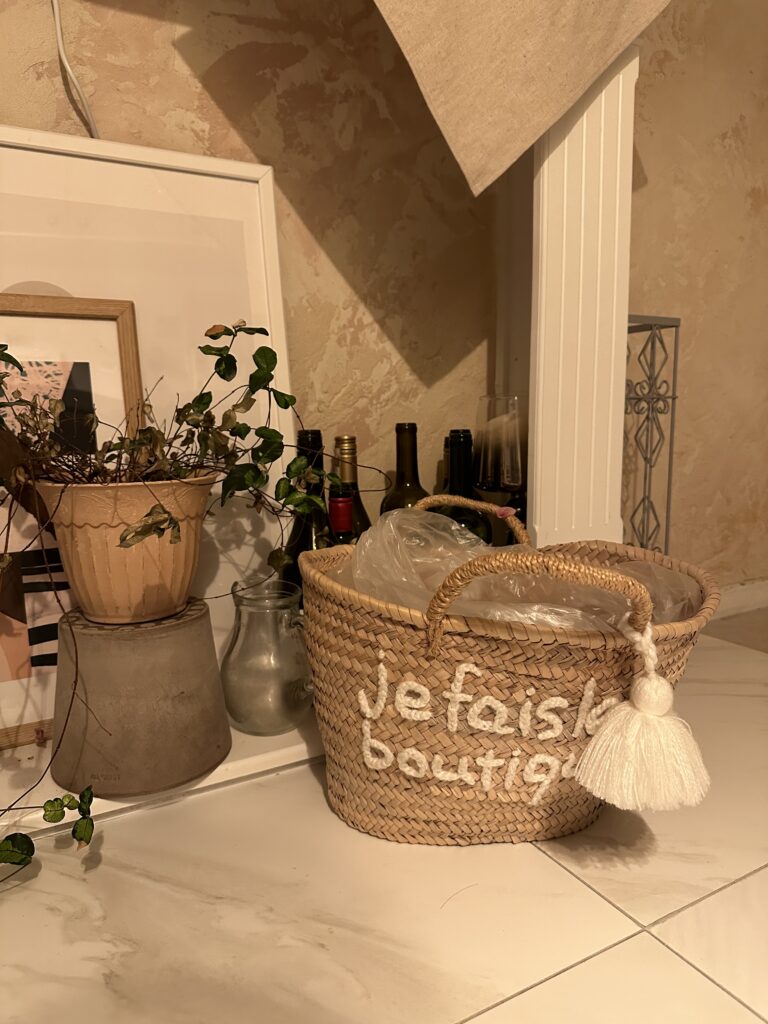
7. Seagrass Woven Collapsible Baskets (3-pack) — Best for Open Shelving
Price: ~$32 for 3-pack
Best for: Open closet shelves, anyone who changes aesthetic themes
I have open shelving in my closet. Everything visible had to look cohesive or my BPD brain fixates on visual chaos.
What makes it work:
Natural seagrass = looks intentional, not cheap
Collapsible when not in use
Neutral aesthetic works with any colour scheme
Easy to empty, donate contents, repurpose basket
Not tied to one category forever
How I use it:
One holds accessories, one holds workout items like massage balls, and one holds off-season items. When I purge a category (like my brief running phase), I empty the basket and repurpose it for something new. Sometimes I place a plastic bag inside and use it as a trash bin in my bedroom for dry trash. The natural texture adds warmth to my beige/pink/black theme without looking cluttered.
Pros:
✅ Actually looks expensive (natural materials > cheap fabric)
✅ Collapsible for storage when not needed
✅ Easy to cycle through items during purges
✅ Versatile across all rooms (closet, bathroom, living room)
✅ Neutral colour works with any aesthetic phase
✅ Sturdy without needing cardboard inserts
Cons:
❌ More expensive per basket than fabric cubes
❌ Can snag delicate fabrics (rough seagrass texture)
❌ Only comes in natural colour (no theme matching)
❌ Heavier than fabric alternatives
My verdict: These are the “gateway organiser” for people who want storage that doesn’t scream “I’m organising.” Natural materials make chaos look intentional. Best for an aesthetic organisation that photographs well.
→ Check current price on Amazon
My #1 Pick for Small Apartments: Hanging Compression Bags
After testing all seven across two years and multiple apartment moves, my top recommendation is the $25 hanging compression bags.
Why?
Because they solved my most expensive problem (no closet space) without requiring me to purge my coat collection. They work in every apartment regardless of layout. And unlike vacuum compression bags, they require zero effort—just zip and hang.
The data:
Freed up 50% of my closet rod space (10+ coats now take up 3-4 hangers worth of space)
Eliminated “no room for new stuff” frustration
Travel luggage stays ready instead of being a winter coat storage unit
Survived 7 apartment moves without damage
No vacuum required = actually use them consistently (tried vacuum bags, abandoned them after one season)
The real reason they win: I actually maintain this system during depressive episodes. Vacuum bags required energy I didn’t have. These just hang there, doing their job, requiring nothing from me.
Runner-up: Cable management box ($12). Boring but transformed every desk and nightstand for pocket change.
The Minimal Maximalist Philosophy Behind These Choices
Here’s the thing about me and organisation: I’m obsessed with buying beautiful storage solutions, using them religiously for three months, then donating half of what’s inside them because I’ve moved on to a new phase of life.
I call myself a minimal maximalist.
I love collecting things—vintage coffee mugs, books I’ll probably never read, skincare products that promise miracles. But I also have zero attachment to keeping them forever. If I haven’t touched something in six months, it’s gone. Donated, sold, gifted, released back into the universe.
This drives people crazy. “Why buy it if you’re just going to get rid of it?” Because I’m buying experiences, not permanence. I’m buying the joy of discovery, the aesthetic pleasure of arranging things beautifully, the satisfaction of creating a cohesive theme. Then I let it go before it becomes clutter that weighs down my mind.
Living with BPD means my brain doesn’t handle visual chaos well. Living at a Buddhist temple for months taught me that physical clutter creates mental clutter. But living in my own small apartment in Korea taught me something the minimalism influencers won’t tell you: you can love abundance and practice release at the same time.
I’m not here to tell you to own 33 items or live out of a backpack. I’m here to show you organisers that help me cycle through my minimal maximalist lifestyle without losing my mind—all tested in my actual 400-square-foot reality.
The BPD Brain and the Illusion of Control
When you have Borderline Personality Disorder, organisation becomes both therapy and a trap.
On good days, organising feels like reclaiming control. I can’t control my emotional intensity, but I can control whether my sweaters are folded or hanging. I can’t stop intrusive thoughts, but I can create a colour-coded system for my skincare. Small acts of order become anchors when everything else feels chaotic.
On bad days, organisation becomes another thing to fail at. The perfectly arranged shelf mocks me. The system I created last month feels impossible to maintain. The Pinterest-perfect minimalism I tried to replicate feels like a lie because my brain doesn’t work that way.
For years, I thought I was bad at organising because I couldn’t maintain systems long-term. Turns out, I’m not supposed to. My life changes too fast. My interests shift. My needs evolve. The organisational system that worked when I was deep in my coffee obsession doesn’t work now that I’m spending all my time studying for grad school applications.
The breakthrough came when I stopped trying to build permanent systems and started building flexible ones that could evolve with me.
What Living in a 100 sq ft Temple Room Taught Me About Letting Go
Right now, I live in a Buddhist temple room that’s 100 square feet. I have a foldable mattress, a low table, and exactly three storage solutions. That’s it.
But here’s what the minimalism Instagram accounts won’t show you: I still own way more stuff than fits in this room. I have storage at my parents’ house. I have boxes of things I’m “keeping for later.” I have a closet full of clothes I cycle through seasonally.
The temple didn’t teach me to own less. It taught me to be honest about what I’m actually using right now versus what I’m keeping out of fear or fantasy.
The Buddhist teaching my mentor shared: “If you don’t release unnecessary possessions, you’ll live with a cluttered mind.” But “unnecessary” is personal. For me, my book collection is necessary—it brings me joy every time I see it. For someone else, it would be clutter.
The trick isn’t minimalism. It’s intentionality. And intentionality can include buying things, loving them, then releasing them when they’ve served their purpose.
Why I Buy Everything Then Let It Go
I love buying things. I love the hunt, the discovery, the aesthetic pleasure of arranging new items in my space. I love creating themes—right now everything in my room is beige, pink, and black because it makes me feel calm and put-together.
I also love letting things go. When I’m done with a book, I leave it in a cafe for someone else to find. When I outgrow clothes, I sell them or donate them immediately. When a skincare product doesn’t work, I gift it to a friend instead of hoarding it in a drawer.
This drives my family insane. “Why did you buy that if you’re just getting rid of it six months later?”
Because those six months mattered. That book taught me something. Those clothes made me feel confident during a hard season. That skincare ritual was self-care when I needed it most.
I’m not accumulating. I’m cycling.
And cycling requires good organisation—not to keep things forever, but to know what I have, use it fully, then release it cleanly.
Why My Airbnb Properties Have Almost No Storage
Here’s something that surprised my Airbnb guests: my properties have minimal storage solutions.
No under-bed bins. No complicated closet systems. No decorative baskets everywhere.
Why? Because guests don’t need storage—they need space. They’re staying 2-3 nights, not moving in. They need a luggage rack, a closet with hangers, and maybe one shelf for toiletries. That’s it.
I learned this from staying at dozens of other Airbnbs before launching my own properties. The most cluttered, stressful spaces were always the ones overloaded with storage bins, decorative baskets, and organisational systems that had nothing to do with what guests actually needed.
Overloading a space with storage solutions makes it feel cluttered, not organised. Guests want simplicity: “Where do I put my stuff?” should have one obvious answer per room.
So I never bought these organisers for my Airbnb properties. They’re designed for long-term living, not short-term stays. Everything below is what I use in my personal 400 sq ft apartment—tested through BPD chaos cycles, multiple moves, and my constant buy-and-release rotation.
Turns out, what works for long-term living is completely different from what works for short-term stays.
My Testing Criteria (For My Life, Not Guests)
I didn’t test these organisers with strangers. I tested them with the most chaotic person I know: myself.
Here’s what mattered:
1. Can I maintain it during a depressive episode?
If the system requires daily upkeep or complex steps, I’ll abandon it when my mental health tanks. It has to be stupidly simple.
2. Does it support my buy-and-release cycle?
I need storage that’s easy to empty completely when I’m ready to donate everything inside. No permanent installations or complicated disassembly.
3. Does it look cohesive with my current aesthetic?
Right now I’m in a beige/pink/black phase. Everything has to fit that theme or it creates visual noise that stresses me out.
4. Can I afford to replace it when I inevitably break it or move?
I’m not precious about possessions. If it costs $100 and requires careful handling, I’ll stress about damaging it. Under $30 is ideal.
What I DON’T Recommend: Under-Bed Storage
Let me be honest: I personally hate under-bed storage.
I know everyone recommends it. I know it “maximises unused space.” But:
- Out of sight = out of mind (ADHD brain forgets it exists)
- It feels psychologically heavy (knowing stuff is under my bed makes the room feel cluttered)
- Annoying to access (pulling out bins every time I need something)
Exception: If you live in a studio under 400 sq ft, you probably need it.
Studios require using every corner. Use under-bed storage for long-term archive items only—holiday decorations, sentimental boxes, truly seasonal items. Don’t store anything you need monthly.
Which Storage Solution for Which Space?
Studio Apartments (Under 400 sq ft)
Essential trio:
- Compression bags (hidden storage without furniture)
- Rolling cart (moves between kitchen/bathroom as needed)
- Fabric cubes (visible storage that looks cohesive)
Why: Studios need every item to earn its space. These three solve the biggest pain points without adding visual clutter.
One-Bedroom Apartments
Essential trio:
- Linen storage boxes (seasonal bedding off daily shelves)
- Over-door hanger (coats/bags without furniture)
- Cable management box (multiple rooms = multiple device zones)
Why: Slightly more space means seasonal rotation and room-specific organisation becomes possible.
For Renters (No Drilling Allowed)
Best options:
- Over-door hanger (zero damage)
- Magnetic shelf (washing machine only)
- Rolling cart (completely portable)
- Compression bags (slides anywhere)
Avoid: Floating shelves, wall-mounted anything
For ADHD/BPD Brains
What works:
- Clear window linen boxes (see contents without opening)
- Open fabric cubes (no doors to forget behind)
- Cable box (reduces visual overwhelm)
Avoid: Hidden storage, complex systems, anything requiring daily maintenance
Common Mistakes When Organising Small Apartments
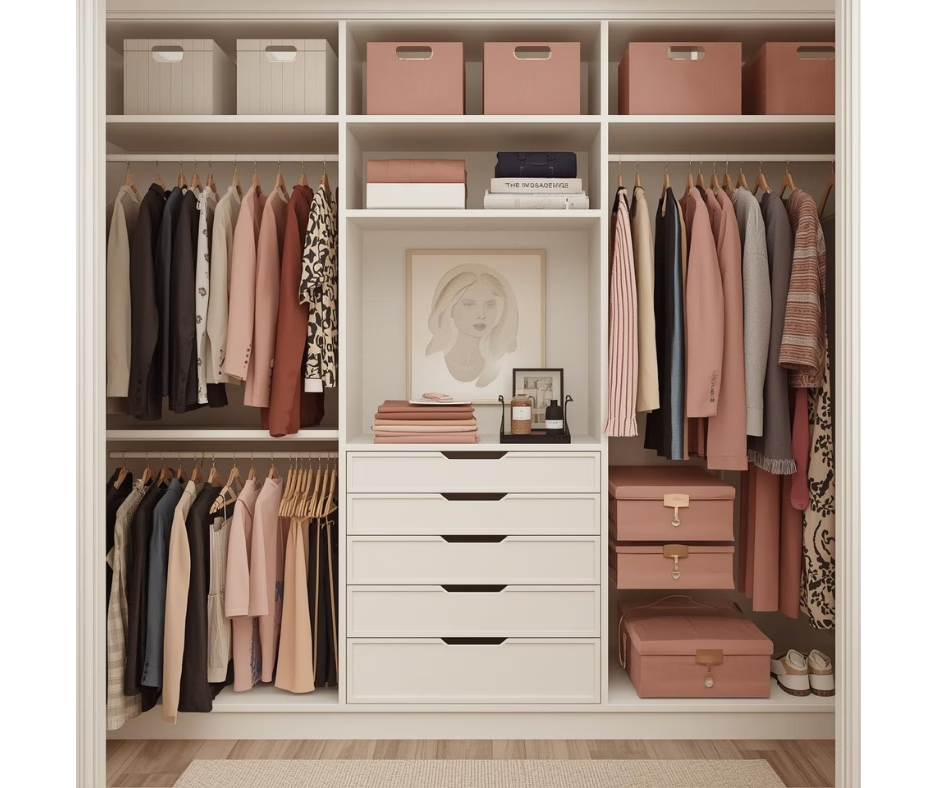
Mistake #1: Buying Before Measuring
I’ve bought storage cubes that don’t fit my shelves four times.
Solution: Measure your space. Write down dimensions. Bring them when shopping. Check product dimensions before clicking “buy.”
Mistake #2: Organising During Manic Phases
When my BPD swings into high energy, I create elaborate systems with colour-coded labels and Pinterest-level aesthetics. Two weeks later, when energy crashes, I can’t maintain any of it.
Solution: Only organise during stable phases. Keep systems stupidly simple. If it requires more than two steps to put something away, you won’t do it consistently.
Mistake #3: Keeping “Just In Case” Items Too Long
“Just in case I start running again” (I won’t).
“Just in case I need a formal dress” (I live at a temple).
Solution: New rule: If I haven’t used it in 6 months AND can’t name a specific upcoming event where I’ll need it, it goes.
FAQ: Best Storage for Small Apartments
What’s the best storage for renters who can’t drill holes?
The over-door hanger and compression bags. Both require zero installation and won’t damage walls. The rolling cart and fabric cubes are also completely portable. Avoid anything requiring drilling unless you have explicit landlord permission.
How much should I spend on apartment storage?
You can meaningfully organise one room for under $50:
- Bedroom: Compression bags ($25) + over-door hanger ($18) = $43
- Kitchen: Rolling cart ($30) + cable box ($12) = $42
- Closet: Fabric cubes ($25) + linen boxes ($30) = $55
Start with the room causing the most stress.
Do I need under-bed storage for a studio apartment?
Probably yes for studios under 400 sq ft. But use it only for seasonal/archive items, not daily-use things. You’ll forget what’s under there and it makes the space feel heavier.
Prioritise visible, accessible storage (rolling carts, cubes, over-door) for weekly items. Save hidden storage for true long-term items.
Which storage works best for ADHD brains?
As someone with ADHD:
✅ Clear/open storage (if you can’t see it, you forget it exists)
✅ Rolling carts (visible, moveable, no doors to open)
✅ Fabric cubes with labels (categories reduce decision fatigue)
✅ Over-door hangers (daily items at eye level)
❌ Hidden storage (under-bed, closed cabinets)
❌ Complex filing systems (too many steps between thought and action)
Can organization really help with anxiety/BPD?
Yes, but not how Instagram minimalism suggests.
Organisation helps when it reduces decision fatigue (everything has a home) and eliminates visual chaos (clear surfaces = clear mind). It doesn’t help when it becomes another thing to feel guilty about failing at.
The key: systems that forgive imperfection. Open bins you can toss things into, rolling carts you can shove into corners, compression bags you seal once and forget for months.
What about the “minimal maximalist” philosophy?
I love buying things. I love the discovery, the aesthetic pleasure, the arrangement. I also love letting things go when they’ve served their purpose.
Minimal maximalist = buy what brings joy, use it fully, release it freely.
Organization tools support this by making the cycle easy—bring in new things, enjoy them, donate/sell when you’re done, repurpose the storage for the next phase.
Conclusion: Storage That Adapts to Your Life
Here’s what two years of testing taught me:
The best storage for small apartments isn’t the prettiest or most expensive. It’s the storage that:
- Solves your specific space problem
- Survives your actual lifestyle (chaos, moves, phases)
- Reduces daily decision fatigue
- Adapts when your life changes
You don’t need all 7 of these. Pick 2-3 based on your biggest pain point:
- No closet space? → Compression bags
- Visual cable chaos? → Cable management box
- No entryway? → Over-door hanger
- Tiny kitchen? → Rolling cart
Start with one room. One solution. Two weeks of testing. Then decide what’s next.
Organization isn’t a destination—it’s a practice. Some seasons you’ll be organized. Some seasons you won’t. Both are okay.
Next Steps:
- Pick your biggest pain point (closet, kitchen, cables, or entryway)
- Choose one organizer from this list
- Order it and test for 2 weeks
- Let go of guilt if you abandon the system later—that’s growth, not failure
FREE DOWNLOAD: Small Apartment Organization Kit
Get my complete guide including:
✅ Room-by-room shopping lists (under $50, $100, $200 budgets)
✅ “Keep or Release?” decision flowchart
✅ Measurement guide (so you don’t buy wrong sizes)
✅ ADHD/BPD-friendly organization checklist
✅ Seasonal swap schedule
👉 Download the Free Kit Here →
Questions about organizing small apartments, or want to share what worked for you? Drop a comment below—I read and respond to every one.
Affiliate links support this blog at no extra cost to you. I only recommend products I’ve used in my own 400 sq ft chaos. Thanks for supporting small creators.