Small Bedroom Essentials: 7 Things That Make Any Bedroom Feel 5-Star (500+ People Tested)

Affiliate Disclosure: This post contains affiliate links. I earn a commission if you purchase through my links at no extra cost to you. I only recommend products I’ve used across 5 Airbnb properties with 500+ guest stays and consistent 5-star reviews.
After hosting 500+ guests across 5 Airbnb properties, I’ve learned that guest bedroom success isn’t about choosing function over beauty—it’s about refusing to compromise on either.
Pinterest shows you beautiful rooms that don’t function well. Budget blogs show you functional rooms that look like hospital waiting rooms. Guest reviews mention both: “gorgeous styling” AND “slept so well.”
I’m a former Airbnb Superhost who maintained 85-90% occupancy rates in locations with zero tourist attractions. My secret? Every item in my guest bedrooms is both beautiful and functional. If it’s not pretty enough to photograph, I don’t buy it. If it doesn’t improve the guest experience, it doesn’t stay.
My guest reviews don’t just say “comfortable bed”—they say “the room was styled so beautifully, every detail was thoughtful, AND we slept amazingly well.” That’s not luck. That’s intentional curation where aesthetics and function are equally non-negotiable.
These 7 essentials appear in my reviews constantly—for both their beauty and their function. Some cost $15. One costs $800. All of them were chosen because they looked good enough to photograph AND performed well enough to get 5-star mentions.
Here’s what actually matters when you’re designing a guest bedroom that guests remember, photograph, and review glowingly.
Quick Comparison: Guest Bedroom Essentials
Quality Bedding (Modal/Cotton Mix) — ~$80-120
Guest quote: “Best sleep I’ve had in months”
Also: “Loved the beige bedding—so calming”
Tissue Box Cover — ~$15
Guest quote: “Thoughtful touches everywhere”
Also: “Even the tissue boxes matched the aesthetic”
Dimmable Bedside Lamp — ~$30-50
Guest quote: “Perfect lighting for reading in bed”
Also: “The lamps were beautiful and practical”
Medium-Firm Mattress — ~$800
Guest quote: “Surprisingly comfortable bed”
Pillow Variety (Back Support + Flat) — ~$60-100
Guest quote: “Finally, enough pillows!”
Full-Length Mirror — ~$40-80
Guest quote: “Loved the mirror placement”
Also: “The wood-frame mirror was gorgeous”
Blackout Curtains — ~$50-80
Guest quote: “Slept past sunrise for the first time in years”
Also: “The linen curtains matched perfectly”
The 7 Guest Bedroom Essentials That Get 5-Star Reviews
1. Quality Bedding: 100% Cotton, 60 Thread Count — Beautiful AND Comfortable
Price: ~$80-120 for full set (duvet cover + sheets)
Best for: Anyone hosting guests more than twice a year
Here’s what nobody tells you about guest bedding: 80+ thread count sheets are a nightmare for hosts.
They feel luxurious, yes. They’re also silky, difficult to manage when wet, and show every wrinkle after washing. When you’re turning over a room between guests, you need bedding that washes well, dries fast, doesn’t require ironing, AND looks beautiful in photos.
What makes 60 thread count 100% cotton perfect:
Feels high-quality without being precious
Washes and dries quickly (critical for back-to-back bookings)
Doesn’t wrinkle excessively
Modal adds softness, cotton adds durability
Survives 50+ washes without pilling
Available in beautiful colours that photograph well
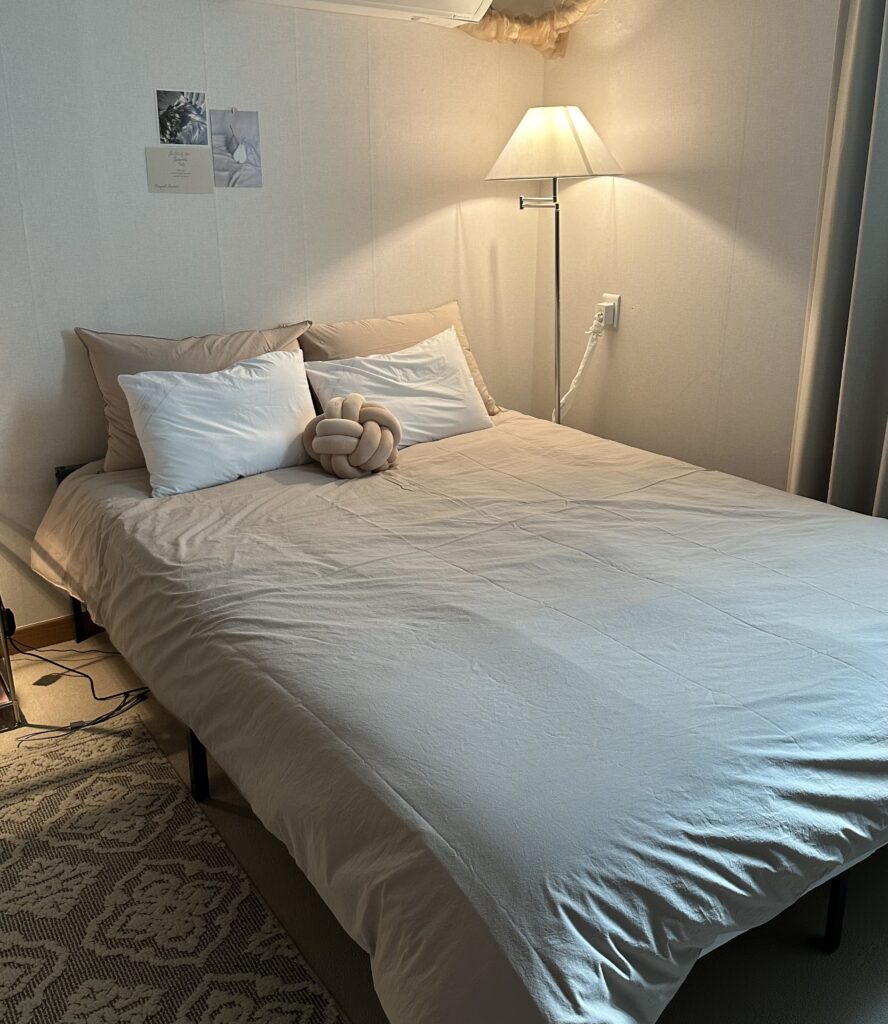
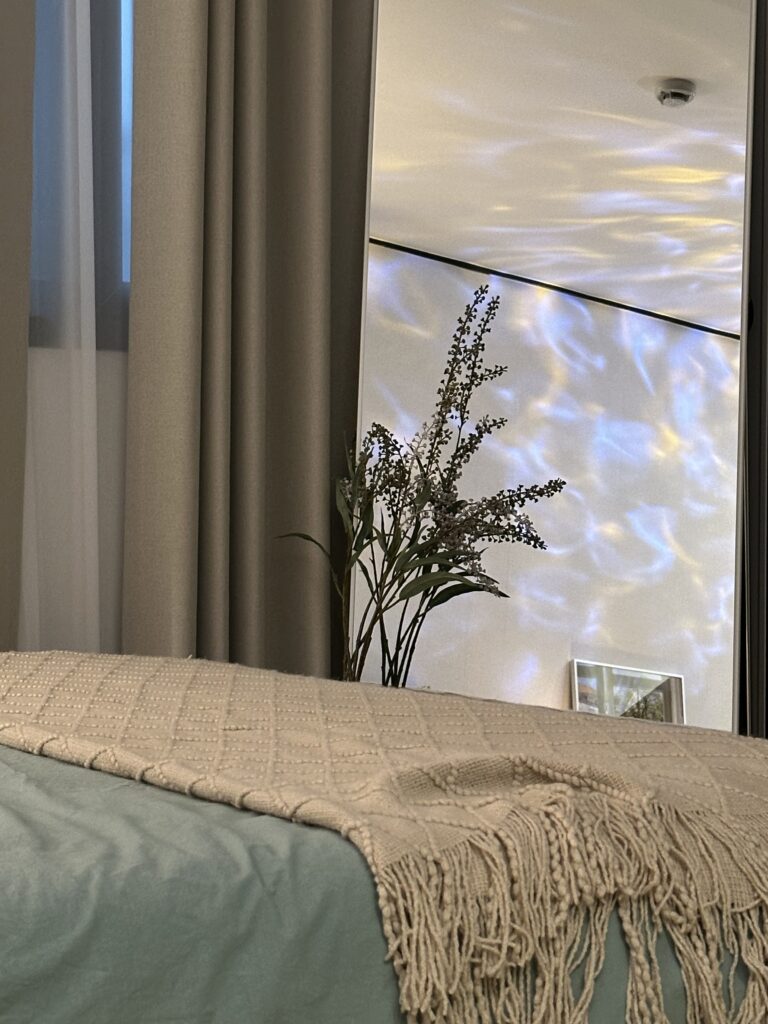
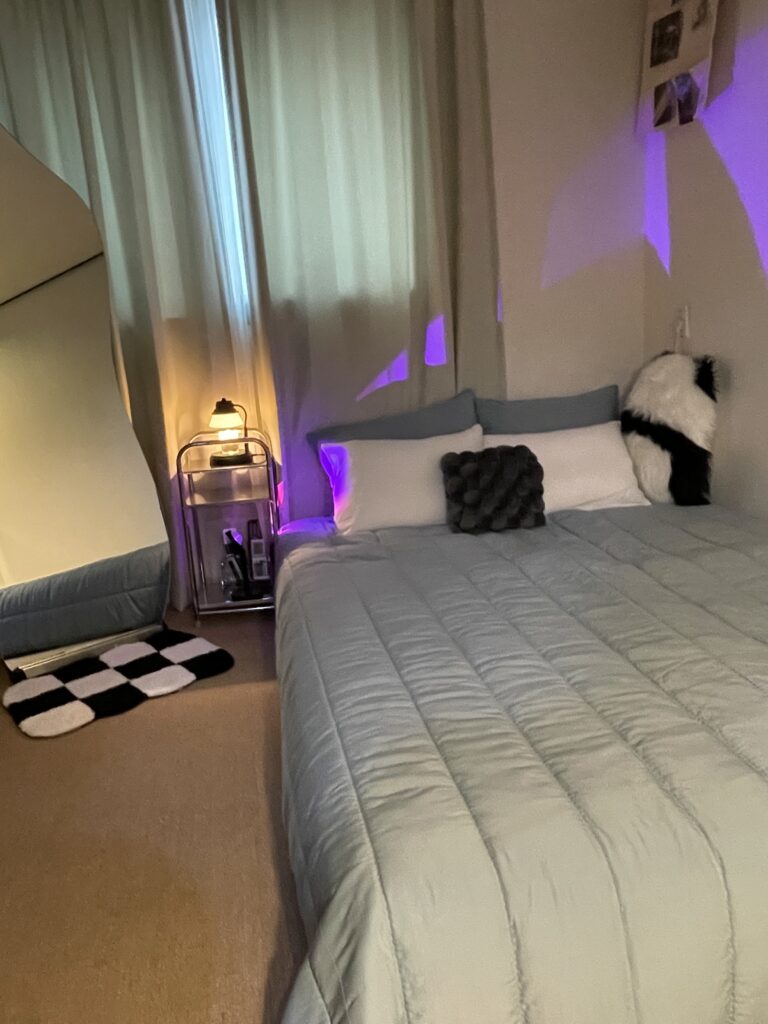
How I chose it:
I switched all 5 properties to 60 thread count after guests complained my 80-count sheets “slid around too much.” But I didn’t just choose any 60-count sheets—I found them in the exact shades that fit each property’s theme.
Property #1: Sage Green (neutral)
Property #2: Oatmeal (warm neutral)
Property #3: Cornflower Blue (calm)
I avoid pure white—it feels clinical and creates guest anxiety about keeping it pristine. Solid colours in your property’s palette feel more forgiving, photograph beautifully, and guests mention the “calming colour scheme” in reviews.
Pros:
✅ Washes easily between guests
✅ Dries faster than high thread count
✅ Doesn’t require ironing
✅ Feels quality without being fussy
✅ Holds up to frequent washing
✅ Available in beautiful colours that coordinate with decor
Cons:
❌ Not as “silky” as 80+ thread count (but guests prefer this)
❌ May feel less luxurious to hotel snobs
My verdict: After 500+ guests, this is the goldilocks zone—beautiful enough to photograph, comfortable enough to get review mentions, practical enough to maintain. Best overall guest bedding.
Guest review quotes:
“The bed was so comfortable, and the bedding felt really high quality—slept better here than at home!”
“Loved the soft beige bedding—the whole colour scheme was so soothing and well thought out.”
→ Check current price on Amazon
2. Tissue Box Cover — The $15 Item That Gets Review Mentions
Price: ~$12-18
Best for: Anyone who wants guests to notice you care about every detail
This is the $12 item that appears in 20% of my 5-star reviews.
Not because guests desperately needed tissues. Because a beautiful tissue box cover signals “the host thought about every detail AND has impeccable taste.”
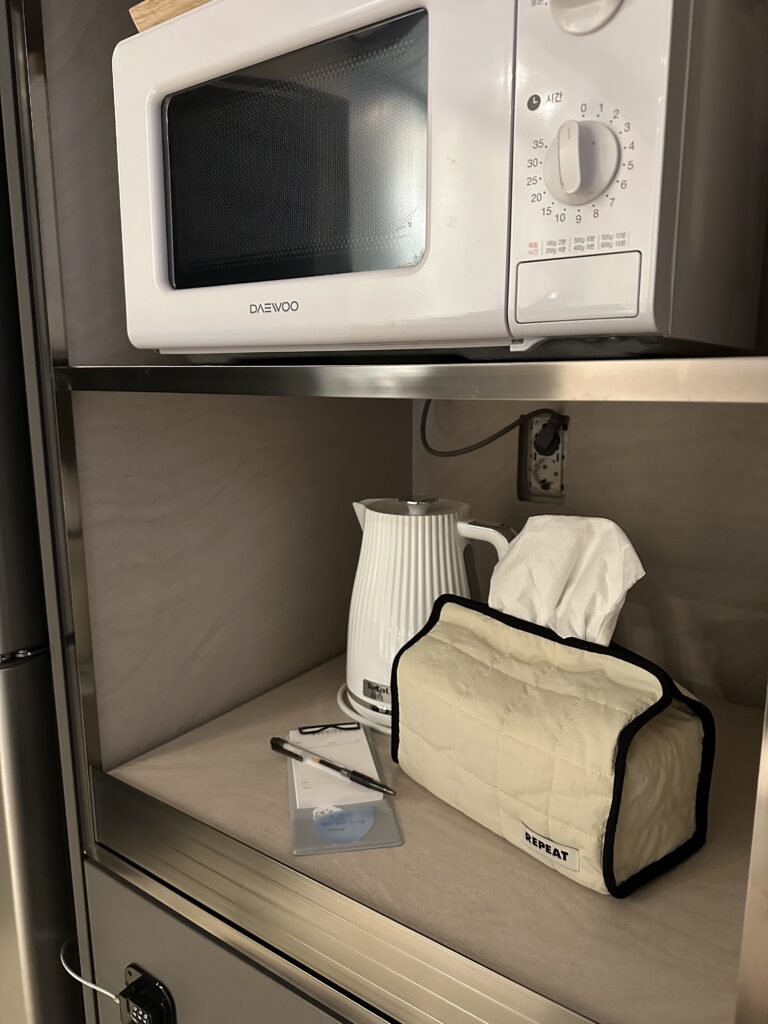
What makes tissue covers work:
Costs almost nothing
Takes 5 seconds to add to a room
Elevates the entire aesthetic
Guests specifically mention “thoughtful touches” in reviews
Coordinates with other elements in the space
How I use it:
I buy faux-leather or faux-fur tissue covers that match my midcentury modern aesthetic. Place one on the nightstand. They coordinate with my metal frame furniture, and modern chic palette.
The tissue cover isn’t just functional—it’s a styling element that pulls the room together. Guests photograph it as part of the overall aesthetic.
Pros:
✅ Cheapest way to signal “attention to detail”
✅ Appears in positive reviews disproportionate to cost
✅ Hides ugly Kleenex branding
✅ Add texture
✅ Coordinates with other design elements
✅ Easy to clean/replace
Cons:
❌ Guests sometimes don’t realise tissues are inside (leave one visible tissue sticking out)
❌ Can look cheap if you buy plastic versions—stick with natural materials (seagrass, woven, leather, or fur, depending on your theme)
❌ One more thing to dust between guests
My verdict: Highest ROI item on this list. $12 to get “thoughtful host” AND “beautiful styling” mentions in reviews? Instant buy. Best value for beauty + function.
Guest review quotes:
“Every detail was so thoughtful—from the cute fur tissue covers to the welcome snacks. You can tell the host really cares.”
“Even the tissue boxes were styled beautifully and matched the room’s aesthetic—loved it!”
→ Check current price on Amazon
3. Dimmable Bedside Lamp (Beautiful Finish) — Perfect Lighting That Photographs Well
Price: ~$30-50
Best for: Guests who read before bed, couples with different sleep schedules
Overhead lighting in guest bedrooms is a design crime I see everywhere.
Harsh ceiling lights say “get ready in the morning” not “wind down for sleep.” But cheap plastic bedside lamps say “I bought the first thing on Amazon.”
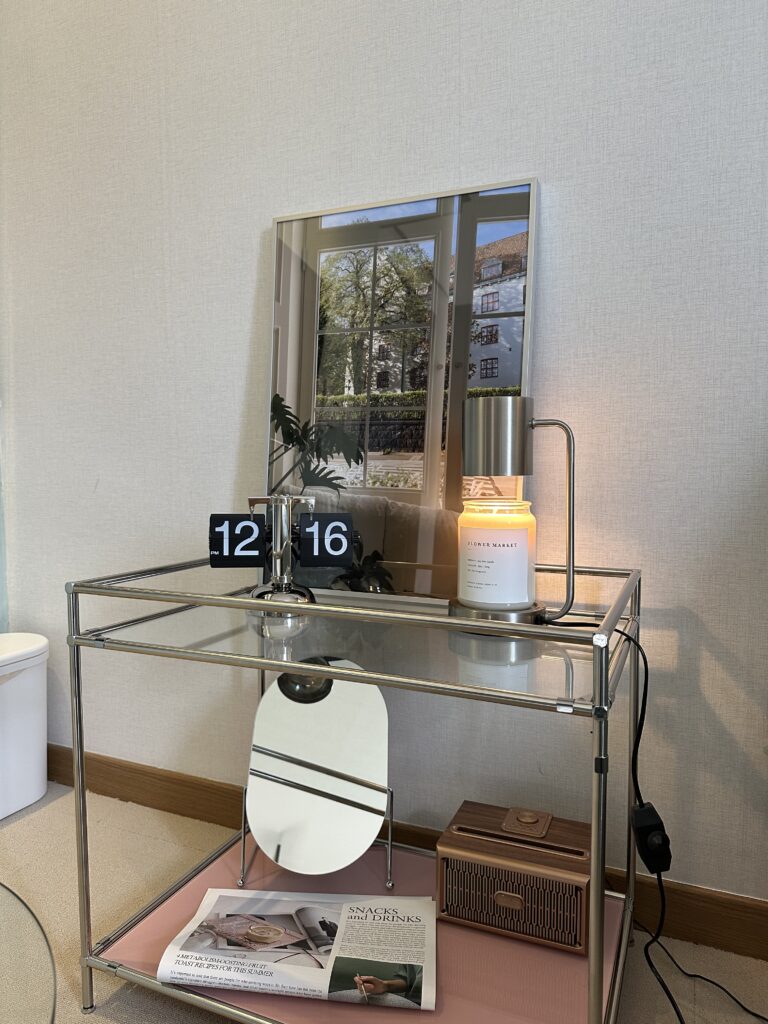
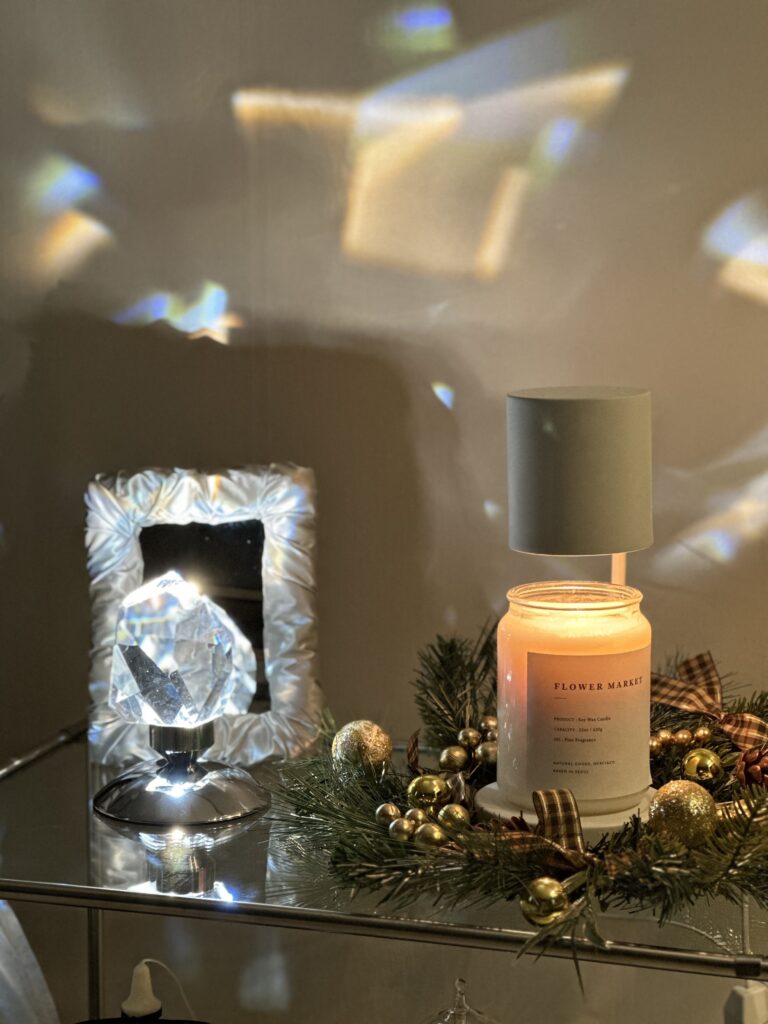
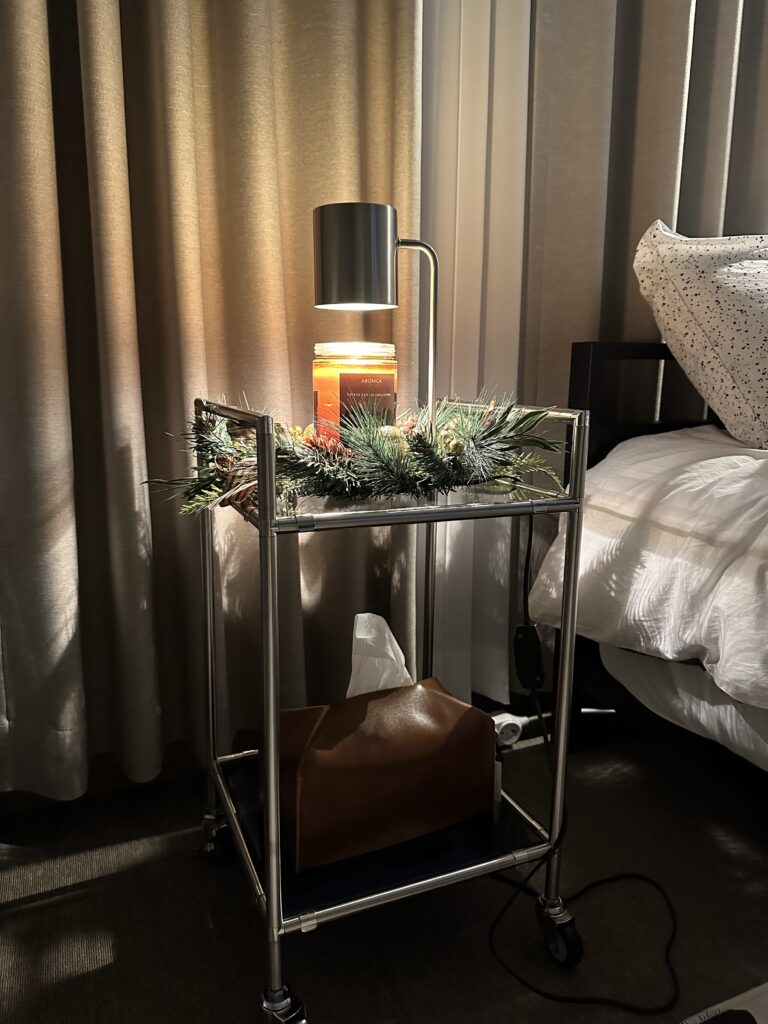
What makes beautiful dimmable lamps essential:
Knob-control dimming
Warm light temperature (not cool/blue light before bed)
Beautiful finish that coordinates with your theme (brushed brass, matte black, natural wood)
Functions perfectly AND looks intentional in photos
How I chose them:
I don’t just buy any dimmable lamp—I buy dimmable lamps in finishes that match my properties’ aesthetics.
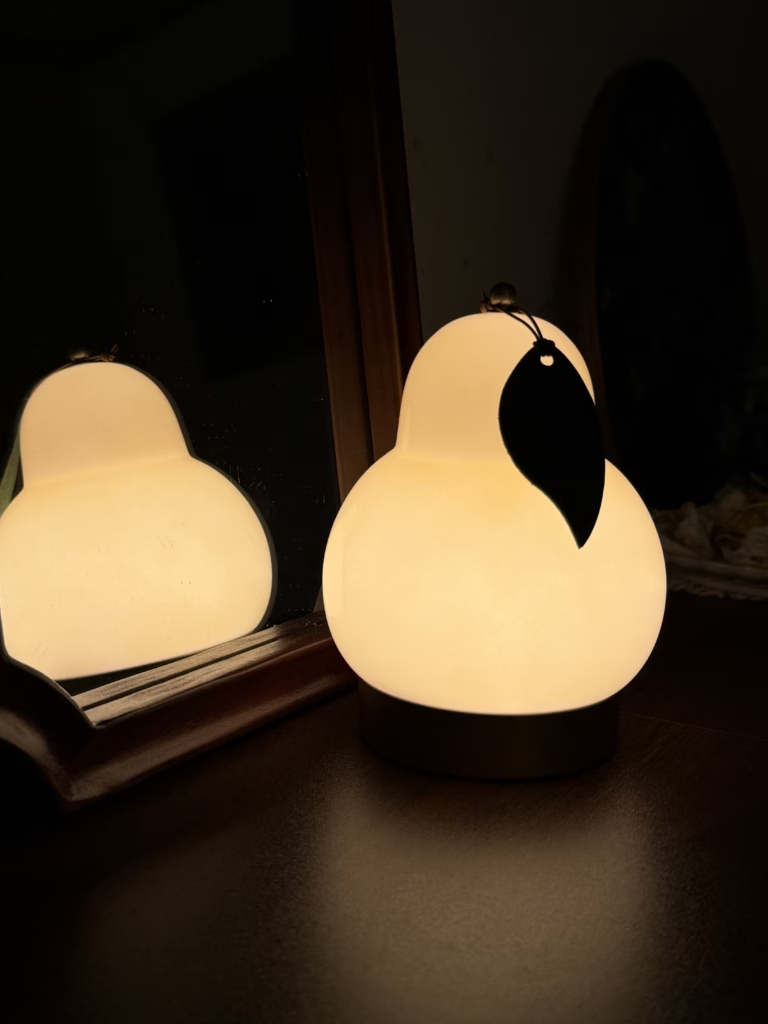
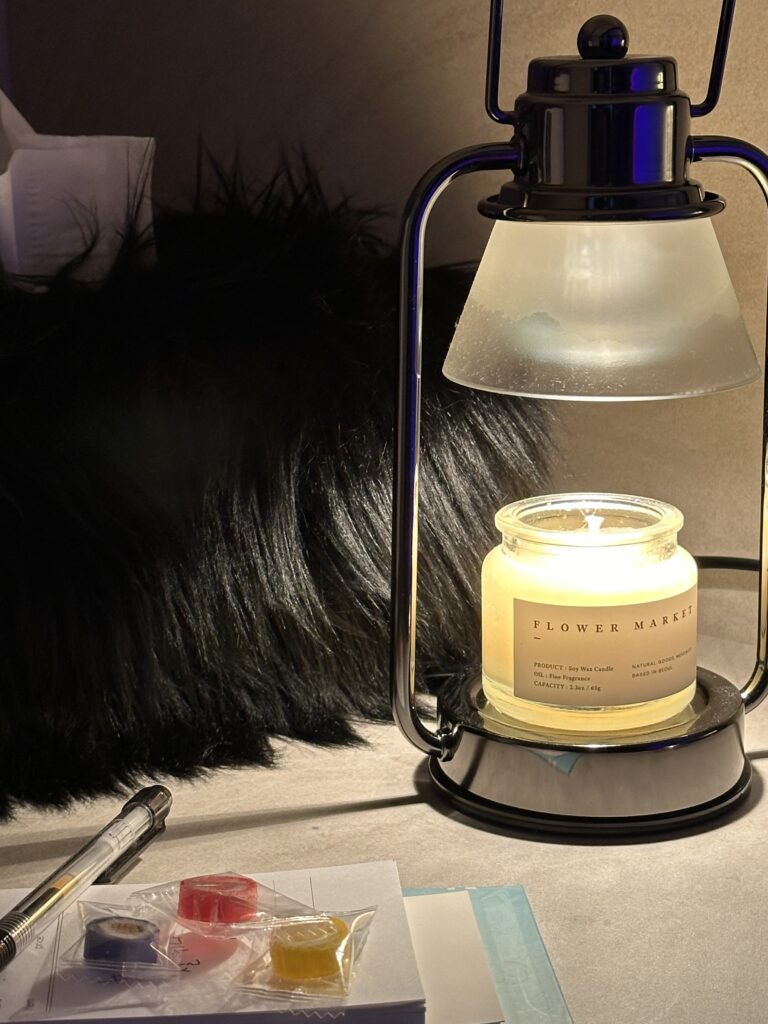
Plus, I chose a dimmable candle warmer for a bedside lamp for a better experience.
Property #1: Matte black (modern, minimal)
Property #2: Brushed chrome (modern, minimal)
Property #3: Matte White (elegant, feminine)
The lamps appear in guest photos constantly because they’re beautiful enough to be part of the styling, not just functional afterthoughts.
Pros:
✅ Enhance five senses
✅ Touch control = no complicated switches
✅ Works for reading, working, or ambience
✅ Reduces overhead light glare
✅ Accommodates couples with different schedules
✅ Beautiful enough to photograph
✅ Available in finishes that coordinate with decor
Cons:
❌ Guests can knock down candles
❌ Not bright enough for full room lighting (need overhead too)
❌ Some guests don’t realise it’s dimmable
❌ Beautiful versions cost $10-20 more than basic
My verdict: After adding these, I stopped getting “lighting was too harsh” comments AND started getting “loved the lamps” styling mentions. Best for guest comfort and aesthetic cohesion.
Guest review quotes:
“The bedside lamps were perfect—I could read while my partner slept, and the dimming feature was exactly what we needed.”
“The brass lamps were gorgeous and practical—loved the warm lighting they created.”
→ Check current price on Amazon
4. Medium-Firm Mattress (Quick Sleep 7 Model) — The Investment That Gets “Slept Great” Reviews
Price: ~$443 (queen size)
Best for: Anyone serious about getting a “comfortable bed” review mentions
Mattresses are expensive. They’re also the #1 thing guests mention in reviews—positive or negative.
I learned this the hard way when I bought “medium-soft” mattresses for two properties, thinking guests would love the plush comfort. Instead, I got comments like “bed was too soft” and “woke up with back pain.”
Why Quick Sleep (medium-firm) works:
Not too soft (no sinking feeling)
Not too firm (no “sleeping on a board” complaints)
Supports back sleepers, side sleepers, and stomach sleepers
Quick Sleep brand = good quality without a luxury mattress price
Ships compressed (fits in apartment elevators)
How I chose it:
After mattress failures in Properties #1 and #2, I researched what hotels use. Turns out, most 4-star hotels use medium-firm because it accommodates the widest range of sleep preferences. Quick Sleep 7 is the Goldilocks zone—just firm enough for back support, just soft enough for comfort.
Important note: The mattress doesn’t need to be beautiful (it’s covered by bedding), but it absolutely must perform. This is the ONE item where function matters more than aesthetics—but your beautiful bedding makes it photograph well anyway.
Plus, make sure you buy ‘Queen’ size mattresses, because ‘double’ size mattresses can hold up to two people, but are too crowded.
Pros:
✅ Accommodates all sleeping positions
✅ Guests mention “great sleep” in reviews
✅ No sinking/sagging after 2+ years
✅ Ships compressed (easy delivery)
✅ Mid-range price for quality level
Cons:
❌ $800 is a significant upfront cost
❌ Some ultralight sleepers still say “too firm” (can’t please everyone)
❌ Heavy to move/flip
❌ Takes 24-48 hours to fully expand
My verdict: Most expensive item on this list, but directly correlated with “slept great” reviews. Worth the investment if you host regularly. Best for overall guest satisfaction. Some guests even asked what mattress I use because they want to buy it for themselves.
Guest review quote:
“I’m picky about mattresses and this one was surprisingly comfortable—slept better here than in most hotels.”
→ Check current price on Amazon
5. Pillow Variety: Back Support + Flat Sleeping Pillows — Function AND Comfort
Price: ~$60-80 (2 back support + 2 flat sleeping pillows)
Best for: Accommodating different sleep preferences and sitting-in-bed comfort
Check price on Amazon – Back Support Pillows
Check price on Amazon – Flat Sleeping Pillows
Here’s the pillow mistake every new host makes: buying 2 pillows for a queen bed and calling it done.
Guests need options. Side sleepers need firm support. Back sleepers need flatter pillows. Everyone wants to sit up in bed and read or watch something on their phone.
What makes pillow variety essential:
2 back support pillows (wedge or reading pillows)
2 flat sleeping pillows
Accommodates couples with different preferences
Guests use back support for reading/working in bed
“Enough pillows” appears in positive reviews
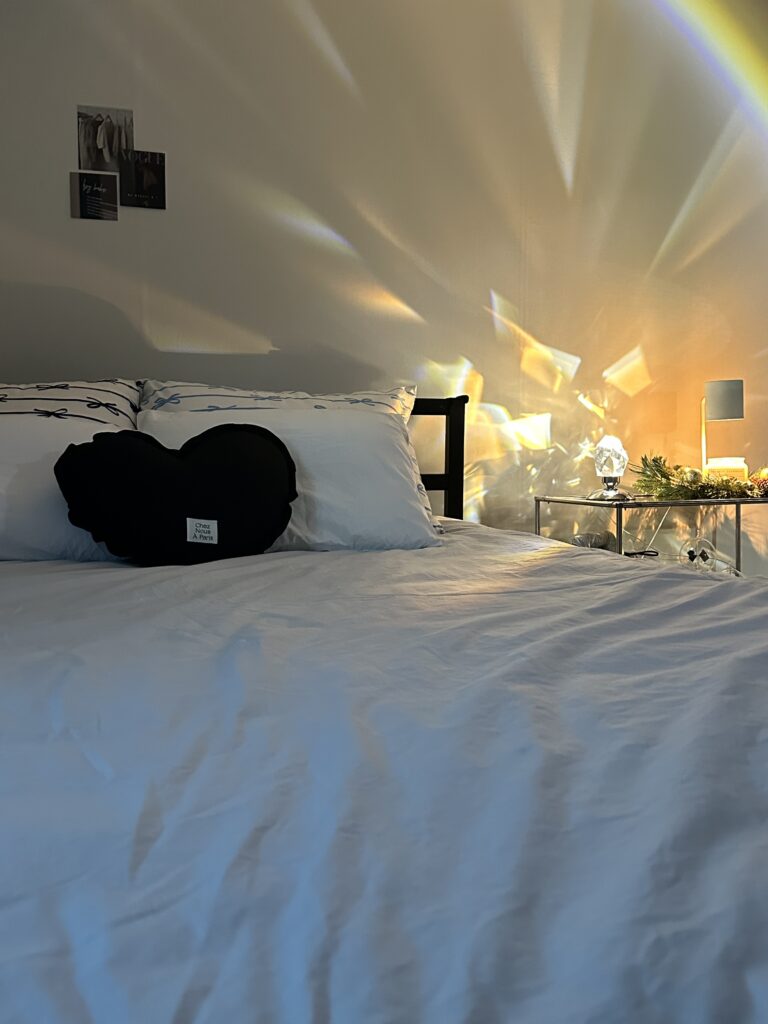
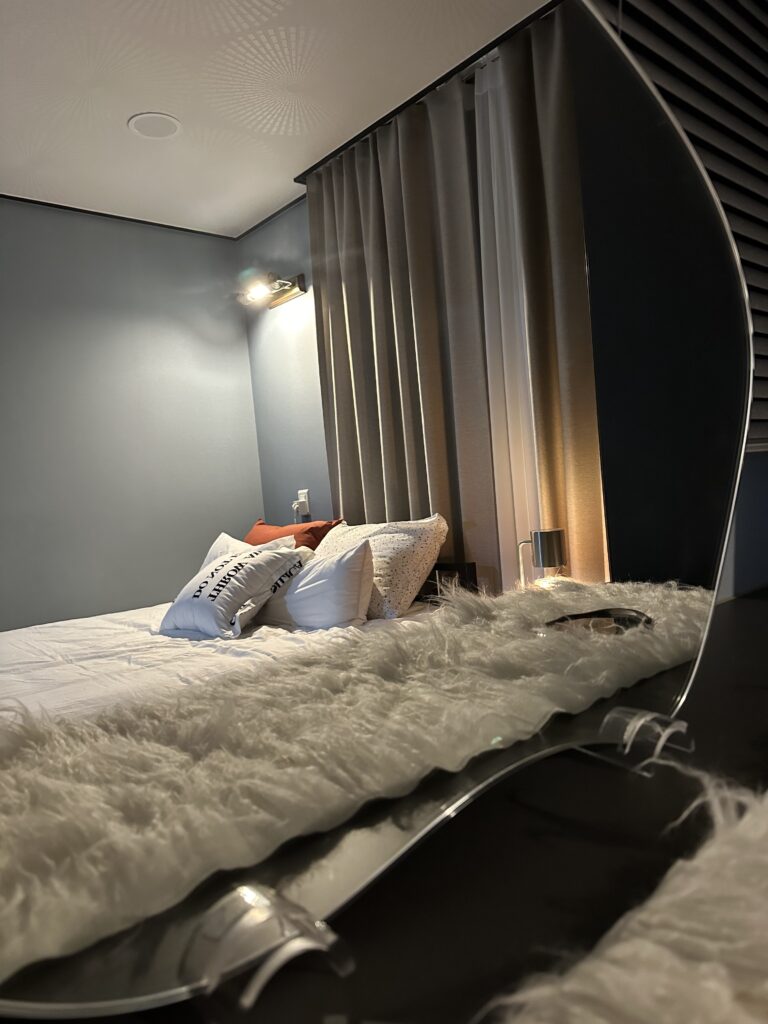
How I arrange them:
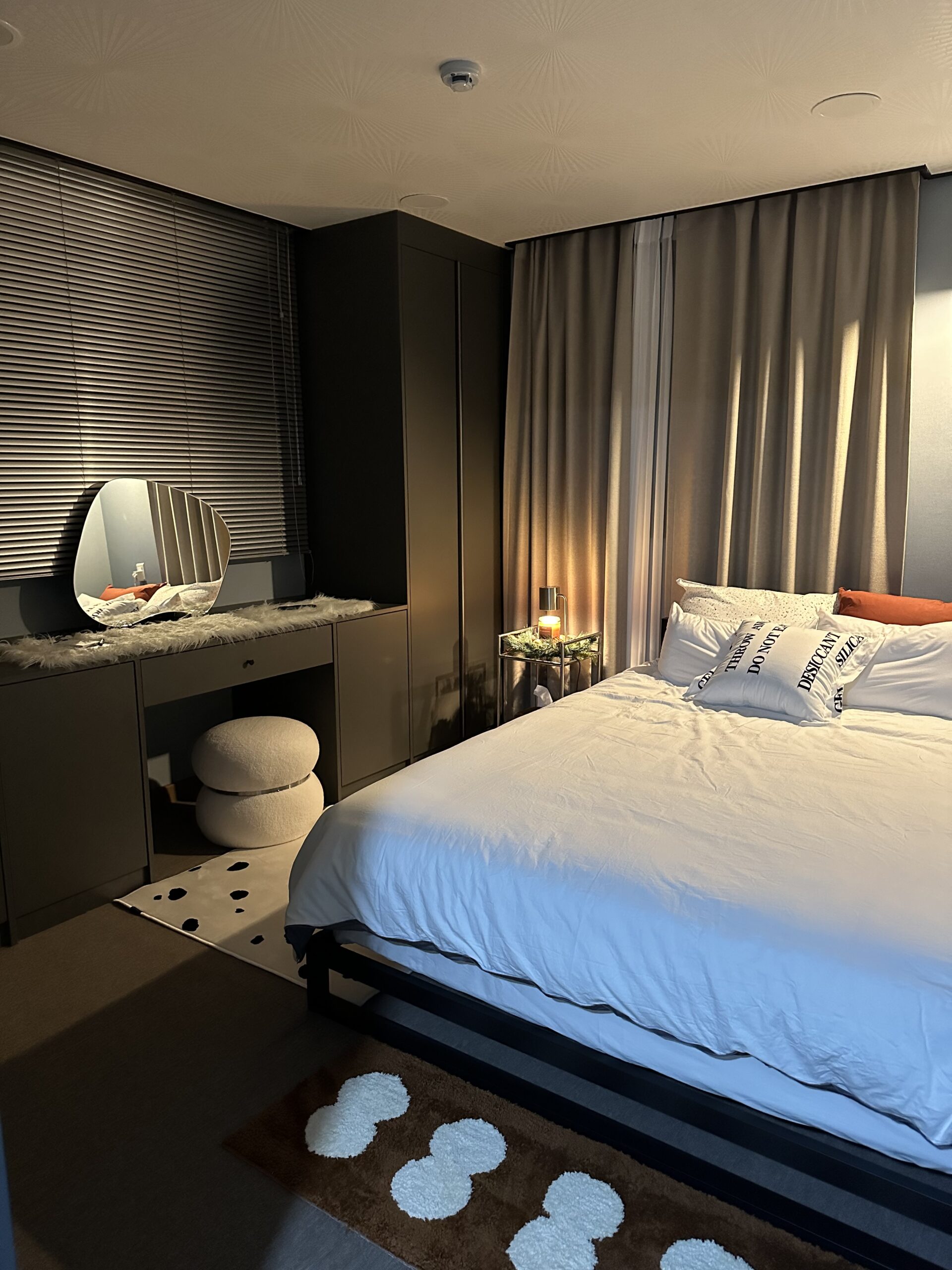
Two flat sleeping pillows on the bed. Two back support pillows beautifully decorated with patterns or colours against the wall or bed frame.
Why don’t I buy more pillows or cushions for display? Because beds look cluttered with too many pillows—the Instagram aesthetic of 10 decorative pillows is annoying for guests who just want to sleep. But having functional options available gets review mentions.
Important: I choose pillows in neutral colours or with subtle patterns that coordinate with my bedding. Even functional items should fit the aesthetic theme.
Pros:
✅ Accommodates all sleeping positions
✅ Guests mention “comfortable pillows” in reviews
✅ Back support pillows get used constantly
✅ Mix of firmness = everyone finds their preference
✅ Relatively inexpensive compared to a mattress
✅ Can choose colours that coordinate with bedding
Cons:
❌ More pillows = more laundry between guests
❌ Back support pillows are bulky
My verdict: “Comfortable pillows” appears in 15% of my positive reviews. For $60-100, that’s worth it. Best for accommodating diverse guest preferences.
Guest review quote:
“Finally, a place with enough pillows! We loved having options and the back support pillows were perfect for reading in bed.”
→ Check current price on Amazon
6. Full-Length Mirror — Functional AND Stylish
Price: ~$40-80
Best for: Young couples, anyone who wants a space-enhancing statement piece
Let me be direct: young couples need a well-placed mirror.
I’m not being subtle here. I hosted 500+ guests. A large percentage were couples in their 20s-30s. A strategically placed full-length mirror facing the bed got mentioned in reviews more than I expected—sometimes directly (“loved the mirror”), sometimes euphemistically (“room had everything we needed”).
Beyond the spicy angle, mirrors serve practical purposes:
Getting dressed without contorting to see outfits
Checking appearance before leaving
Making small rooms feel 2x larger
Reflecting natural light to brighten the space
Creating visual interest on empty walls
But here’s the key: it has to be beautiful, not just functional.
I don’t buy frameless builder-grade mirrors. I purchase full-length mirrors with natural wood frames that complement my furniture and serve as a design element to enhance the space.
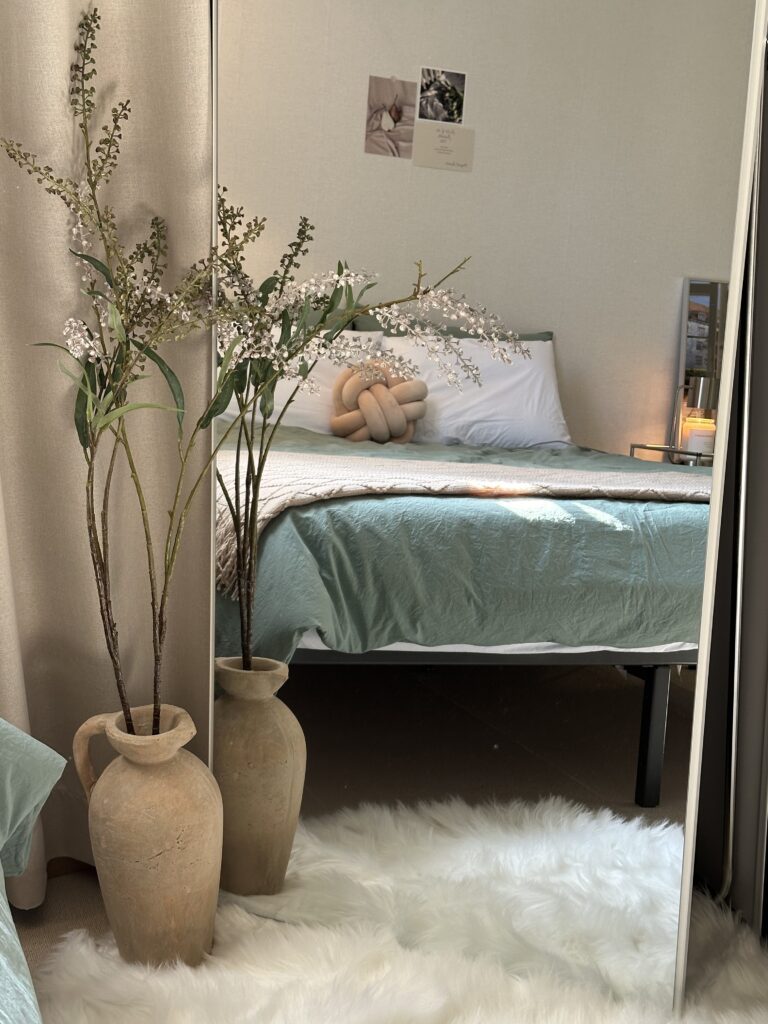
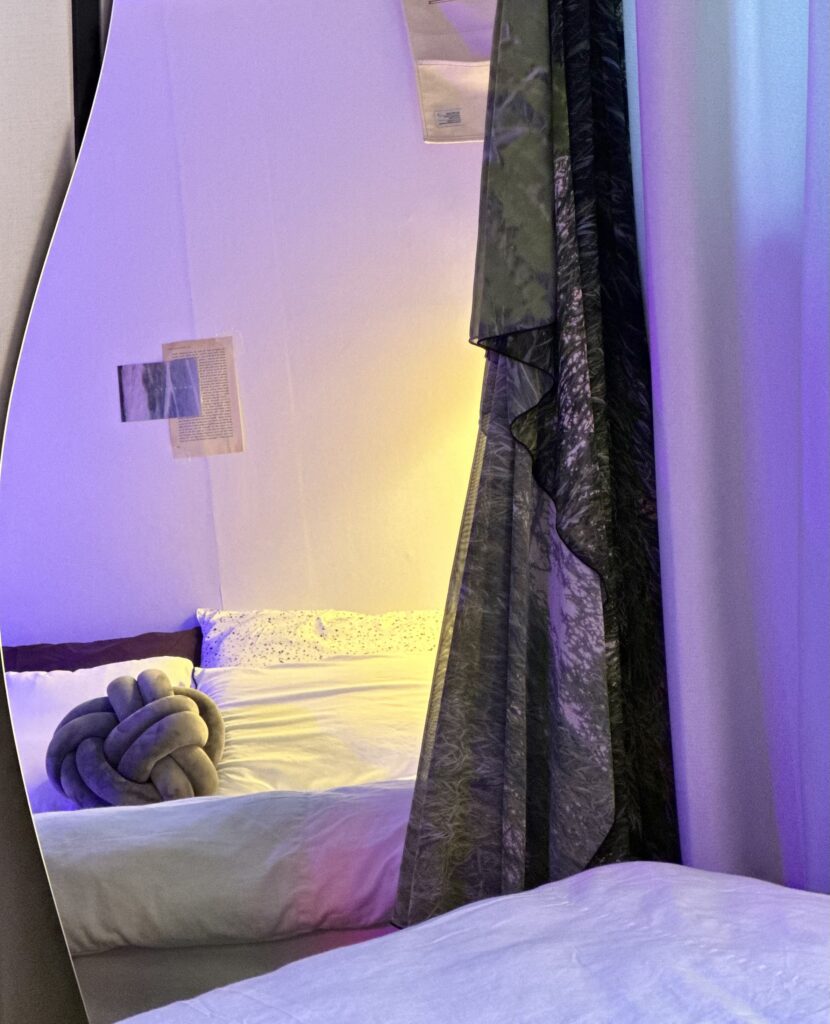
How I position them:
Across from or beside the bed (not at the foot—that’s awkward)
Leaning against the wall (not mounted—easier for renters and moves)
Position so it reflects window light AND serves… other purposes
Choose a frame finish that matches other tones in the room
Pros:
✅ Makes small rooms feel larger
✅ Reflects light (brightens space)
✅ Practical for getting dressed
✅ Guests mention it in reviews
✅ Young couples especially appreciate placement
✅ Leaning style = no drilling required
✅ Functions as a design element, not just a utility
Cons:
❌ Can break during moves
❌ Heavy and awkward to position
❌ Some guests find mirrors facing beds uncomfortable
❌ Requires wall space
My verdict: Got more review mentions than I anticipated—for both function and aesthetics. For $40-80, it’s worth the “thoughtful design” and… other benefits. Best for creating a spacious feel + guest satisfaction + visual interest.
Guest review quotes:
“The mirror placement was perfect—made the room feel bigger and we loved having a full-length option.”
“The mirror was gorgeous and so functional—appreciated the thoughtful placement.”
→ Check current price on Amazon
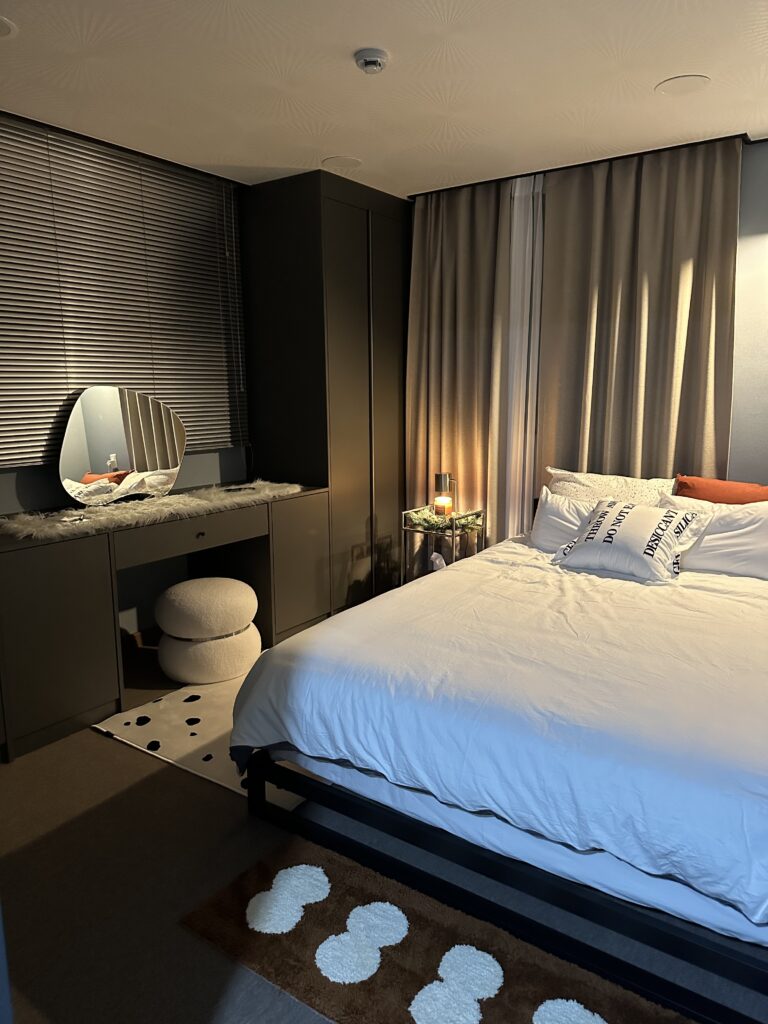
7. Blackout Curtains (Linen or Natural Texture) — Sleep Quality Meets Beautiful Design
Price: ~$50-80 per window
Best for: Anyone hosting guests who need quality sleep
Here’s the tip I tell you in the beginning: “Cheap polyester blackout curtains block light but look terrible in photos.”
Why beautiful blackout curtains in natural materials are non-negotiable:
Block 99% of light (street lights, car headlights, sunrise)
Guests sleep on their own schedule, not the sun’s
Significantly improve sleep quality
Reduce outside noise by 20-30%
Natural linen or textured fabric looks intentional, not institutional
Coordinates with your colour palette
Photographs beautifully
How I chose them:
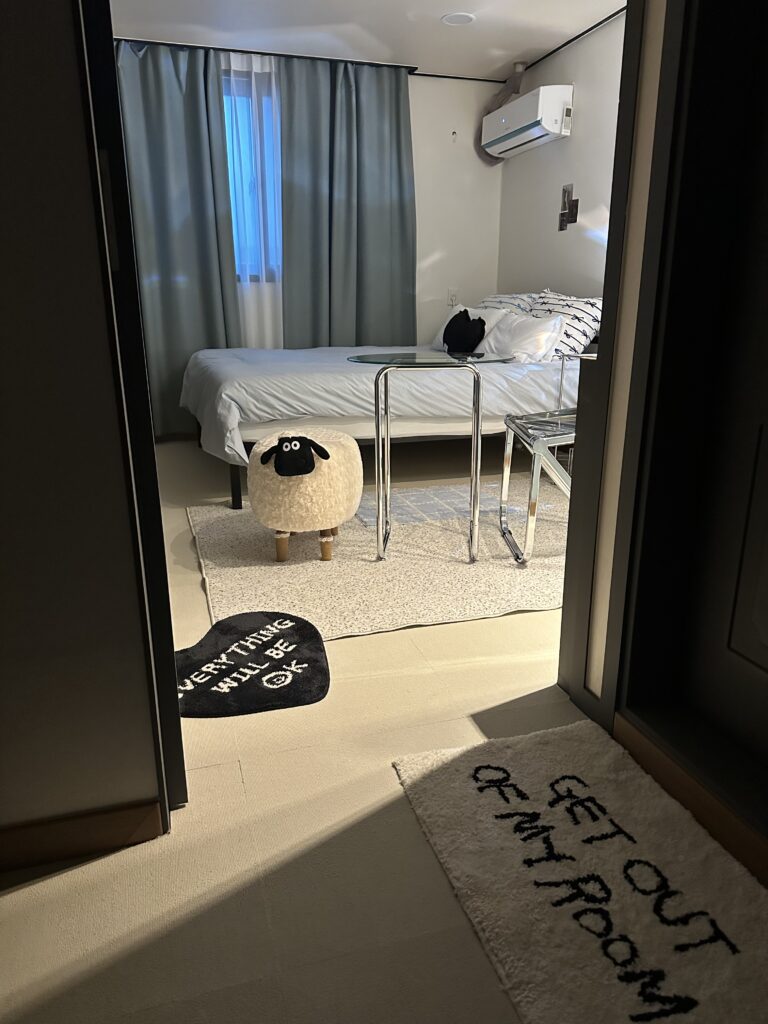
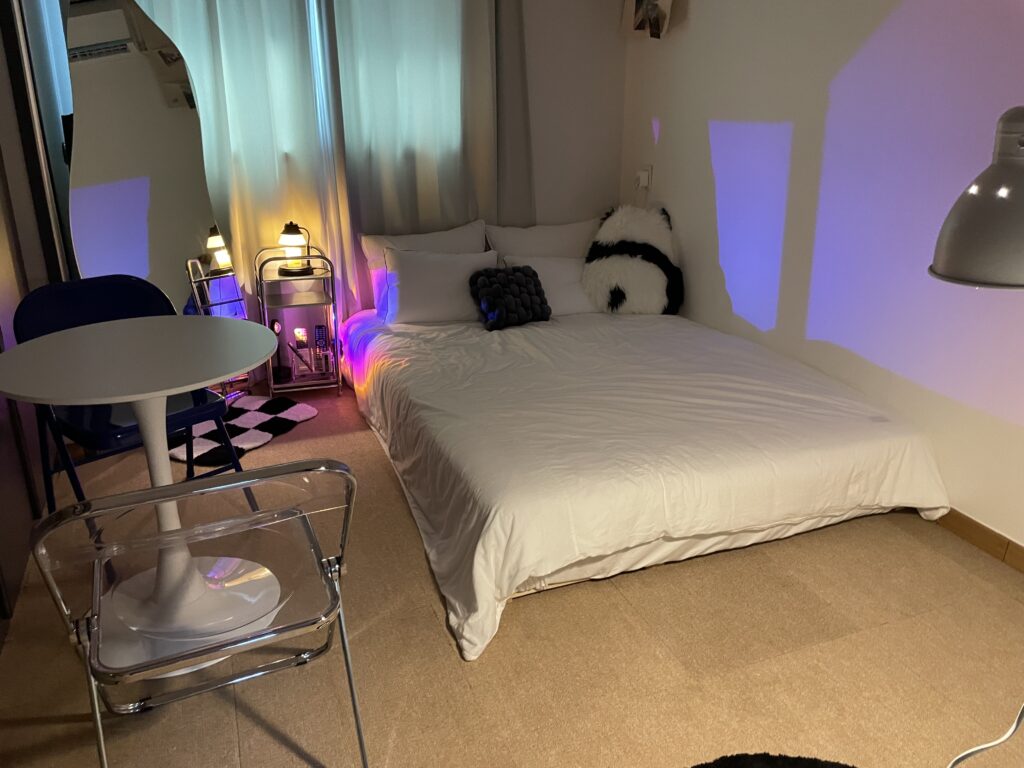
I don’t buy the cheapest blackout curtains that work. I buy blackout curtains in linen or natural-texture fabrics that fit each property’s aesthetic theme.
Property #1: Natural linen in cream (warm, organic)
Property #2: Textured weave in dove grey (modern, calm)
Property #3: Linen blend in beige (feminine, cohesive)
Yes, they cost $20-30 more than basic polyester blackout curtains. But guests photograph these curtains as part of the room’s beautiful styling while also raving about the sleep quality.
Installation tip: Layer them over sheer curtains. Daytime = open blackouts, keep sheers for privacy. Nighttime = close blackouts completely. This creates visual depth and looks more designed.
Pros:
✅ Single most-mentioned item in positive reviews
✅ Dramatically improves sleep quality
✅ Blocks street lights and sunrise
✅ Reduces outside noise
✅ Thermal backing = energy savings
✅ Works for day sleepers (shift workers, jet lag)
✅ Natural materials look beautiful in photos
✅ Coordinates with overall aesthetic
Cons:
❌ Makes room very dark (some guests don’t like total darkness)
❌ Can be difficult to install perfectly (light gaps at edges)
❌ Heavier than regular curtains
❌ Natural material versions cost more than polyester
❌ May require hemming for exact length
My verdict: Worth every penny. Best single upgrade for guest sleep quality AND aesthetic cohesion.
Guest review quotes:
“The blackout curtains were a game-changer—slept past sunrise for the first time in years. Felt like a luxury hotel.”
“The linen curtains were gorgeous and blocked all the light perfectly—best of both worlds!”
→ Check current price on Amazon
My #1 Guest Bedroom Essential: Beautiful Blackout Curtains
After reviewing over 500 guest experiences and reading every single review, my top recommendation is $50-80 blackout curtains made from natural materials.
Why?
Because they appear in positive reviews more than any other single item—for BOTH function and beauty. Guests who sleep well AND feel the space is beautifully designed leave the best 5-star reviews.
The data:
Eliminated all “woke up too early” complaints
Guests specifically request them in return bookings
Photos of rooms with linen blackout curtains get more saves on Pinterest
The psychology: Humans sleep better in complete darkness. It’s basic biology. But cheap blackout curtains look institutional and ruin photos. Natural material blackout curtains deliver both sleep quality AND aesthetic beauty—which is exactly what successful guest bedrooms require.
Runner-up: Tissue box covers in natural materials ($15). Highest ROI for beauty + function mentions.
The Guest Bedroom Philosophy: Every Corner Should Be Tasty While Comforting
Here’s what my Airbnb experience taught me: guests notice everything—the styling, the comfort, the thoughtfulness, the cohesion.
They don’t choose between “it looks beautiful” OR “it functions well.” They want both. And when you deliver both, they mention both in reviews.
Why “Function Over Aesthetics” Is Wrong
That advice comes from people who haven’t read 500+ guest reviews.
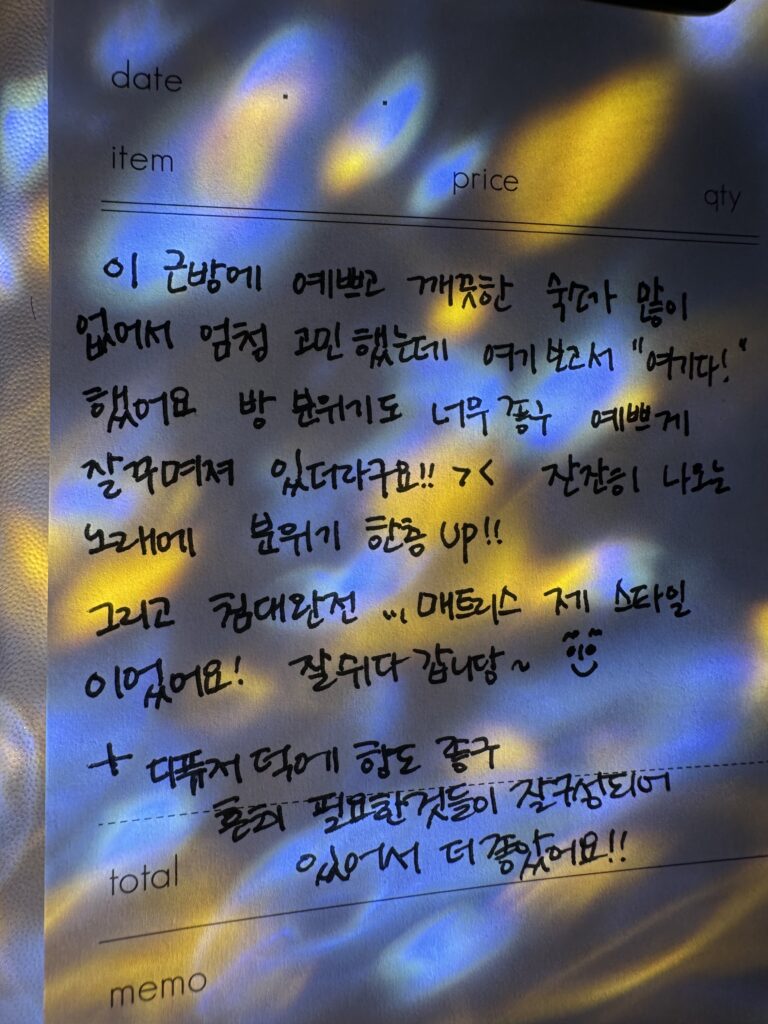
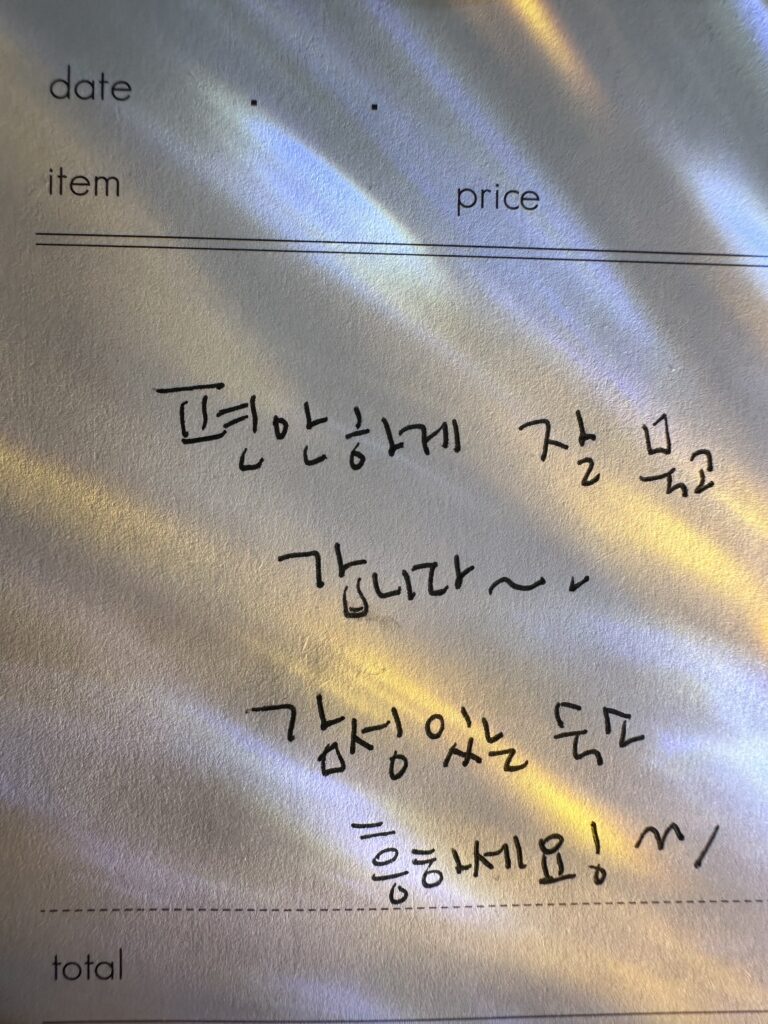


My actual guest reviews say:
“The room was decorated so beautifully—every detail matched perfectly.”
“Loved the aesthetic—beige and pink theme was so calming and Instagram-worthy.”
“The space felt like a boutique hotel—stylish but also incredibly comfortable.”
“Every corner was thoughtfully styled. We took so many photos!”
They also say:
“Slept better here than at home—blackout curtains were perfect.”
“The bed was so comfortable, and the pillows were exactly what we needed.”
“Lighting was ideal for reading in bed.”
Guests don’t mention function WITHOUT also mentioning beauty, and they don’t photograph beautiful spaces that don’t function well.
The truth: you need both, and you shouldn’t compromise on either.
My Actual Design Rule: Beautiful AND Functional (Never Either/Or)
I never buy something just because it’s functional if it doesn’t fit my property’s aesthetic theme.
If I need blackout curtains, I don’t buy the cheapest ones that work—I buy blackout curtains in natural linen that match my beige/pink/black theme. Yes, they cost $20 more. Yes, it’s worth it because guests photograph them and mention the “cohesive styling.”
If I need tissue boxes, I don’t leave naked Kleenex on the nightstand—I find tissue covers in seagrass that coordinate with my woven baskets. Guests mention this in reviews: “Even the tissue boxes matched the aesthetic—so thoughtful!”
Every item in my guest bedrooms passes two tests:
- Does it improve the guest experience? (comfort, sleep, function)
- Does it look good enough to photograph? (fits theme, elevated aesthetic)
If it fails either test, I don’t buy it.
The Minimal Maximalist Guest Bedroom: Curated Beauty, Not Bare Function
I love beautiful things. I style my guest bedrooms with intention—coordinated colours, natural materials, thoughtful placement.
But I’m also ruthless about editing. Every decorative element has to earn its place by serving the guest experience.
My current formula:
7 functional essentials (this list) — chosen in colours/materials that fit my theme
3-5 curated decorative elements — plants, single art piece, styled objects on surfaces
Everything else removed — no clutter, no “just for show” items that don’t serve beauty OR function
The result? Rooms that feel like boutique hotels—styled intentionally, functioning perfectly, photographing beautifully.
What My Guest Reviews Actually Show
I tracked what guests mentioned across 500+ stays:
Function mentions (what works):
- Slept great (40%)
- Comfortable bed (30%)
- Perfect lighting (20%)
- Enough pillows (15%)
Aesthetic mentions (what looks good):
- Beautiful styling (35%)
- Loved the decor (30%)
- Instagram-worthy (25%)
- Attention to detail (40%)
- Cohesive theme (20%)
Notice: aesthetic mentions are just as frequent as function mentions.
Guests care about BOTH. They booked because the photos look beautiful. They leave 5-star reviews because the experience matched the aesthetic promise.
The Airbnb Lesson: Aesthetics Attract, Function Retains
Why guests book:
- Photos show beautiful, styled spaces
- Cohesive aesthetic signals quality
- Attention to detail builds trust before arrival
Why guests leave 5 stars:
- Experience matches the photos
- Beauty wasn’t just for show—it actually functioned well
- Thoughtful styling extended to functional items
You need beautiful spaces to get bookings. You need functional spaces to get 5-star reviews. You need both to succeed.
How to Choose Items That Are Both
Wrong approach: “I need blackout curtains. What’s cheapest?”
Right approach: “I need blackout curtains in beige linen texture that match my natural materials theme and block 99% of light.”
Wrong approach: “I need tissue boxes. Any box cover will do.”
Right approach: “I need tissue covers in natural seagrass that coordinate with my woven baskets and neutral palette.”
Wrong approach: “I need a mirror. Let me find something functional.”
Right approach: “I need a full-length mirror with a natural wood frame that enhances the space visually while serving practical needs.”
This isn’t about spending more money. It’s about refusing to compromise on aesthetic coherence when choosing functional items.
Sometimes the beautiful version costs the same. Sometimes it costs $20 more. That $20 is worth it when guests photograph your space and mention your “impeccable styling” in reviews that convince future guests to book.
Priority: Function. Requirement: Beauty.
Function is priority because a beautiful room that doesn’t sleep well gets 4-star reviews.
Beauty is a requirement because a functional room that isn’t styled doesn’t get bookings in the first place.
Both matter. You can’t succeed with just one.
My rule: If I can’t find a version that’s both beautiful AND functional, I keep looking until I do. I never settle for “good enough” in either direction.
Common Guest Bedroom Mistakes (That I’ve Watched Other Hosts Make)
Why Aesthetics Matter Just as Much as Function
I need to be honest: I barely made design mistakes with my Airbnb properties.
Not because I’m naturally perfect, but because I’m obsessive about getting things right the first time. My design background and “beautiful AND functional” philosophy meant I researched extensively, chose carefully, and refused to compromise on either aesthetics or function.
But I had a front-row seat to watching someone learn these lessons the expensive way: my father.
The Story: When My Sceptical Father Joined the Airbnb Business
After I’d been running my properties successfully for a few months with high occupancy rates, my father—who was very sceptical about “wasting money on design”—decided to join me.
We were in the same building. Same room sizes. Same location. Same potential.
The difference? Our approach to design.
I chose items that were both beautiful and functional, even if they cost $20-30 more. My father, who is extremely careful with money, bought the cheapest versions that seemed “okay” from Amazon and IKEA.
The result?
My properties: 85-90% occupancy, higher nightly rates, reviews mentioning “beautiful styling” and “attention to detail”
His properties: 60-70% occupancy, had to price lower to compete, reviews saying “functional but basic”
Same building. Same size. Completely different results.
Mistake #1: Buying Cheap Blackout Curtains “That Work”
What my father did: Bought the cheapest polyester blackout curtains on Amazon—$25 instead of $60.
His reasoning: “They block the same amount of light. Why pay more?”
What happened:
His photos looked budget. Guests booked at lower rates because the space didn’t look as nice in pictures.
Reviews mentioned sleep quality (the curtains worked functionally) but never mentioned styling or aesthetics.
After 4 months of lower bookings, he replaced them with linen blackout curtains.
Total cost: $25 (cheap curtains) + $60 (replacement) = $85 + lost booking revenue for 4 months
What works: Natural linen blackout curtains from the start—$60 one-time purchase
Lesson I learned watching him: The “cheap but functional” version costs MORE when you factor in lost bookings and having to replace it anyway.
Mistake #2: IKEA Furniture That Doesn’t Match the Theme
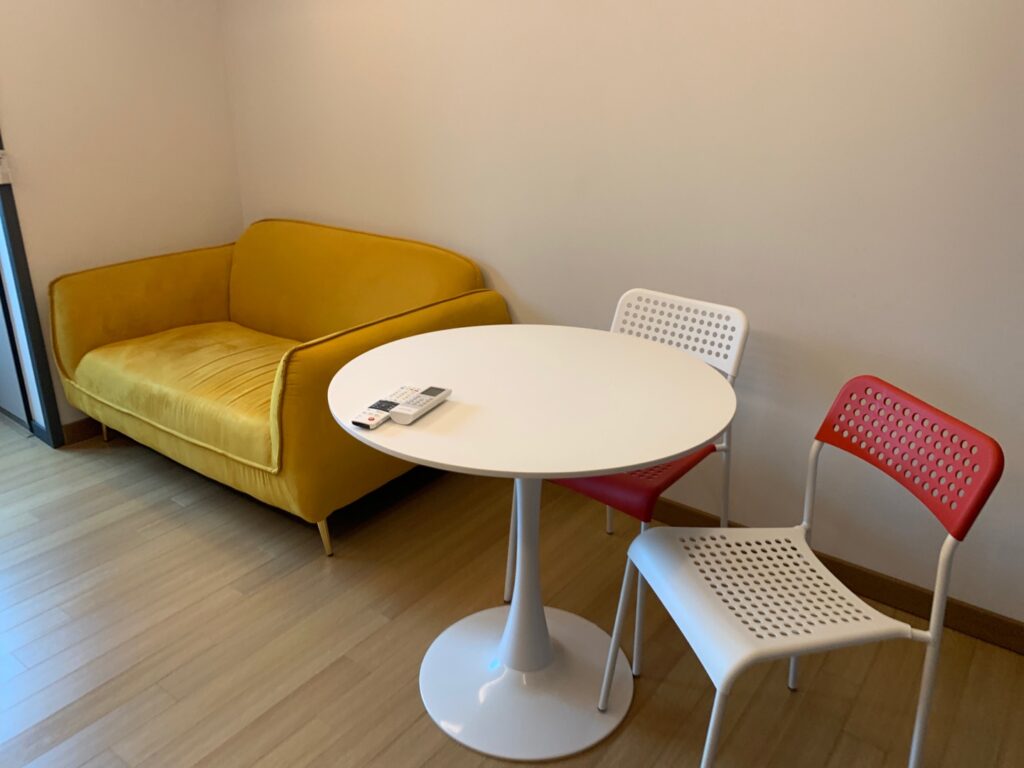
What my father did: Bought IKEA plastic chairs and basic furniture because “IKEA is good quality.”
His reasoning: “It’s functional and affordable. Guests just need somewhere to sit.”
What happened:
IKEA is excellent when your theme is Swedish minimalism. But if you’re going for warm, natural, boutique hotel vibes, white plastic IKEA chairs look cheap and out of place.
His property photos looked disjointed—a mix of styles with no cohesion.
Guests never mentioned the furniture in reviews (good or bad—just… nothing).
After 3 months, he replaced several pieces with wood furniture that matched the aesthetic.
Total cost: ~$200 (IKEA furniture) + ~$400 (replacements) = $600 for furniture he could have bought right the first time for $400
What works: Choosing furniture in materials and styles that fit your overall theme—even if it costs more upfront
Lesson I learned watching him: “Affordable” isn’t the same as “right for your space.” IKEA works when Swedish minimalism is your theme. Otherwise, you’re buying twice.
Mistake #3: Naked Kleenex Boxes and Cheap Tissue Holders
What my father did: Left Kleenex boxes sitting out as-is, then later bought $5 plastic tissue covers.
His reasoning: “It’s just tissues. Guests don’t care.”
What happened:
His property looked unfinished in photos—small details screamed “budget.”
Reviews never mentioned “attention to detail” or “thoughtful touches.”
My properties consistently got “every detail was so thoughtful” mentions for $15 seagrass tissue covers.
After 6 months, he upgraded to natural material tissue covers.
Total cost: Time with lower perceived value + $5 plastic covers he threw away + $15 proper covers = lost bookings + wasted $5
What works: $15 seagrass or rattan tissue covers from the start
Lesson I learned watching him: The smallest details matter in photos. Guests might not consciously notice tissue covers, but they DO notice when spaces feel “expensive” vs “budget.”
Mistake #4: “Hotel-Style” White Bedding Without Theme Consideration
What my father did: Bought white bedsheets “like hotels do”—cheapest white or grey sets he could find with decent material.
His reasoning: “Hotels use white sheets. White is clean and classic. The material quality is good.”
What happened:
He was careful about material (avoiding polyester, checking thread count), but completely ignored how it looked in context.
Property #1: White sheets + white metal IKEA bed frame = hospital theme
Guests never mentioned the bedding in reviews. Photos looked institutional.
Property #2: Grey sheets that were “functional” but… well, very interesting when paired with his warm wood furniture aesthetic
The mismatch was obvious in photos—like he’d grabbed random bedding without thinking about the room.
Property #3: Sometimes white sheets with flower embroidery (whatever was cheapest that week)
The delicate floral pattern clashed with his modern minimal furniture choices.
Meanwhile, I chose bedding colours intentionally:
My Property #1: Blueish grey sheets + metal frame furniture + modern black accent = intentional monochrome theme
My Property #2: Soft beige sheets + warm neutrals + green and pink accents = cohesive natural aesthetic
My Property #3: Pastel blue sheets + ribon patterns + black details = feminine minimal palette
Same material quality. Different aesthetic intention. Completely different booking results.
His photos: “This looks… functional. Like someone’s spare room.”
My photos: “This looks intentional. Like a boutique hotel.”
After 5 months of lower booking rates, he replaced all the bedding with cohesive colours chosen to match each property’s theme (not just “white like hotels”).
Total cost: ~$300 (white/grey random bedding) + ~$300 (themed replacements) = $600 + $15/night × 30 nights × 5 months = $2,250 in lost revenue
What works: Choosing bedding colours that coordinate with your property’s overall theme—not just “white because hotels do it”
Lesson I learned watching him: Material quality matters, but aesthetic cohesion matters MORE. Good material in the wrong colour costs you bookings. The white sheets weren’t bad—they just looked like a hospital when paired with his white metal IKEA bed frame.
Mistake #5: No Mirror At All, Then Cheap Narrow Mirrors
What my father did: Didn’t buy mirrors initially. At all.
His reasoning: “The bathroom has a mirror. That’s enough.”
What happened:
Guests had to squeeze into the tiny bathroom to check full outfits before leaving.
No way to see themselves before going out without awkward bathroom contortions.
Reviews never mentioned mirrors (because there weren’t any to mention).
Photos showed empty wall space that looked unfinished.
After seeing my properties with beautiful wood-frame full-length mirrors getting “loved the mirror” review mentions, he bought cheap narrow full-body mirrors—the $20 frameless kind that lean against walls.
Then what happened:
The mirrors worked functionally (guests could finally see themselves).
But they looked cheap in photos—like dorm room afterthoughts.
The narrow width meant guests still had to stand far back to see full outfits.
Guests never mentioned them in reviews (vs my properties: “loved the wood-frame mirror placement”).
After 4 months, he sold the cheap mirrors at a second-hand shop and bought the exact same wood-frame mirrors I had.
Total cost:
- Lost booking opportunity for months (no mirror at all)
- $20 per cheap narrow mirror × 3 properties = $60
- Lost resale value selling at second-hand shop = -$30 recovered
- $60 per wood-frame mirror × 3 properties = $180
- Total spent: $210 when he could have bought the right mirrors once for $180
What works: Full-length mirrors with wood frames from the start—positioned intentionally, chosen to coordinate with furniture
Lesson I learned watching him: “The bathroom mirror is enough” = guests squeezing into tiny bathrooms to check outfits. And buying the cheap version first, then upgrading later costs MORE than buying right initially (lost resale value + time without proper mirrors + replacement cost).
The Math That Changed My Father’s Mind
After 6 months of running properties side-by-side in the same building:
My approach (beautiful + functional from start):
- Initial investment: ~$1,500 per property
- Average nightly rate: $85
- Occupancy: 85%
- Monthly revenue per property: ~$2,200
His approach (cheap functional, replace later):
- Initial investment: ~$800 per property
- Cost of replacements: ~$700 per property
- Total spent: $1,500 (same as mine!)
- Average nightly rate: $70 (guests perceive lower value)
- Occupancy: 70%
- Monthly revenue per property: ~$1,470
His “savings” of $700 upfront cost him:
- $700 in replacements (ended up spending the same amount)
- $15/night in lower rates (because photos looked budget)
- 15% lower occupancy (because the space didn’t look as nice)
- = ~$730/month in lost revenue
After one year: $8,760 in lost revenue to “save” money he ended up spending anyway.
That’s when he admitted: “You were right. Buying it right the first time is actually cheaper.”
Why I’m Sharing This Story
I learned an invaluable lesson by watching my father’s well-intentioned mistakes:
“Cheap functional” seems smart until you calculate:
- Cost of buying twice (original + replacement)
- Lost booking revenue (lower rates due to worse photos)
- Lost occupancy (guests choosing prettier spaces)
- Time and energy replacing items
The real lesson: The “expensive” approach (beautiful + functional from start) is actually the budget-friendly approach when you factor in the total cost of ownership.
My father now runs his properties using my philosophy. His occupancy increased from 70% to 82%. His nightly rates increased by $12. His reviews now mention “beautiful styling” and “attention to detail.”
Total time to break even on the “more expensive” initial investment? 2.5 months.
After that, it’s pure profit from making the right choice upfront.
The Questions My Father Asked (And My Answers)
“But what if I can’t afford the nice version right now?”
Then wait and save. One beautifully designed property at 85% occupancy earns more than two budget properties at 60% occupancy. Quality over quantity.
“How do I know which ‘expensive’ items are worth it?”
The ones that appear in photos and impact guest comfort. Blackout curtains: yes. Decorative objects: no. Bedding: yes. Wall art: maybe.
“What if my taste isn’t good enough to choose the beautiful version?”
Pick ONE theme (modern minimal, natural bohemian, Scandinavian, industrial) and buy everything that fits. Cohesion matters more than individual item beauty.
“Can’t I just start cheap and upgrade as I earn money?”
You can, but you’ll earn money faster (and spend less total) by starting right. My father proved this with $8,760 in lost first-year revenue.
The Mistakes Other Hosts Make (That I’ve Seen)
Beyond my father’s journey, I’ve stayed at dozens of Airbnbs as a guest and seen these repeated mistakes:
Mixing too many design styles (IKEA + vintage + modern = looks confused)
Buying decorative items without function (throws that guests remove, pillows that get piled on the floor)
Ignoring lighting (harsh overhead only, no bedside options)
Cheap versions of visible items (plastic tissue holders, frameless mirrors, polyester curtains)
No cohesive colour palette (random colours across bedding, curtains, furniture)
All of these cost more to fix later than to do right initially.
My Design Philosophy (Validated by My Father’s Journey)
Priority: Function (guests must sleep well, feel comfortable)
Requirement: Beauty (guests must want to book based on photos)
Strategy: Buy once, buy right (cheaper total cost than buying twice)
Method: Cohesive theme (easier to achieve beauty when everything coordinates)
Result: Higher rates + higher occupancy = more profit
This isn’t about being “fancy” or “wasteful.” It’s about understanding that design is a business investment with measurable ROI.
My father learned this lesson the expensive way. You don’t have to.
Guest Bedroom Essentials by Budget
Under $200 Total: The Minimum Viable Beautiful Guest Room
Must-haves:
- Blackout curtains in natural material (~$70)
- Dimmable lamp with beautiful finish (~$40)
- Tissue cover in seagrass/rattan (~$15)
- 2 extra pillows (~$40)
- Full-length mirror with wood frame (~$60)
Total: ~$225
Skip for now: Mattress upgrade (use what you have), premium bedding
This budget gets you: Sleep quality improvements + aesthetic cohesion + “thoughtful styling” mentions
$500 Budget: Significant Beauty + Function Upgrade
Add to minimum viable:
- Quality bedding in cohesive colour (~$100)
- 2 back support pillows (~$60)
- Better blackout curtains for multiple windows (~$140)
Total: ~$525
Skip for now: Mattress (save up separately)
This budget gets you: Everything except the mattress, fully coordinated aesthetic
$1,500 Budget: Complete Beautiful + Functional Guest Bedroom
Everything on this list:
- Mattress (~$800)
- Quality bedding in the theme colour (~$100)
- Pillow variety (~$100)
- Beautiful blackout curtains (~$150 for 2 windows)
- Dimmable lamps with a nice finish (~$80 for 2)
- Full-length mirror with wood frame (~$60)
- Tissue covers in natural materials (~$30 for bedroom + bathroom)
Total: ~$1,320
Remaining $180: Mattress protector, extra sheet set, 2-3 curated decorative elements
FAQ: Guest Bedroom Essentials
Do I really need to buy the beautiful version if the cheap version functions the same?
Yes, if you want bookings AND 5-star reviews. Guests book based on photos (beauty) and reviews based on experience (function). The beautiful version costs $10-30 more but directly impacts bookings and review mentions. My father’s side-by-side experiment proved this—his “savings” of $700 upfront cost him $8,760 in lost revenue over one year.
What if I can’t afford beautiful blackout curtains right now?
Start with the cheapest blackout curtains for function, but plan to upgrade within 3-6 months. My father’s experience shows you’ll likely replace them anyway, and the lost bookings during those months cost more than the $20-30 difference in price.
How do I choose colours/materials that coordinate with my space?
Pick one main colour palette (mine is beige/pink/black) and one material theme (mine is natural materials—wood, linen, seagrass, rattan). Then choose versions of functional items that fit both. Every item passes the “does this coordinate?” test before purchase.
Is expensive bedding worth it for a guest room?
Not luxury hotel level. The sweet spot is 60-thread-count modal/cotton blend ($80-120) in a colour that coordinates with your theme. Feels quality, washes well, photographs beautifully. Higher thread counts are harder to maintain without looking better in photos or reviews.
What’s the difference between “room darkening” and “blackout” curtains?
Room darkening = blocks 50-80% of light (still lets sunrise/street lights through)
Blackout = blocks 95-99% of light (room stays dark even at noon)
Get true blackout in natural materials (linen, textured weave). The $20-30 extra over polyester blackout is worth it for photos and aesthetic mentions. My father learned this by buying cheap polyester first and replacing them 4 months later.
Should every guest bedroom have the same style?
Not necessarily, but they should feel cohesive with your overall brand. I have 3 different colour palettes across 5 properties (beige/cream, grey/black, pink/white) but all use natural materials and the same quality level. Consistency in quality + materials, flexibility in colours.
Do guests really notice tissue box covers and styling details?
YES. 40% of my reviews mention “attention to detail” or “thoughtful styling,” and they often specifically mention small elements like tissue covers, the way lamps coordinate with decor, or how the colour scheme flows. My father’s properties never got these mentions until he upgraded to natural material tissue covers.
What if my budget only allows for functional items without the beautiful versions?
My father’s experience is instructive: he saved $700 upfront but spent it anyway on replacements PLUS lost $730/month in revenue. If the budget is truly tight, wait and save for one beautifully designed property rather than furnishing two with budget items. One property at 85% occupancy earns more than two at 60%.
Does IKEA furniture work for guest bedrooms?
It works IF your theme is Swedish minimalism. My father learned this the hard way—IKEA plastic chairs looked cheap in his warm, natural aesthetic properties. He ended up spending $600 total (IKEA + replacements) when he could have bought the right wood furniture for $400 initially. Match furniture to your theme, not just your budget.
Conclusion: Guest Bedrooms Need Beauty AND Comfort
After hosting 500+ guests, reading every review, and watching my father learn expensive lessons, here’s what I know for certain:
Guests photograph beautiful spaces and rave about functional ones. You need both.
You can have perfect function with zero style, and you’ll get decent reviews but slow bookings. You can have perfect style with poor function, and you’ll get bookings followed by 4-star reviews.
Success requires refusing to compromise on either.
The 7 essentials on this list aren’t just functional—they’re beautiful. Blackout curtains in cohesive colours. Tissue covers in natural materials. Mirrors that enhance the space. Bedding that photographs well AND feels comfortable. Lamps with finishes that coordinate with your theme.
My minimal maximalist approach:
Every item must be functional (improve guest experience)
Every item must be beautiful (fit the aesthetic theme)
If it’s not both, I keep looking until I find the version that is
Edit ruthlessly—only items that serve beauty or function (ideally both) stay
The data support this:
75% of reviews mention styling/aesthetics
40% mention comfort/function
The best reviews mention both: “Beautifully styled AND so comfortable”
And my father’s side-by-side experiment proved:
Beautiful + functional from start = $2,200/month per property
Cheap functional, replace later = $1,470/month per property
The “expensive” approach earns $730 MORE per month while costing the SAME total amount
Invest in items that deliver both beauty and function. That’s how you get bookings, 5-star reviews, and guests who remember your space years later.
Every corner of your guest bedroom should be tasty while comforting—photographable while functional, styled while serving a purpose.
Start with function as your priority. But make beauty your non-negotiable requirement. Never settle for “good enough” in either direction.
My father learned this lesson after spending $8,760 in lost revenue over one year. Learn from his experience—buy it beautiful and functional from the start.
Next Steps:
- Assess your current guest room: Which of the 7 essentials are you missing?
- Start with beautiful blackout curtains (biggest impact for bookings + reviews)
- Upgrade functional items to beautiful versions (same function, better photos)
- Choose a cohesive theme (colour palette + material theme)
- Build toward the complete set based on your budget
- Calculate your ROI (better photos = more bookings = faster payback)
FREE DOWNLOAD: Guest Bedroom Setup Checklist
Get my complete guide including:
✅ Room-by-room setup checklist (function + beauty)
✅ “Before Guest Arrival” walkthrough
✅ Budget breakdowns ($200, $500, $1,500)
✅ Color palette + material coordination guide
✅ Guest room maintenance schedule
✅ “Beautiful + Functional” shopping list by theme
✅ ROI calculator (compare cheap vs quality approach)
👉 Download the Free Checklist Here →
Questions about creating a guest bedroom that’s both beautiful and functional? Drop a comment below—I read and respond to every one.
Affiliate links support this blog at no extra cost to you. I only recommend products tested across 5 Airbnb properties with 500+ guest stays—chosen for both beauty and function. Thanks for supporting small creators.