How to Create a Panic-Safe Corner in Your Bedroom (BPD-Tested Guide)

I learned I needed a panic-safe corner on August 27th—the day my girlfriend broke up with me, the day before what was supposed to be our third anniversary.
The panic attack hit around midnight. My chest tightened, breathing became impossible, and my BPD brain spiralled through every catastrophic thought at once. I reached for my phone to text her—the person who always talked me down from these episodes.
Then I remembered: she was gone.
I spent two nights and three days on an uncomfortable foldable mattress at my parents’ house, eyes open, unable to sleep. The entire house felt haunted by our shared memories. Every corner reminded me of what I’d lost. I had no panic-safe room. No designated space that felt separate from the trauma.
Now that I think of it, I desperately needed a safe space. But how do you create a panic-safe corner at a house you’re not even living in?
That’s when I realised the brutal truth: I’d been using another person as my panic room. And when she left, I discovered I had no backup plan. No physical anchor when everything felt like it was falling apart.
Creating a panic-safe corner isn’t about hiding from your problems. It’s about having a reliable place to regulate your emotions before they escalate into a crisis. It’s about giving yourself the same stability you tried to find in another person—except this one can’t leave you.
My First Attempt: The Shower Booth
Before I understood what a “panic-safe corner” was, I had an instinctive version: the shower booth.
Whenever I had a mental breakdown, I’d turn on the shower and sit in the corner with hot water hitting my head. I’d sit on the cold tile floor in a crouching pose, panicking, letting the water drown out the sound of my own crying.
The contrast helped—hot water on my head, cold tiles under me, the white noise of water blocking out intrusive thoughts. It wasn’t intentional emotional regulation. It was survival.

Why it worked (sort of):
- Temperature shock interrupted panic spirals
- Physical sensation grounded me in my body
- Water noise created a sensory cocoon
- Enclosed space felt protected
Why it wasn’t sustainable:
- Can’t stay in the shower for hours
- Water bills add up during extended episodes
- Not accessible during middle-of-the-night panic attacks
- Left me physically exhausted and dehydrated
The shower booth taught me something crucial: I needed a physical space that provided similar grounding without the limitations. A corner I could access anytime, stay in as long as needed, and return to repeatedly until my nervous system learned “this is where we regulate.”
Why You Need a Physical Safe Space (Not Just a Person)
The lesson I learned the hard way: People are wonderful. People can be incredibly supportive during difficult moments. But people also have their own lives, their own limits, and their own capacity for emotional labour.
When you have BPD, the intensity of your emotions can exhaust even the most well-meaning loved ones. And when those people eventually set boundaries or leave entirely—which they have every right to do—you’re left with no grounding mechanism except the coping skills you may or may not have developed.
The psychology behind having a designated space:
Your brain learns through association and repetition. When you consistently go to the same physical location during moments of distress, your nervous system starts recognising that space as “the place where we regulate emotions and return to baseline.”
Research in trauma therapy and DBT (Dialectical Behaviour Therapy) confirms that having a consistent physical environment for emotional regulation significantly improves outcomes. Your panic-safe corner becomes a Pavlovian trigger—but instead of salivating when a bell rings, your parasympathetic nervous system activates when you sit in your corner.
Why this matters for BPD specifically:

People with BPD experience emotions at an intensity most people can’t comprehend. What feels like mild disappointment to others can feel like complete devastation to us. Our nervous systems are hypersensitive, our emotional regulation skills are underdeveloped, and our abandonment fears make us particularly vulnerable when our usual support systems disappear.
A panic-safe corner gives you something stable and predictable when everything else feels uncertain. It’s the one thing that won’t judge you, won’t get tired of you, won’t leave you, and won’t tell you you’re “too much.”
What Makes a Corner “Panic-Safe”
Essential elements that define a panic-safe corner:
1. Consistent Location (Same Spot Every Time)
Your brain needs to associate this specific physical location with emotional regulation. Moving it around defeats the neurological conditioning that makes it effective.
Pick a corner that:
- Feels protected (ideally with your back against two walls or a solid structure)
- Has a view of the door (addresses primal safety needs during heightened anxiety)
- Isn’t in high-traffic areas where you’ll be disturbed
- Can consistently serve this singular purpose
2. Sensory Comfort Without Demands
During panic attacks, your sensory system is overwhelmed. The panic-safe corner needs to provide gentle sensory input without creating additional stimulation.
What this looks like:
- Soft textures (blankets, cushions, yoga mat)
- Warm lighting (never harsh or bright—see my lighting guide)
- Comfortable seating that supports your body
- Temperature control (blanket available if you get cold during episodes)
What this doesn’t include:
- Your phone charging (removes temptation to doom-scroll during crisis)
- Work materials (no laptop, no bills, no “productive” items)
- Triggering objects (photos of exes, stressful reminders)
3. Grounding Tools Within Reach
You need something to occupy your hands and redirect your attention during panic attacks.
My personal grounding toolkit:
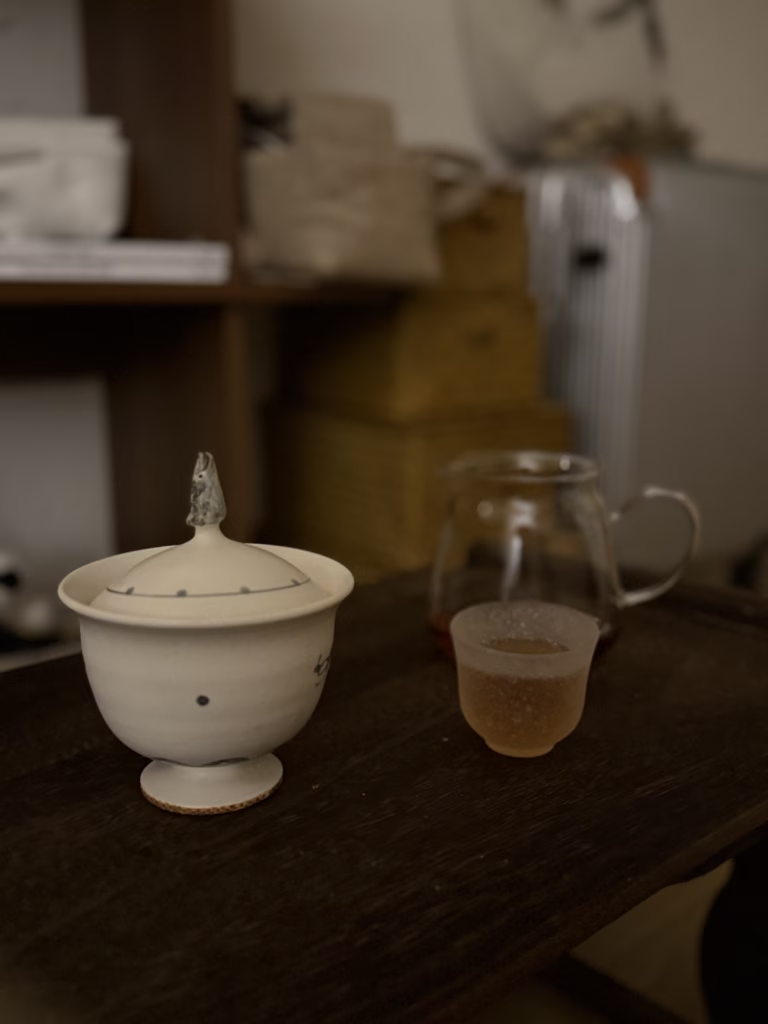
- Tea ceremony – The ritual of making tea forces you to slow down and focus on small, repetitive actions. Warm tea genuinely helps calm your nervous system.
- Sandalwood incense stick – Scent grounds you in the present moment immediately
- Soft cotton blanket in warm colours – Texture and weight provide sensory comfort
Physical tension release tools:
- Cork massage ball – Rolling tension out of shoulders and back provides physical grounding
- Korean-style hinoki wood spinal therapeutic pillow – Supports neck and releases tension differently than regular pillows
- Massage roller made of hinoki wood (Japanese cypress) – The wood scent plus physical sensation creates dual grounding
These aren’t typical “anxiety tools,” but that’s the point. Your panic-safe corner should include whatever actually works for YOUR nervous system, not what Instagram wellness accounts say you should use.
Other effective options:
- Crocheting or knitting – Not my style, but something that distracts your mind whilst simply regulating your muscles can be incredibly grounding
- Stress ball or fidget toy
- Ice pack (temperature shock interrupts panic spiral)
- Weighted lap pad
- Journal and pen (if writing helps you process)
4. Audio Option (Intentional, Not Distracting)
Music or white noise can help during emotional regulation—but it needs to be intentional, not distracting.
What works:
- Small speaker or AirPods with a pre-loaded calming playlist
- White noise machine or app
- Rain sounds or nature audio
- Specific songs that ground you (mine: “The Sea” by Corinne Bailey Rae)
What doesn’t work:
- YouTube or streaming (leads to distraction)
- TV (too visually stimulating)
- Anything with lyrics that might trigger emotional spirals
5. Zero “Shoulds” Allowed
This is the hardest rule to follow, especially if you’re accustomed to being productive even during times of distress.
The panic-safe corner is not for:
- Working through your to-do list
- Forcing yourself to journal if you don’t want to
- Meditating perfectly with proper posture
- “Getting over it” quickly so you can be productive again
The panic-safe corner is for:
- Sitting and breathing until you feel remotely human
- Crying without judgment
- Existing in emotional chaos until it naturally de-escalates
- Being exactly as much of a mess as you need to be
My temple training reinforced this: The monks here have a concept called “just sitting”—you sit with whatever arises, without trying to fix it or make it go away faster. That’s what the panic-safe corner enables.
Should Your Bed Be Your Panic-Safe Corner?
My honest opinion: No. Ideally, your panic-safe corner should be completely separate from your bed.
The problem with using your bed:
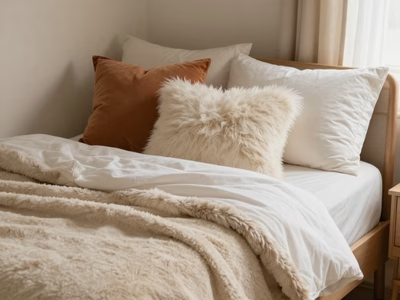
Beds are designed for sleep. They’re associated with rest, intimacy, vulnerability, and unconsciousness. When you start using your bed as your primary emotional regulation space, you risk creating confusing associations for your brain.
If your bed becomes too strongly linked with panic attacks and emotional crises, you can develop sleep problems. Your nervous system won’t know whether “being in bed” means “time to sleep” or “time to have a breakdown.”
The reality of small spaces:
I believe this in theory. In practice? I’m living in a 177 square foot temple room. My bed HAS to be in or near my panic-safe corner because there’s literally nowhere else to put it.
My solution when space forces compromise:
I sit AGAINST my bed, but FACING AWAY from it.
The bed provides back support, but I’m not looking at it. I’m not lying on it. I’m not under the covers. I’m sitting on my yoga mat on the floor, using the bed frame as a wall, oriented toward my tea setup and mood light.
This creates psychological separation even when physical separation is impossible.
Why the yoga mat matters:
It’s not just about floor comfort (though that helps during long regulation sessions). The yoga mat serves multiple purposes:
- Prevents hard floor sitting
- Allows me to stretch during my lone time at my corner
- Defines the physical boundary of my safe space
- Creates a ritual: when I roll out the mat, my brain knows “we’re here to regulate”
The key principle for small spaces:
If you absolutely must have your bed near your safe corner due to space constraints:
- Sit ON THE FLOOR, not on the bed
- Face AWAY from the bed
- Use the bed as structural support only
- Create clear ritual differences (yoga mat, specific position, grounding objects)
Your brain can learn: “Sitting on the floor facing the tea setup = regulation time” vs “Lying in bed under covers = sleep time.”
It’s not ideal. But it’s better than having no panic-safe corner at all because you’re waiting for perfect circumstances that may never come.
My Real Setup: Temple Room Edition
Current space: 177 square feet—humble and small, combining organising, storing, sleeping, and stacking all in one room
The reality of my panic-safe corner:
I’m simply on the floor. No beanbag, no fancy chair. Just a yoga mat in my designated corner, sitting against my bed but facing away from it.
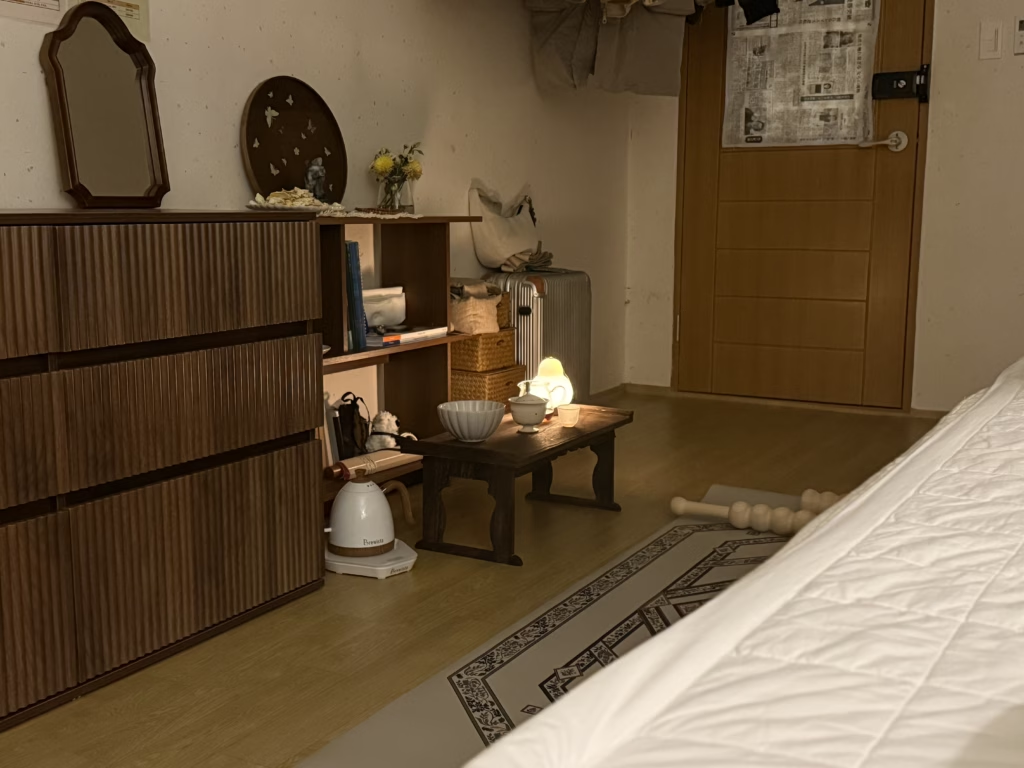

What my corner includes:
- Yoga mat – Defines the physical space, prevents hard floor sitting, and allows stretching
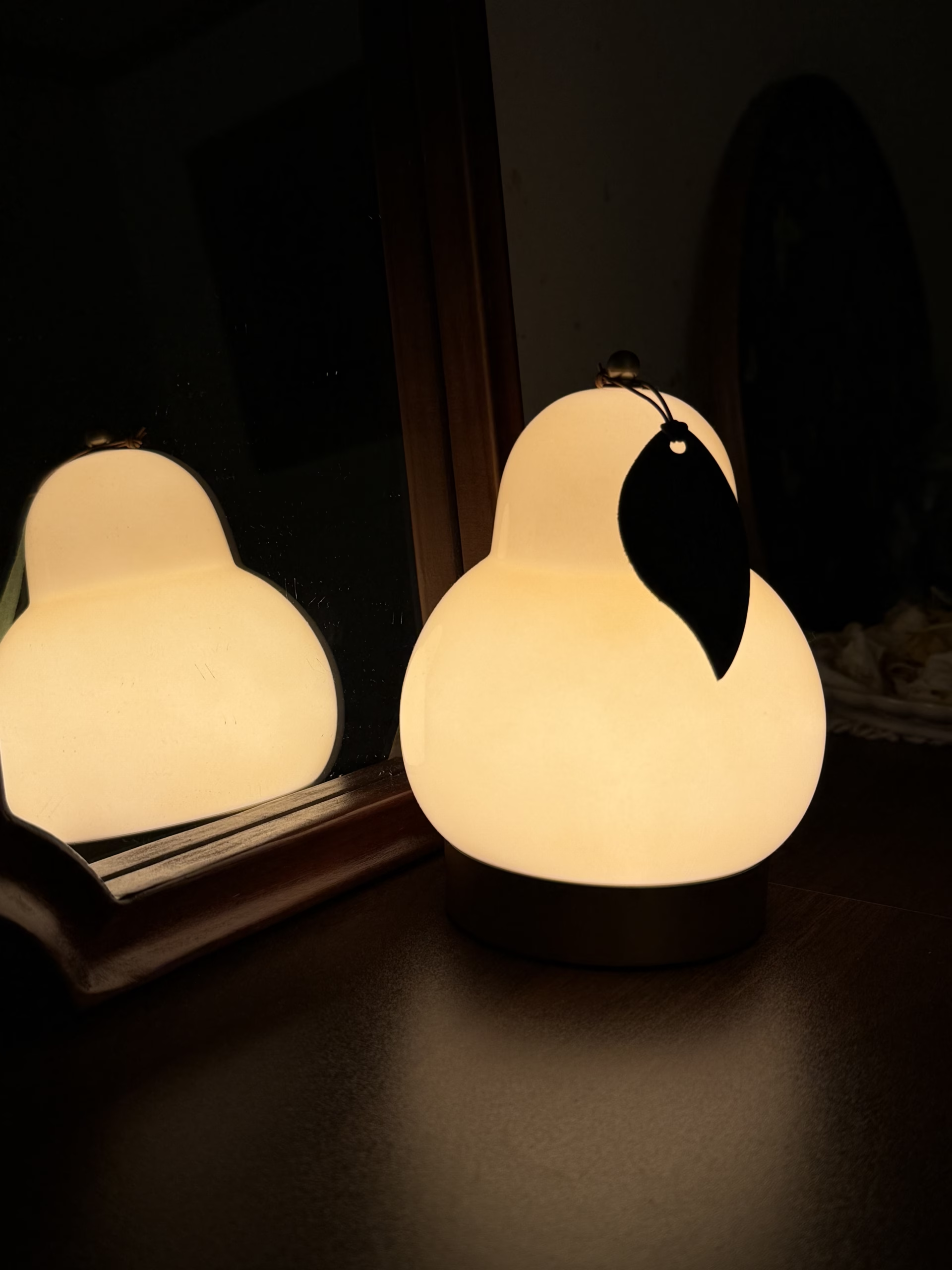
- Pear-shaped mood light – Soft, warm glow
- Jade Buddha statue from my Myanmar pilgrimage – Visual reminder of impermanence and peace
- Soft cotton blanket in warm colours – Sensory comfort and warmth
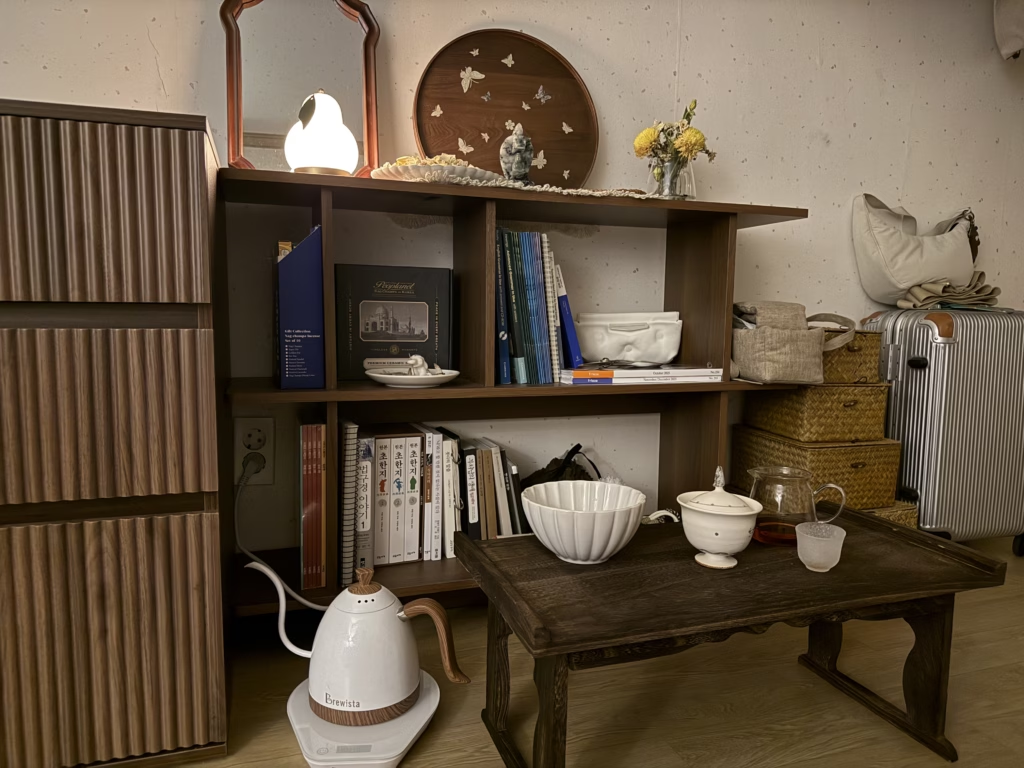
- Tea ceremony setup: Gaiwan, tea cup, electric kettle, wooden tea table – For my grounding tea ritual
- Sandalwood incense – Scent grounds me immediately
- Possibly fresh flowers – When I can afford them, natural elements help
- AirPods Pro – For calming music without disturbing temple quiet
- Physical grounding tools: Cork massage ball, Korean-style hinoki wood spinal therapeutic pillow, and hinoki wood massage roller
The honest truth about my corner:
It’s not Instagram-perfect. There are books stacked nearby. Decorations crammed around it. In a room this small (177 sq ft), everything overlaps. I removed the TV because I don’t use it, but the space is still visually busy.
Does it still work? Yes. Absolutely.
Because what makes it effective isn’t perfection—it’s consistency. My nervous system knows: when I sit in this specific corner, roll out my yoga mat, make tea, light incense, and wrap myself in my cotton blanket, we’re here to regulate. Not to sleep, not to work, not to scroll. Just to exist until the storm passes.
How often I use it: At least twice a week during difficult emotional moments. Sometimes more during particularly hard periods.
Does it always “work”? No. Some panic attacks are too severe for any space to feel safe. But it works significantly more often than not having a designated corner at all. And on the days it does work, it prevents emotional spirals from escalating into a full crisis.
Total cost to recreate my setup: $40-80, depending on what you already own
- Yoga mat ($15-25)
- Mood light ($10-20)
- Basic gaiwan tea set ($15-30)
- Sandalwood incense ($5-10)
- Soft cotton blanket (might already own)
- Massage tools ($10-20 optional)
How to Create Your Panic-Safe Corner Today
Step 1: Choose Your Location (5 minutes)
Walk through your bedroom or living space and notice which corner feels most protected. Trust your gut instinct—your nervous system already knows which space feels safest.
Ideal characteristics:
- Corner location (two walls behind you, or bed frame as support)
- View of the door
- Away from high-traffic areas
- Gets some natural light during the day but isn’t directly under harsh lighting
Step 2: Clear the Space (15 minutes)
In small spaces like mine, you might not be able to remove everything. That’s okay. Clear what you can. The consistency of location matters more than perfect minimalism.
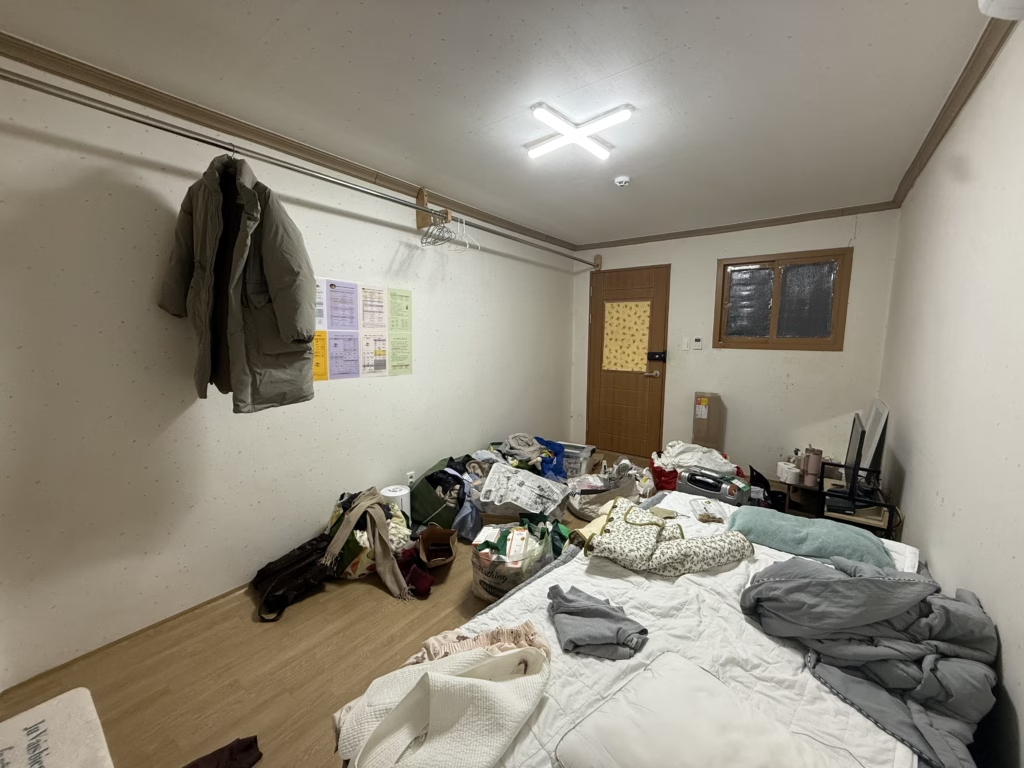
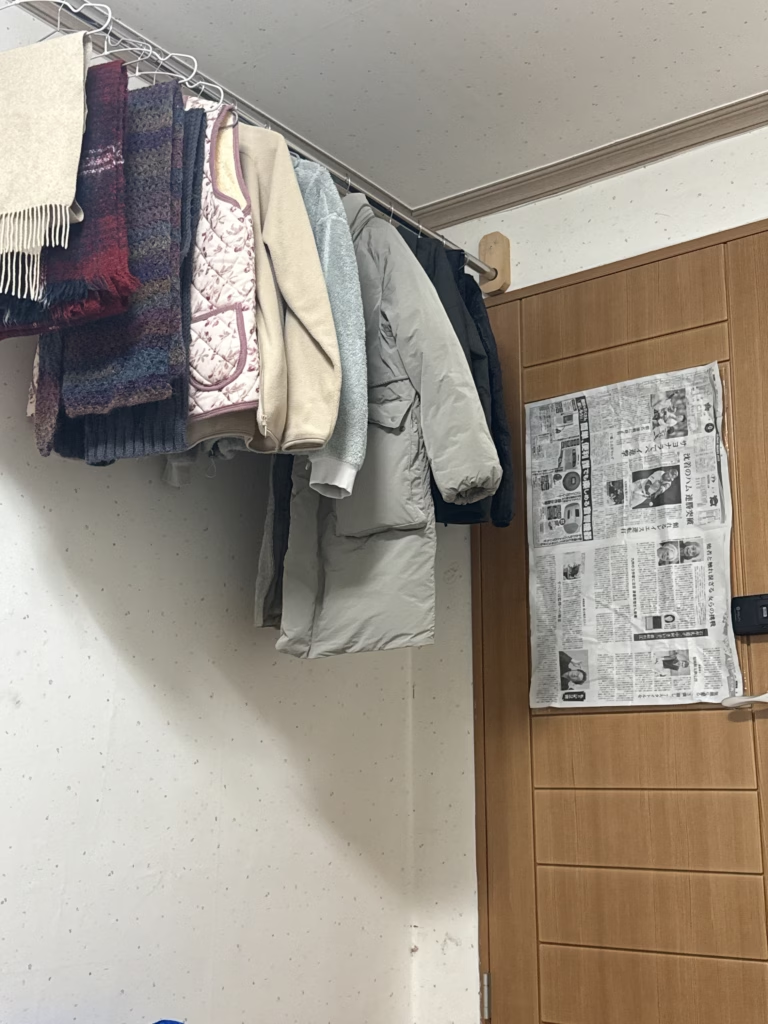
See the difference?
Remove anything that doesn’t serve emotional regulation:
- Work materials
- Random storage
- Anything visually cluttered that adds to overwhelm
Step 3: Add Your Essential Items ($0-40)
Start with the basics you might already own:
- Something to sit on – Yoga mat ($15-25), floor cushions, or pillows ($0 if you have them)
- Blanket – Soft texture, slightly heavy if possible ($0-15 if buying new)
- One grounding object – Tea supplies, stress ball, massage tool, textured item ($0-20)
- Light source – Small lamp or mood light ($10-20, or use existing lamp)
Total for basics: $0-40 if you’re creative with what you own
Step 4: Test It Before You Need It
Don’t wait for your next panic attack to try out your new corner. Sit there for 10-15 minutes during a calm moment.
Notice:
- Does it feel protected and safe?
- Is the lighting comfortable?
- Are your grounding tools within easy reach?
- Does anything feel “off” that you need to adjust?
Refine based on your observations. This might take 2-3 tries to get right.
Three Budget Versions
$0 Version: Use What You Have
- Designate one corner as your consistent spot
- Use existing pillows, cushions, or a yoga mat if you have one
- Add a blanket from your bed (use only in your corner)
- Make tea or coffee as your grounding ritual
- Use your phone for calming audio (then put it away immediately)
Result: Functional panic-safe corner using only existing items
$30 Version: Essential Additions
- Yoga mat or floor cushion ($15-20)
- Small lamp, candle, or mood light ($5-10)
- Incense or calming scent ($5-8)
Total: $25-38
Result: Dedicated items that stay in your corner and serve this singular purpose
$60 Version: Comfort Setup
- Quality yoga mat ($25)
- Mood light or adjustable small lamp ($15-20)
- Tea set (gaiwan or simple teapot and cup) ($15-20)
- Soft cotton blanket or weighted lap pad ($15-25)
- Grounding tools (massage ball, incense, stress ball) ($10-15)
Total: $80-100 (slightly over but includes everything for complete setup)
Result: Purpose-built corner that maximises comfort and effectiveness during crisis
Common Mistakes That Undermine Effectiveness
Mistake #1: Making It Too Pretty
This isn’t an Instagram aesthetic. Function over form. If your panic-safe corner looks perfectly styled with decorative pillows arranged just so, you’ll feel guilty “messing it up” during actual panic attacks.
Fix: Prioritise comfort and accessibility over visual appeal. My corner has books and decorations crammed around it. It’s not pretty. It works.
Mistake #2: Putting Your Phone There
During emotional distress, phones are dangerous. You’ll text people you shouldn’t, doom-scroll anxiety triggers, or compare your crisis to others’ highlight reels on social media.
Fix: Leave your phone across the room. If you need audio, use AirPods or a speaker with pre-loaded playlists, then immediately put your phone away.
Mistake #3: Using It Only During Full Panic Attacks
If you only sit in your corner during a crisis, your brain associates it purely with distress. You need positive and neutral associations too.
Fix: Sit there during calm moments. Have your morning tea there. Stretch on your yoga mat. Read in your corner. Create neutral and positive associations alongside the crisis ones.
Mistake #4: Letting Others Use Your Space
Your panic-safe corner is yours. Not a guest seating area. Not where your partner sits during arguments. Not a communal space.
Fix: Set this boundary clearly, even if it feels selfish. This is your emotional regulation zone, and protecting it is protecting your mental health.
Mistake #5: Forgetting to Actually Use It
During panic attacks, executive function collapses. You won’t remember you have a panic-safe corner unless you’ve practised going there repeatedly.
Fix: During any moment of elevated emotion—even mild frustration—go sit in your corner for 5 minutes. Train your nervous system to default to this space automatically.
Mistake #6: Waiting for Perfect Circumstances
You’ll never have the ideal space. The perfect minimalist corner. The beautiful meditation cushion. The Instagram-worthy setup.
Fix: Start with what you have, where you are. My corner in a cramped 177 sq ft room with my bed right there works better than the non-existent perfect corner I was waiting to create.
The Brutal Reality Check
Creating a panic-safe corner won’t cure BPD. It won’t prevent panic attacks. It won’t make emotional intensity disappear.
What it does is give you a physical anchor when everything else feels like it’s falling apart. It provides consistency when people are unpredictable. It offers a place to fall apart safely instead of destructively.
When my girlfriend left, and I spent those sleepless nights at my parents’ house with no safe space—just an uncomfortable foldable mattress and rooms full of our shared memories—I learned what true absence feels like. What it means to have nowhere to go when your nervous system is in meltdown.
Now, living in my cramped temple room with books stacked everywhere and barely enough space to breathe, I have something I didn’t have then:
A corner that’s mine. Where I can sit on my yoga mat with my tea and incense and cotton blanket and just exist in my pain without adding the trauma of feeling completely untethered.
That consistency—that reliability—is what helped me survive the worst emotional period of my life. Not because the corner magically fixed anything, but because it gave me a place to exist in my pain without judgment, without time limits, without having to explain myself to anyone.
You deserve that too. Even if it’s just a corner with a pillow and a blanket. Even if it feels silly at first. Even if you’re not sure it will work. Even if, like me, your bed has to be right there because you have no other choice.
Create it anyway. Before the next crisis hits. Because when your emotional support person is gone, and your nervous system is in full meltdown, you’ll be grateful you have somewhere stable to go.
Now go designate your corner. Roll out your mat or put down your cushion. Add one grounding object. Light your first incense stick or make your first cup of tea.
Your nervous system will thank you.
Ready to build your complete calm bedroom?
→ Start here: 5 Small Bedroom Design Changes for Better Sleep
→ Essential foundation: Bedroom Lighting Guide – Why I Stopped Using Overhead Lights
→ Complete transformations: My 5 Airbnb Bedroom Makeovers
→ Whole-home approach: Creating Healing Spaces in Small Apartments